Performancing Metrics

Posts

10 Affordable Online Master’s in Mechanical Engineering

The field of mechanical engineering is a diverse and exciting one. Mechanical engineers are responsible for designing, developing, testing, and maintaining machines that can be found in most industries. 

In our fast-paced modern world, there’s never been more of a demand for STEM graduates to stay on top of the latest technology. The best way to do that is to pursue higher education. 

From automobiles to airplanes to medical devices, it’s easy to see that the work of a mechanical engineer touches just about every area of our lives. You’ll deal with everything from the basic nuts and bolts to large-scale projects like buildings and bridges.

In short, your work as a mechanical engineer will be life-changing.

However, that doesn’t necessarily mean that you have to change your lifestyle in order to go back to school. In the past, getting a master’s degree meant quitting your full-time job, moving to a new city, and perhaps foregoing other commitments in order to earn your credentials.

That is no longer the case. Now, you can earn a degree in mechanical engineering right from your own couch.

An online degree offers the same quality and affordability as a traditional, on-campus program. However, since you won’t need to relocate or pay for expenses like transportation and housing, you may find that an online program is even more affordable—and of course, more convenient, too. 

Most courses are offered asynchronously, allowing you to complete your studies whenever you choose (even if it’s early in the morning or late at night!). No more schedule shuffling!

Needless to say, there are countless benefits to earning an online degree. 

Intrigued? You should be. Keep reading to learn everything you need to know about the 10 most affordable online master’s in mechanical engineering. 

See Also:10 Best Online Master’s in Materials Science and Engineering

What Are the Best Mechanical Engineering Degrees?

We know that you have educational goals that you’re itching to pursue, but you may not know where to start. The editors of Master’s Programs Guide utilize a unique ranking methodology based on the following five aspects:

25% Overall Degree Affordability: Average cost of undergraduate and graduate tuition per school

25% Graduation Rate: Number of students who start at the university and actually finish there

20% Earnings Potential: Average mid-career salary of school alumni

20% Selectivity: The number of students who apply versus the number who actually get accepted

10% Online Graduate Offerings: The number of programs offered online in each department

At Master’s Programs Guide, we strive to do our best to guide you and your family toward a fruitful academic career. The pursuit of knowledge is a noble one, and we want to help you reach your goals.

See Also: Top 50 Highest Paying Masters Degrees

#1. Georgia Institute of Technology-Main Campus

Georgia Tech

Online Master of Science in Mechanical Engineering

The Georgia Institute of Technology, also known as Georgia Tech, is a public research university that was founded in 1885. The mechanical engineering degree here is the oldest and most historic at the university—when this university first opened its doors, the mechanical engineering program was the only one it offered!

Today, there are more than 30 different departments focusing on science and technology at this school. However, it is the computer science and engineering programs for which Georgia Tech is the most well-known.

If you’re ready to take a deep dive into the innovative problem-solving techniques you can use to solve complex mechanical engineering challenges, you will want to consider the online Master of Science in Mechanical Engineering at the Georgia Institute of Technology. Offered by the George W. Woodruff School of Mechanical Engineering, this program has multiple start dates per year and is offered exclusively online.

You will take core courses such as:

  • Robotics
  • Wind Engineering
  • Experimental Methods
  • Advanced Digital Signal Processing

You’ll be able to choose from a medley of electives to further customize your degree, helping you to stay engaged in your studies and tailor your work to allow you to meet your career goals.

As a student in this program, you will benefit from a variety of resources that will help make online learning easy, convenient, and accessible. From peer tutoring to an extensive library system, this degree truly offers it all.

An affordable program, it features tuition that starts at just $1,100 per credit hour. All classes are three credit hours each, making it easy for you to progress quickly through the curriculum (and without having to spend a ton of money!). You can apply for many types of financial aid, including student loans, employer tuition reimbursement, and much more. 

See Also: Top 10 Most Affordable Online Master’s in Statistics

#2.  Texas A&M University-College Station

Texas A&M

Online Master of Science in Mechanical Engineering

Texas A&M University-College Station is a public research university located in College Station, TX. Founded in 1876, this school is the flagship institution of the Texas A&M University System. It is also one of the largest, home to a student body of more than 69,000 students that is the second largest in the United States.

It is the only school in the state of Texas to possess designations as a space, sea, and land grant institution. It regularly receives funding from organizations like:

  • National Science Foundation
  • National Aeronautics and Space Administration
  • Office of Naval Research

When you enroll at Texas A&M University, you’ll become an “Aggie”—and that’s something that you can definitely be proud of!

The online degree in mechanical engineering at Texas A&M University is ideal for the student who recognizes that distance learning is the most convenient option. It will help you develop strong independent research and learning skills as you discover new ways to solve difficult problems in engineering. A two-year degree, the program is research-intensive and includes lots of advanced coursework.

You’ll take at least 32 semester credit hours as you study topics such as:

  • Advanced Product Design
  • Continuum Mechanics
  • Mechanics of Robot Manipulators
  • Engineering Dynamics

You can pursue research with esteemed faculty at the school, examining topics such as energy conversion and combustion, dynamics, vibrations, and acoustics, and rotating machinery as you work in labs like the Center of Innovation in Mechanics for Design.

There’s plenty of time to play in this program, too—it’s not just about the work! You can join a variety of student organizations, including the American Society of Mechanical Engineers, the Society of Automotive Engineers, and much more. These organizations offer learners (including those studying from afar!) the opportunity to go on trips, interact with monthly speakers, and network with alumni.

The department, home to about 567 graduate students, is offered at a school that is ranked among the top public institutions by U.S. News & World Report. You’ll be able to connect with leading industry and government employers as a student here, benefitting from vast career resources. Of course, tuition is affordable, too, making it easy for you to earn a degree without taking on tons of student loan debt. 

#3.  Texas Tech University

Texas Tech

Online Master of Science in Mechanical Engineering

Texas Tech University is a public research institution located in Lubbock, TX. Originally founded as Texas Technological College, it is now one of the largest universities in the state of Texas. It is also one of the most diverse, recognized as a designated Hispanic-serving institution.

It offers more than 150 different programs of study within 13 colleges, along with 60 research institutes and centers. Here, you’ll have outstanding opportunities to explore your potential as an engineer in the lab and beyond. 

The online master’s degree in mechanical engineering at Texas Tech will provide you with a core education in traditional areas like solids and mechanics, dynamics and controls, and thermal sciences and fluid dynamics while also pursuing multidisciplinary research with other departments, too. 

Far from being a cookie-cutter program, this degree comes with multiple options for concentrations, specializations, and customizations. You can choose from a thesis option, a report option, or a coursework option. Depending on the pathway you select, you will complete between 30 and 36 credit hours of study. 

There’s even a combined BS/MS program you can pursue if you’ve yet to complete your undergraduate opportunity. This will let you earn both degrees in just five short years of study! No matter which pathway you select, you’ll take core classes in engineering mathematics, a chosen concentration area, and six credit hours of courses that exist outside of your concentration area. 

Sample classes cover topics in categories such as:

  • Dynamics and Controls
  • Solid Mechanics and Materials
  • Design
  • Thermal Sciences and Fluid Mechanics

Many students choose to pursue internships or cooperative learning in addition to their required courses, too, allowing them to connect with industry partners and gain valuable hands-on experience. 

This affordable program features tuition that starts at just $19,098 for the entire program. In Addition to these low rates, the university offers multiple financial aid opportunities that make it easier than ever to finance your degree. 

#4.  University of Houston

University of Houston

Online Master of Mechanical Engineering

A public research university, the University of Houston is located, as you might expect, in Houston, TX. It is the flagship institution of the University of Houston System and the third-largest school in the state of Texas. It offers more than 282 degree programs within over a dozen academic colleges. 

Of all of the schools on this list, the University of Houston has one of the best and proudest alumni networks. You’ll join a group of more than 260,000 past graduates who are proud of where they came from—and are willing to share their experiences and career connections with future students.

Not only that, but the University of Houston is another cheap university for mechanical engineering. This program will prepare you for roles in government, industry, academia, and more, providing you with the skills you need to solve real-world problems in a practical way. 

Although the traditional version of this program is taught on-campus in the Energy Capital of the World, you’ll gain a lot as an online student, too. You will be able to interact face-to-face via synchronous and asynchronous instruction that exposes you to core courses and research in topics such as:

  • materials science
  • control of dynamical systems
  • applied mechanics
  • biomedical engineering

You can choose from thesis and non-thesis tracks. Either way, you’ll find that the degree is incredibly affordable, with low tuition rates and generous financial aid available.

A 30-credit hour program, it is ranked as one of the best of its kind by U.S. News & World Report. You will be able to take advantage of multiple opportunities for professional development and can even attend on-campus events such as “Weekend U” so you still have the opportunity to connect in real life with your classmates and instructors. 

#5.  University of Florida

UF

Online Master of Science in Mechanical Engineering

A public land-grant research university, the University of Florida is located in Gainesville, FL. It was founded in 1853 and offers a variety of programs on-campus as well as online. It is ranked as the sixth-best public university in the United States by U.S. News & World Report

A 30-credit hour program, the online Master of Science in Mechanical Engineering at the University of Florida is just one of the many engineering degrees available online here. Other majors include industrial and systems engineering, electrical and computer engineering, materials science and engineering, and more. 

There are even certificates available that can help you advance your degree by making it just a little bit more specialized. Certificate options include:

  • hardware and systems security
  • engineering innovation
  • engineering leadership
  • engineering project management
  • transportation operations and planning

You can choose from a thesis- or non-thesis option taking special individualized courses that allow you to better meet your goals. You can choose from interdisciplinary courses that cover topics like Dynamics, Systems, and Control, Solid Mechanics, Design, and Manufacturing, or basic skills that will prepare you for Ph.D. study.

Courses are delivered through UF Edge, a revolutionary system that makes it easy for you to tackle distance learning regardless of whether it’s your first or fifth time as an online student. The classes are exactly the same as the ones taught on campus, except all materials are delivered through the hands-on Canvas e-learning platform.

Best yet, this degree is incredibly affordable. As a Florida resident, you’ll pay just $48.73 per credit hour, with non-residents paying just a little bit more. There are extensive opportunities for financial aid available, including scholarships, grants, loans, and more.

#6.  University of California-Riverside

Online Master of Science in Mechanical Engineering

The University of California-Riverside is one of ten campuses in the University of California system. It is known for its commitment to research, pioneering groundbreaking discoveries in things like biological pest control, entomology, and more. 

The accelerated online master’s in mechanical engineering at the University of California-Riverside is another one of the best in the country. This program will allow you to explore high-level areas of mechanical engineering like sustainable design, control systems, thermofluid systems, and the practical use of gaseous plasmas. 

This quick program makes it possible for you to graduate in as little as 13 months. The entire curriculum is delivered online with no residency requirement, making it one of the most convenient options for distance learners with other commitments to attend to. You will enjoy flexible admissions with three start dates and be able to choose from six different specializations.

You will take 16 credits of core engineering courses along with 16 specialization credits. You can tailor your program to your area of expertise and participate in four one-credit capstone courses. These capstone courses are meant to serve as a substitute for the residency, allowing you to gain practical, hands-on experience from afar.

Core courses include things like:

  • Engineering in the Global Environment
  • Principles of Engineering Management
  • Technology Innovation and Strategy for Engineers

You can choose from specializations like Plasma-Aided Manufacturing and Materials Processing, Secure and Reliable Control Systems, and Sustainable Product Design. 

This university is one of the best in the country, having been recognized by a number of publications. The engineering school has been regarded within the top 33% of engineering schools in the nation by U.S. News & World Report, recognized both for its quality academics as well as for its commitment to diversity. 

It is also unique in that it has been selected as a “Military Friendly School” by Victory Media. It’s one of the best institutions in the country when it comes to providing educational opportunities for veterans and is among the top 20% of all schools that are doing all they can to help military members and veterans. 

An affordable program, it offers an excellent return on investment. The degree boasts an average salary of $80,000 upon graduation, with some graduates earning as much as $130,000. With the experience that you gain by working with faculty experts and industry partners in this program, you shouldn’t have a hard time finding a job, either!

#7.  North Carolina State University at Raleigh

NC State

Online Master of Science in Mechanical Engineering

Founded in 1887, North Carolina State University at Raleigh is a public land-grant research institution that is the largest in the Carolinas. It forms one of the corners of the Research Triangle with Duke University and the University of North Carolina at Chapel Hill producing the other two, making it one of the best in the country when it comes to its commitment to research. 

Not only that, but NC State has quite the reputation to live up to when it comes to distance learning. In fact, this award-winning school has been offering distance education since 1978! Originally a land grant school, the university has an enrollment of more than 35,000 students studying both on-campus and online. 

The online Master of Science in Mechanical Engineering at North Carolina State University at Raleigh is perfect for off-campus students whose schedule, budget, or location does not allow for on-campus enrollment. The courses are identical to those that you might take on campus, requiring 30 credit hours for completion.

You won’t need to complete a thesis, instead completing all of your courses in a more hands-on fashion. You’ll be able to enhance your career opportunities while taking just two courses per semester. Sample courses include:

  • Mechanics of Composite Structures
  • Compressible Fluid Flow
  • Foundations of Fluid Dynamics
  • Metrology for Precision Manufacturing

Ranked sixth in the country by U.S. News & World Report, this online engineering school offers more than a dozen other degrees and certificate programs for you to choose from. Popular graduate certificates that can help you expand the reach of your graduate degree include:

  • materials informatics
  • nuclear nonproliferation science and policy
  • computer science

As a graduate student, you will benefit from low tuition rates (made even lower if you happen to be a North Carolina resident). Of course, there’s plenty of financial aid to apply for, too, including scholarships and monthly payment plans. 

Colorado State

#8.  Colorado State University-Fort Collins 

Online Master of Science in Mechanical Engineering

Colorado State University-Fort Collins is a public land-grant university located in Fort Collins, CO. The flagship university of the state university system, it is classified among “R1: Doctoral Universities-Very High Research Activity.”

In fact, on average, this school spends more than $375 million per year on research and development, with graduates including astronauts, CEOs, politicians, and even Pulitzer Prize winners.

Despite the academic caliber, affordability is key. You will find yet another cheap online master’s at Colorado State University-Fort Collins. This degree will help you take your training to a new level. A practitioner-oriented degree, this Online Master of Science in Mechanical Engineering will help you develop strong skills in advanced analysis along with detailed knowledge of material properties. 

You’ll be able to hone your skills in manufacturing, advanced composite materials, mechanical design, metals and alloys, and more. 

The skills you build in this program can be applied directly to mechanical engineering as well as to work in a variety of other fields, such as healthcare aerospace, automotive design, renewable energy, and manufacturing materials. A flexible program, it will allow you to watch recorded campus-based lectures, engage in course content, and interact with peers online. All courses are asynchronous, meaning you can study at the time that best fits your schedule. 

You will be required to take specific core courses but you can also choose electives that align with specific career goals—12 credit hours’ worth, in fact! Core classes include:

  • Metals and Alloys
  • Reliability Engineering
  • Manufacturing Engineering
  • Simulation Modeling and Experimentation

You will learn from expert faculty who incorporate their own innovative research into the curriculum. 

An affordable program, it features tuition that starts at just $964 per credit hour. Financial aid is available for this fully online program, which can be completed in less than two years.

#9.  The University of Alabama

University of Alabama T

Online Master of Science in Mechanical Engineering

The University of Alabama, also known simply as Bama, is a public research university located in Tuscaloosa, AL. Established in 1820, it is one of the oldest and largest public universities in the state of Alabama.

It offers hundreds of programs of study in more than a dozen different divisions and is home to the only publicly supported law school in the state. Of course, its engineering programs are quite remarkable as well.

The online Master of Science in Mechanical Engineering at the University of Alabama is another one that is offered exclusively online for distance learners. It is identical to the on-campus degree program with applications accepted year-round.

You will work closely with faculty as you conduct research and study topics such as:

  • CAD design energy
  • combustion
  • conservation and management
  • HVA
  • precision engineering turbomachinery

It does not require the completion of a thesis, instead requiring the completion of a comprehensive exam. 

The degree is ranked as one of the best in the country by U.S. News & World Report and is also highly regarded for its services for veterans. You’ll complete 30-credit hours of study and tailor your courses to meet your interests and career goals. Concentration areas include things like:

  • vibrations
  • robotics
  • structural mechanics
  • renewable and sustainable energy
  • mechatronics

Best yet, you won’t have to pay an arm and a leg to enroll in this program, either. Tuition starts at just $440 per credit hour with generous financial aid available for qualifying students. There are several scholarships specifically for distance learners, such as Build on Bama, the Bama Link Grant, and the College of Continuing Studies Scholarship. 

Iowa State

#10.  Iowa State University 

Mechanical Engineering Master’s Degree Online

Iowa State University, officially known as Iowa State University of Science and Technology, is the largest school in the state. It is a public land-grant research institution that was uniquely coeducational from the start. Founded in 1858, the school has nearly 300 different degrees for students to choose from.

Of these, many are offered entirely online. The school is classified as one of the “R1: Doctoral Universities-Very High Research Activity” by the Carnegie Classification and is highly ranked by U.S. News & World Report for its engineering specialties. 

You will find another best-value online master’s in mechanical engineering at Iowa State University. This 30-credit hour program is a coursework-only professional degree that is perfectly suited for working professionals and individuals who are looking for a bit more flexibility in their degrees.

You’ll take core courses such as:

  • Material and Manufacturing Considerations in Design
  • Mechanical Behavior and Manufacturing of Polymers and Composites
  • Creativity and Imagination for Engineering and Design

If you choose, you can even pursue an additional graduate certificate, such as one in Advanced Manufacturing. Double-majoring in another field of interest or participating in independent study is another option. 

As a full-time student, you will be able to complete your studies in as little as one year. Although students in this program are not considered for graduate assistantships, you will be able to access affordable tuition that starts at just $5,070 per semester for graduate students. 

FAQs

What is the most affordable online master’s in mechanical engineering?

When it comes to financing a degree, the reality is that no two students will pay exactly the same price at every single school. There are lots of factors that go into determining the cost of attendance, including the “sticker price” tuition rate, additional fees, a student’s financial background, and what sorts of scholarships they apply for. 

However, the schools listed above offer affordable tuition and generous financial aid, two characteristics that contributed to their inclusion in this ranking. You’ll also find affordable master’s in mechanical engineering at schools like the University of New Mexico, Kennesaw State University, Mississippi State University, and Old Dominion University, to name a few.

While public schools generally offer programs with lower overall tuition rates, that’s certainly not always the case. In fact, many students at private universities will find that they end up paying less than they would at a public school because of the extra financial aid.

Look into all financial aid opportunities that might be available to you. Complete the FAFSA (Free Application for Federal Student Aid) early, as early as the October of the year before you plan to start school. Even if you don’t think you’ll qualify for any need-based financial aid, it’s important to leave no stone unturned in your search! 

How do I get into the best online mechanical engineering master’s program?

If you’re planning on applying to a master of science in engineering program, it’s a good idea to touch base with the schools to which you plan to apply. Each university has different requirements and while they are usually similar, it pays to do your research. 

Typically, you will need to have a bachelor’s degree in mechanical engineering (or a closely related field) from an ABET-accredited program. If you don’t have a background in mechanical engineering, don’t panic. Many schools will still admit you, but you may need to complete prerequisite coursework in things like material science, engineering mechanics, or thermodynamics before beginning your core courses. 

Often, a minimum GPA is cited as a requirement—typically a 3.0 or higher. You may be required to take the GRE or other diagnostic tests. Plan to submit documents such as official transcripts, test scores, letters of recommendation, a resume or CV, and a personal statement.

What will I learn in a best-value online master’s in mechanical engineering?

Just as the admissions requirements differ between schools, so, too, does the curriculum. Each mechanical engineering program is a bit different. 

Most programs require between 30 and 36 credit hours of study. You may have to complete a thesis, final exam, or capstone. You might take classes in things like:

  • mechanical engineering analysis fluid dynamics
  • dynamic systems and controls
  • materials processing and mechanics

The beauty of most online master’s in mechanical engineering degrees is that they allow you to customize your studies to an area of interest. This is something you may not have been able to do as an undergraduates student, instead having to follow a prescribed set of courses. As a grad student, though, you’ll be able to explore the topics that interest you most, allowing you to take your career to the next level.

Is an online master’s in mechanical engineering worth it? 

Absolutely. There are so many reasons to consider getting an online master’s in mechanical engineering. With just a couple of years of study, you can advance your career prospects and expand your professional network. You’ll open the door to countless new job opportunities and build your confidence as a professional in this industry, too.

The pay alone is worth the effort it takes to get a master’s—something we’ll discuss in more detail below—but also consider the intrinsic benefits of doing so. You’ll be able to participate in research and invent new things to advance existing technologies. You’ll develop real-world expertise and enjoy a wonderful job outlook. 

Plus, the field of mechanical engineering is a broad one, enabling you to pursue work in a variety of career paths such as aerospace engineering, petroleum engineering, surveying, and much more.   

How much do mechanical engineers with a master’s make?

The time has never been better to become a mechanical engineer! Job prospects are best for candidates who stay apprised of the latest technology. So while you can get a job with just a bachelor’s degree, you’re going to have much better odds of landing a high-paying position with that master’s degree.

Mechanical engineering is a broad field, meaning you can work as a mechanical engineer or pursue work in fields like:

  • communications
  • bioengineering
  • automotives
  • aerospace engineering

Because of this, the pay tends to be varied.

As a mechanical engineer, you can expect to earn an average annual salary of $90,160 per year, according to the Bureau of Labor Statistics. The job outlook is excellent for these jobs, too, expected to see a growth of about 7% by 2030. 

IF YOU ENJOYED THAT THEN CHECK OUT OUR ARTICLES ON THE BEST AFFORDABLE ONLINE MASTER’S IN INDUSTRIAL ENGINEERING & BEST MASTER’S IN SYSTEMS ENGINEERING!

Michael Templeton
Managing Editor

Kacey Reynolds Schedler
Contributing Editor

20 Best Masters of Education Programs

20 Best Master's in Education

Thinking of earning your Master of Education degree? That’s a smart choice.

Keep reading to learn more about why earning one of the best master degrees in education might be right for you!

Why Pursue the Best Education Masters Programs?

It can help pave the path for a raise or promotion in your current job. Or it can serve as a launchpad for a new career. There are dozens of areas to specialize in when you choose a masters in education. The best one will depend on your exact goals and background.

Many involve classroom teaching methods. Others focus on:

  • administration
  • counseling
  • curriculum
  • diversity and inclusion
  • student affairs and other educational leadership roles

Other trends include an increased focus on early childhood development. This is done in order to set students up for future success. These programs work to address problems before they develop. There are many degree programs geared toward working with special education students, too.

There’s also a rise in demand for qualified teachers in science, technology, engineering, and mathematics (STEM) fields. 

Unlike many master’s degree programs, a master’s in an education field requires more than mere coursework.

For example, you may also need to pursue a specific certificate or licensure or an internship and fieldwork. There are differences in how long it might take to finish your degree. Some M.Ed. programs only take a year. Others can take two (or more if attending part-time). 

According to the National Center for Education Statistics, the United States spent ~$800 billion on public K-8 schools and ~$13,847 per child in 2019. This is far more than the global average. And it’s important!

Education is a huge field. It impacts almost every child and every town in the country. There are over 130,000 K-12 schools, ~60 million students (not counting homeschools students), 3.2 million full time teachers, and 90,410 public school principals.

Masters of Education Organizations

It’s no surprise there are dozens of organizations devoted to the field. Two of the biggest are the National Academy of Education and the American Educational Research Association. Others include: 

ADMISSION REQUIREMENTS FOR MASTER’S IN EDUCATION PROGRAMS

Working in the education sector can be one of the most impactful careers. Your job involves preparing students for their futures. There are dozens of roles to fill. But one thing they all have in common is the high degree of responsibility expected of candidates.

Education professionals deal with youth and young adults. They’re held to a higher standard than workers in other fields. Keep that in mind as you consider potential degree programs and their admission requirements. 

See Also: Best & Cheapest Online Master’s in Education

Any college program is tough to break into. Grad programs are the most selective. A master’s in education can be difficult to get into. That’s even more true if you are applying to be a K-12 teacher. Or if you want to work with special needs children or other vulnerable populations. Be objective as you assess your own background, abilities, and goals. This will help you find the best master’s in education program for you. 

An outstanding grade point average is a great start when it comes to fulfilling admission requirements. But it’s just enough to get you in the door. To increase your chances of being accepted, you must read through any given program’s website. Use a fine-toothed comb to pick out all the admission requirements. Take plenty of notes. Admission requirements can get complicated fast!

Don’t get discouraged. Education is one of the best fields for graduate students to consider. It has an excellent growth rate and since many accredited online programs can be completed in as little as one year, there’s no reason to wait.

See Also: Top 10 Most Affordable Online Master’s in Secondary Education

Specialization Options for Masters of Education Programs

A Master’s in Education (M.Ed. or Ed.M) can take many forms. This includes:

  • a Master of Arts in education (M.A.Ed. or M.A.E) 
  • a Master of Science in education (M.S.Ed. or M.S.E.)
  • a Master’s in Teaching (MAT)

Each of these may be offered with a number of specializations that go beyond the bachelor’s degree. That means no two are alike and each. They will have different degree completion requirements. That includes the number of credit hours. They will have  different admission requirements, too. 

Some common specializations include:

  • curriculum and instruction
  • teaching
  • counseling
  • higher education
  • foreign languages
  • academic enrichment
  • gifted education
  • student affairs
  • secondary education
  • elementary education
  • postsecondary education and adult education
  • educational psychology
  • special education
  • education policy
  • educational research
  • arts

Educational programs tend to be keen on recruiting a diverse candidate pool. It is important to relate how your own background and prior work have prepared you for success. Supply a resume, statement of purpose, and three letters of recommendation. The three letters of recommendation should come from other teachers or administrators when possible.

Together, these materials will show that your values and intentions are in-synch with those of the graduate school. The personal statement should be related to teaching. 

Before you get started on those applications, let’s talk about how to pay for your degree!

See Also: Affordable Online Master of Education Programs

WHAT ABOUT FINANCIAL AID & SCHOLARSHIPS?

Financial aid is one of the biggest barriers faced by prospective students. But the return on investment is  what motivates students to put in the money and effort to earn a degree. Before you apply for a loan, it’s worthwhile to check out federal financial aid options. 

Many prospective students overlook the Fulbright Program. This a government-funded cultural exchange program. It features graduate degree grant opportunities. Get your application in early!

Federal Student Aid

Federal student aid options exist, too. These include TEACH Grants. These are for those interested in teaching high need subjects. Examples include bilingual education, mathematics, reading, science, and special education. Prospective students need a 3.25 cumulative GPA or must score well on admissions exams.

Grads accepting this grant will commit to teaching at a low-income school for four years. Otherwise, this higher education award is converted into a loan.

Loans

Loans are a quick and painless method of paying for school. The trick is paying off the debt after graduation. Federal loans aren’t the only game in town. There are a few advantages to taking one versus a private bank loan. Interest rates tend to be lower. These awards offer more flexibility in terms of repayment after completing the graduate programs, too.

To apply, you must fill out a Free Application for Federal Student Aid (FAFSA). From there, they tabulate how much you’re able to borrow based on your tuition. 

Other Financial Aid Opportunities

Federal options are only the beginning. Grad students can find state and local scholarships. There’s also no shortage of professional organizations and alumni associations who can help. Most colleges have their own in-house scholarships, teaching assistantships, and paid research positions, too.

Once you’ve found the best master of education programs to apply to, don’t delay. Get your materials together and apply for aid.

HOW MUCH CAN I MAKE WITH A MASTER’S DEGREE IN EDUCATION? 

There are many different career paths for those with a Master’s in Education. It’s hard to pin down precise salary ranges. 

One reason people working in education decide to get a master’s in education is that they love their jobs. But want to earn more money. A whopping 94% of public school teachers apparently pay out of their own pocket each year for classroom supplies!

The Bureau of Labor Statistics is an incredible resource for seeing potential earnings. However, it doesn’t break down pay according to degrees held. 

The national median wage for high school teachers was $61,820 in 2021. The top 10% making as much as $100,310 or more. 

Vocational and adult education teachers see wages comparable to the K-12 teachers. The highest paying subjects relate to business, politics, architectural, or engineering fields. 

University and college professors make $79,640 and higher. Many fields require a Ph.D. to become a professor, but not all do. 

In short, the best masters of education programs can prepare you for lucrative, well-paying careers.

WHAT ARE THE 20 BEST MASTERS OF EDUCATION PROGRAMS?

We know that you have educational goals that you’re itching to pursue. You may not know where to start. The editors of Master’s Programs Guide utilize a unique ranking methodology. It is based on the following three aspects:

40% Potential Salary After Graduation: Average mid-career salary of school alumni 

30% Institutional Accreditation: Regional and National Accreditation for the 2019-2020 school year 

30% Overall Degree Affordability: Average cost of undergraduate and graduate tuition per school

At Master’s Programs Guide, we strive to do our best to guide you and your family toward a fruitful academic career. The pursuit of knowledge is a noble one. We want to help you reach your goals. 

Check out our ranking of the 20 best masters in education programs!

#1. Texas A&M University

Master of Education in Curriculum and Instruction

Texas A&M University

You will find one of the best education programs at Texas A&M.

The College of Education & Human Development at Texas A&M University (TAMU) is in College Station, Texas. This school is home to the Teaching, Learning, and Culture (TLAC) department. It offers a flexible Master of Education in Curriculum and Instruction. It can be taken either online or on-campus. Both versions are non-thesis graduate programs. They take 36-credit hours. The on-campus option can also be done as a Master of Science. The master of science in education has a thesis component. 

The online degree option comes with a generalist emphasis. Core classes include:

  • Cultural Foundations of Education 
  • Analysis of Teaching Behavior 
  • Reflective Inquiry 
  • Trends in Curriculum and Instruction
  • Curriculum Development 

The online program features a variety of content delivery methods. These include eCampus, video lectures, group projects, and online chat. Program outcomes cover four main areas: 

  • Academic learning
  • Social climate and emotional well-being
  • School improvement
  • Family and community partnerships

TAMU recommends its M.Ed. in curriculum and instruction program for students with undergraduate backgrounds in certain areas. These include:

  • agricultural leadership
  • communication
  • curriculum and instruction
  • psychology
  • technology
  • special education

You can participate in the Texas A&M University Education Research Center’s work related to school governance and reform. There are also routine education career fairs. On-campus students enjoy access to over 1,000+ organizations.

 Texas A&M University ranks No. 32 on U.S. News & World Report’s Best Education Schools for 2020. This was for Best Online Master’s in Curriculum and Instruction Programs. 

To Apply:

Students have up to seven years to finish the program. They can apply to transfer up to 12 credit hours. Applicants should submit:

  • an essay specific to the format of their degree program (i.e. on-campus, online)
  • three letters of recommendation
  • a department data sheet
  • official transcripts

GRE exam scores aren’t necessary. TAMU suggests a minimum undergraduate GPA of at least 2.75. International students should also send in their TOEFL or IELTS scores. 

#2.  University of California, Los Angeles

Master of Education 

UCLA

You can find another one of the top masters in education programs at the University of California Los Angeles. The University of California Los Angeles is often referred to as UCLA. It is renowned at a global level for its high academic standards, research activity, creative programs, and vibrant location.

Located in Los Angeles CA, the school offers several graduate programs related to the field of education. Students selecting the non-thesis Master of Education professional degree option can pick an area of study. Examples include:

  • student affairs
  • teacher education
  •  Principal Leadership Institute preliminary administrative credential

The student affairs path is a year-long cohort program for those new to the field. This option teams UCLA’s Education Department with its Division of Student Affairs to offer in-depth, practical education on social justice. You will also learn about transformative practice, and rigorous scholarship. It features a paid internship to enhance hands-on learning. 

The two-year Teacher Education Program (TEP) is for educators planning to work in urban districts. This path also features a curriculum emphasizing social justice.

It has a year-long teaching residency. There are choices to focus on:

  • elementary education
  • mathematics
  • science
  • English
  • social studies

Graduates can also obtain a California teaching credential. 

The third master’s of education path is through UCLA’s Principal Leadership Institute. This 14-month course of study is built around California Administrative Professional Expectations. It is made to prepare leaders for critical roles within urban educational settings. Both faculty and student body are diverse. Graduates will possess the necessary coursework for California Tier 1 Administrative Credentialing. 

The curriculum between these three M.Ed. options will depend on the study emphasis. All degrees include at least nine graduate courses. Five are in professional education. There is a requirement for a field experience equal to one class. This may involve K-12 classroom participation. Those taking the Teaching Education option must conduct teaching observations. They must perform student teaching if they are seeking a state credential. 

UCLA’s Master of Education programs incorporate a final exam or capstone project instead of a thesis. Students in the student affairs emphasis only need to do a comprehensive exam. Those in teacher education do an individual inquiry project. Students taking the administrative credential route will complete a capstone portfolio. M.Ed. degrees take between one to two years. This depends on the specialization area. You can take nine quarters to finish all degree requirements. 

To Apply:

Out of ~856 recent program applicants, UCLA admitted ~375, or 44%. Applicants should submit at least three letters of recommendation, a resume, and a statement of purpose. GRE scores aren’t required for the teacher education route. Interested students should be qualified in the subject they desire to teach. They must also have a suitable background with children.

#3.  University of Colorado Boulder

Master of Arts in Education (Multiple Options)

University of Colorado Boulder

Another one of the best master of education programs can be found at the University of Colorado Boulder.

The University of Colorado Boulder is a public university nestled on 600 beautiful acres. It is set against the backdrop of the Rocky Mountains. Its laudable agenda is to increase accessibility in higher education. This is in order to open up new opportunities for students from all walks of life. One major area it wants to have an impact on is education. That’s why its School of Education offers an assortment of graduate degree programs. This includes the Master of Arts in: 

  • Educational foundations, policy, and practice
  • Higher education
  • Educational equity and cultural diversity
  • Learning sciences and human development
  • Literacy studies
  • STEM education
  • Curriculum & instruction
  • MA+ teacher licensure (for Colorado licensure only)

Programs range from 30 to 36 credit hours. For the licensure option, you must complete 800+ hours of student teaching practicum. You will be scheduled for a licensure exam (PRAXIS II). 

The curriculum for each Master of Arts path varies. Sample classes for the MA+ teaching licensure option include: 

  • Advanced Child Growth and Educational Development
  • Anthropology of Education
  • Curriculum Theories
  • Gender Issues in Education
  • Issues in School Change and Reform
  • Psychological Foundations of Education
  • Sociology in Education
  • Teaching for Understanding and Equity

The campus features plenty of activities to keep students busy. These includes the Center for Student Involvement and Recreation Center. There are also supportive offices like:

  • Career Services
  • International Student Services
  • Veteran Services
  • Student Affairs

Graduates of the CU Boulder’s graduate educational programs reported 100% job attainment. That was within the first six months after leaving CU Boulder. 

To Apply:

Admissions requirements include unofficial transcripts, a personal statement, and three letters of recommendation. International students should also submit TOEFL scores. The school considers multiple factors when assessing packages. It encourages students from underrepresented groups to apply.  U.S. News & World Report lists the University of Colorado Boulder as No. 41 in Best Education graduate schools.

#4.  University of Illinois at Urbana-Champaign

Master of Education (Multiple Options)

University of Illinois at Urbana-Champaign

You’ll find another one of the best master’s degree in education options here in Illinois. The university’s College of Education features 23 flexible options to choose from. Many of these can be completed as either a:

  • Master of Education
  • Master of Science
  • Master of Arts

Sample degree options include: 

  • Bilingual / bi-cultural
  • Curriculum research, early childhood education, aesthetics & teacher education 
  • Digital environments for learning, teaching, & agency
  • Early childhood education
  • Educational administration and leadership
  • Higher education
  • Infancy & early childhood special education
  • Learning & behavior specialist
  • Mathematics, science, & engineering education
  • Quantitative and qualitative methodology, measurement, and evaluation (QUERIES)
  • Secondary education plus teacher licensure

Degree options fall broadly into one of four categories:

  • curriculum & instruction
  • educational psychology
  • special education
  • education policy, organization & leadership

Most programs can be completed on-campus. Several can also be done off-campus in Chicagoland or online. Off-campus/online programs are created to train working students to advance their careers.

The school features unique program advice depending on which area students are currently working in. These include:

  • an Illinois educator
  • national educator
  • international educator
  • business professional
  • military or GI bill recipient
  • Chicago public school teacher

U of Illinois Master of Education students often complete 32 credit hours. You’ll take four credit hours from psychological foundations coursework in education. You’ll take four from philosophical and social foundations coursework in education policy, organization, and leadership.

Master’s degree students have up to five years to complete the degree.

To Apply:

Applicants to the University of Illinois at Urbana-Champaign should possess a 3.0 GPA or higher. This is on the last two years of their bachelor’s degree coursework. They will also submit:

  • transcripts
  • a resume/CV
  • personal statement
  • writing sample
  • three letters of recommendation

Non-Native English speakers will need to submit proof of English proficiency. This is done via TOEFL or IELTS exams. 

#5.  University of Kansas

Master of Education (Multiple Options)

University of Kansas

You will find the best masters degree for teachers at the University of Kansas. The education master’s degrees at the University of Kansas allow students to focus on developing the precise skills they need to pursue their dream careers. Programs are taught within one of five departments:

  • curriculum and teaching
  • educational leadership and policy studies
  • educational psychology
  • health, sport, and exercise sciences
  • special education

Students can pursue a 30- to 36-credit hour Master of Arts or Science. Options include:

  • Autism spectrum disorders
  • Counseling and psychology
  • Curriculum & instruction 
  • Early childhood unified
  • Educational leadership
  • Educational technology
  • Health & physical education
  • Higher education administration
  • Sport management
  • Teaching English to speakers of other languages

Several degrees can be completed online. These include a master’s in secondary special education and transition. There are also options to attend at the main Lawrence campus or Edwards campus. KU makes its online programs simple. There are short 8-weeks classes.

Most programs feature an optional thesis. They can be finished in two years. Master of Science options have higher credit hour and length requirements. These are due to mandatory practicum hours. In some cases, there are field experience components. 

KU’s School of Education hosts licensure services. These are devoted to helping students navigate the complicated process for attaining or verifying professional licenses.

The university also features an exceptional Career Services section. It is there to assist with career and degree exploration. They help with finding internship openings and networking with recruiters through job fairs. 

To Apply:

University of Kansas’ programs in education are accredited by the Higher Learning Commission of the North Central Association. Admissions requirements vary depending on the degree path. The often include:

  • transcripts
  • three letters of reference
  • a goal statement
  • a resume
  • evidence of English proficiency (international/non-native English speakers).

#6.  University of Florida

Master of Education (Multiple Options)

UF

The University of Florida has some of the best master of arts in teaching programs.

The sun-soaked campus of University of Florida in Gainesville has over a dozen master’s degree options. The bachelor’s degrees and master’s in education are taught by the College of Education. Most options are offered either as a Master of Arts or Master of Education degree. The average complete time of the masters in education programs is just two years. Many are also offered 100% online. A few of the paths to choose from are:

  • Alternative certification for teacher education K-6
  • Bilingual education
  • Counselor education
  • Education administration and policy/educational leadership
  • Educational technology
  • Mathematics education
  • Reading and literacy education
  • Special education
  • Teacher leadership for school improvement

Typical program overviews list full-time or part-time attendance options. There are six to nine credits taken each semester. Class sizes are small. The master’s degree program allows for high levels of personalized attention. Graduate students will complete 36- to 39-credit hours. These master’s in teaching courses include:

  • Administration of School Personnel 
  • Curriculum and Instructional Leadership
  • Data-Driven Decision Making 
  • Educational Leadership: The Individual 
  • Educational Organization and Administration 
  • Principalship 
  • Public School Law 
  • Supervised Practice in School Admin

UF’s educator prep degrees are accredited by the National Council for Accreditation of Teacher Education. It is ranked No. 23 for Best Education Schools on U.S. News & World Report’s 2021 list of best schools for graduate education.

To Apply:

Each graduate degree option has different admissions requirements. Most applicants should hold a bachelor’s degree. This should be with a minimum GPA of 3.0 on the last 60 credits of bachelor’s degree work. Graduate Records Examination (GRE) scores are required. So is a statement of purpose, three letters of recommendation, and a resume. 

#7.  North Carolina State University

Master of Education (Multiple Options)

NC State

Some of the best teaching masters programs can be found at North Carolina State University. The College of Education at North Carolina State University offers 19 master’s degree paths devoted to the field of education! A quick sample overview includes: 

  • Adult and continuing professional education 
  • Clinical mental health counseling 
  • College counseling and student development 
  • Community college teaching 
  • Digital learning and teaching 
  • Elementary education 
  • Health professions education 
  • Higher education administration
  • New literacies and global learning 
  • Science education 
  • Special education 

You can pursue a Master of Arts or Science or a Master of Education. Programs require between 30- to 39-credit hours. It depends on the focus and type of master’s. The teaching program is taught with a low 14:1 student-faculty ratio. Programs allow generous amounts of individualized attention to every student.

NC State never rests on its laurels when it comes to education research. It’s in the top 6% of institutions nationwide for grants. There is ~$90.8M funded for 124 active research projects aimed at transforming teaching and learning. It partners with local high-need schools to produce math teachers. The education degrees receive funding from the National Science Foundation (NSF). 

To Apply:

UC State is accredited by the Southern Association of Colleges and Schools Commission on Colleges. Master’s in education options have different admissions criteria depending on the specialty. Most require a resume, unofficial transcripts, a statement of interest outlining goals, three letters of recommendation, and proof of residency. International students must submit TOEFL or IELTS exam scores. GRE scores aren’t often needed but check with the specific program’s site. 

#8.  University of Virginia

Master of Education 

University of Virginia

You can apply to some of the best masters programs for teachers at the University of Virginia. The University of Virginia in Charlottesville sprawls across 1,682 acres and includes Academical Village, a World Heritage Site. Its Curry School of Education and Human Development was funded by philanthropist John D. Rockefeller in 1905. It has been at the forefront of teacher preparation for well over a hundred years. Graduate students have 15 options for Master of Education degrees specialties. These include:

  • Administration & supervision
  • Communication sciences and disorders
  • Counselor education
  • Curriculum & instruction, with focus on reading education (online), or combined with an MBA
  • Ed psych with focus on applied developmental science; research, statistics & evaluation; or social foundations (online)
  • Kinesiology with a focus in exercise physiology; pedagogy; or individuals with disabilities
  • Student affairs practice in higher education

There are also Master of Teaching or Master of Science options available. UVA’s Curry School immerses students in practical research. This is done via partnerships with scholars and faculty. You will learn how to tackle pressing educational issues in the real world. 

Most programs are offered full-time. They can be completed in three semesters. There are also part-time programs. These have an average completion time of 2.5 years. Some, like the M.Ed. in administration & supervision, are strictly part-time. They are made for working professionals. Some degrees require fieldwork or clinical assignments. Many allow optional add-on endorsements. These may extend the timeline for completing all requirements. 

To Apply:

Admission to UVA’s master’s program requires proof of the potential for academic achievement. This can be met by submitting writing samples or ​GRE scores. A statement of purpose showcasing strong writing skills and letters of recommendation are also needed. 

#9.  Johns Hopkins University

Master of Science in Education

Johns Hopkins

Johns Hopkins’ international reputation speaks for itself. The renowned JHU School of Education has become a leader in its own right. This is despite its relative youth (the school was founded in 2007). Each year it confers roughly 1,000 certificates and graduate degrees. Many of these come from its Master of Science (MS) in education program. This teaching program at Johns Hopkins prepares students for teaching in Baltimore MD and beyond.

Concentrations include:

  • Digital age learning and educational technology
  • Educational studies: collaboration programs, independent schools, individualized interdisciplinary program, or Urban Teachers option
  • Gifted education
  • International teaching and global leadership cohort
  • Reading
  • School administration & supervision

Credit hours range from 33 to 39. This depends on the track chosen. Most tracks feature ample electives to allow for maximum customization. Some tracks, such as the master’s in school administration & supervision, feature an internship component. This prepares students for hands-on work in both secondary education and elementary education settings.

Johns Hopkins is accredited by the Middle States Commission on Higher Education. Its education programs are approved by the Maryland State Department of Education.

To Apply:

Application requirements depend on the selected degree track in the master’s in education. They tend to include official transcripts. You should have a minimum 3.0 GPA on undergraduate work. You will also need to submit an essay, a resume/CV, and two letters of recommendation. Additional requirements may include current employment at a school. You may need prior certified teaching experience. JHU is ranked No. 14 for Best Education Schools on U.S. News & World Report’s 2021 graduate school listing. 

#10.  New York University

Master of Education (Multiple Options)

New York University

If big city life is beckoning, it doesn’t get much bigger than New York City. Here you will find some of the best masters in teaching programs. The private, urban campus of New York University is nestled in Greenwich Village. It is the Big Apple’s mecca for all things arts and culture-related. If you want a master’s in education that will allow you to work in an urban setting in the heart of New York, this is the one. 

Through the Steinhardt School of Culture, Education, and Human Development, New York University offers a selection of master’s programs. These are in a variety of educational fields. Broad areas include health, arts, media studies, and education. There are specific paths in: 

  • Applied statistics for social science research
  • Bilingual education, or teaching English to speakers of other languages
  • Art + education, dance education, or educational theatre
  • Early childhood education, or higher and postsecondary education
  • Education and social policy
  • Education in English, history, literacy, math, science, language, or social studies
  • Environmental conservation education
  • Childhood education, international education, or special education
  • Music, with a focus in business, music education, or therapy
  • Nutrition and dietetics, school counseling, sociology of education, and more

Steinhart offers more specialization opportunities. These are within several of the above offerings. For example, there are specific certification paths, dual certifications, and overseas options.

Most options culminate in a Master of Arts degree. They require an average of mid-30-credit hours. Some of the professional licensure paths going up to 60-credit hours (or points as NYU calls them). Most can be taken either full- or part-time. Final credit hours are dependent on prior educational experience.

With an award-winning alumni network of 78,000+ members around the globe, Steinhardt continues to help graduates after they’ve left. This is done through a variety of benefits.

Benefits include career services, access to events, and other perks. The school ranks No. 4 on U.S. News & World Report’s 2021 list of Best Graduate Schools in Education.

To Apply:

Admission requirements vary depending on the teaching program. They often include a resume, statement of purpose, letters of recommendation, and GRE or MAT scores. 

OTHER NOTABLE PROGRAMS

#11. Ohio State University

Location: Columbus, Ohio

Degree: Master’s in Education Programs (M.Ed.)

Average In-State Tuition: $12,598

Website     

#12. Indiana University Bloomington

Location: Bloomington, Indiana

Degree: Master of Science in Education (Multiple Options)

Average In-State Tuition: $11,446

Website

#13. San Diego State University

Location: San Diego, California

Degree: Master of Arts (M.A.) or Master of Science (M.S.) 

Average In-State Tuition: $9,154

Website   

#14. Clemson University

Location: Clemson, South California

Degree: Master of Education in Student Affairs

Average In-State Tuition: $15,558

Website   

#15. University of Georgia

Location: Athens, Georgia

Degree: Master’s in Education Programs

Average In-State Tuition: $10,982

Website     

#16. University of Minnesota

Location: Duluth, Minnesota

Degree: Master’s in Education Programs (M.Ed.)

Average In-State Tuition: $35,099

Website     

#17. University of Maryland

Location: College Park, Maryland

Degree: Master’s in Education Programs (Multiple Options)

Average In-State Tuition: $14,526

Website           

#18. Michigan State University

Location: East Lansing, Michigan

Degree: Master’s in Education Programs (Multiple Options)

Average In-State Tuition: $18,132

Website        

#19. University of Connecticut

Location: Storrs, Connecticut

Degree: Master’s of Arts in Curriculum and Instruction

Average In-State Tuition: $19,434

Website          

#20. University of California, Irvine

Location: Irvine, California

Degree: Master of Arts in Teaching in Elementary and Secondary Education, Master of Arts in Education

Average In-State Tuition: $13,775

IF YOU ENJOYED THAT THEN CHECK OUT OUR ARTICLES ON THE MOST POPULAR MASTER’S DEGREES AND TOP 50 HIGHEST PAYING MASTER’S DEGREE PROGRAMS.

Michael Templeton
Managing Editor

Kacey Reynolds Schedler
Contributing Editor

20 Best Online MBA Programs

villanova online mba cost

An online MBA program might be in your future!

So you want to run a business?

There’s a quote by John Maxwell that says, “A leader is one who knows the way, goes the way, and shows the way.”

If you have a desire to run your own business or lead a team to success in some other way, there’s a good chance that you know the way you need to go. However, figuring out how to follow that path—and how to show others what they should do to help the team be successful, too—now that’s another challenge entirely.

When you go to business school, you’ll gain the skills you need to find your path as a leader—and to help those that you are guiding find their way, too. The MBA is often considered the quintessential, gold-standard business degree by most employers.

While a Master of Arts or a Master of Science in something like finance or business analytics can get you buy, only the curriculum of an MBA will provide you with the hands-on emphasis in comprehensive leadership skills that you need to be successful in the long term.

Earning an MBA is a great way to start your career, switch fields, or open up a business of your own. If you earn your MBA online, you can do so even faster, often while also saving a ton of money in the process.

There is a perception that earning an online MBA isn’t the same as earning one on-campus. However, that’s not the case. Business schools offer all kinds of online MBA programs, including both full-time and part-time, executive, flex, or even eMBA programs. While these each have their own lists of pros and cons depending on your career goals and learning style, here’s what they have in common—they’re equivalent to their on-campus counterparts.

Most online MBAs still require a practicum or summer internship, while others feature optional global experiences, cooperative learning experiences, and research fellowships. Plus, an online MBA program tends to be much more affordable than its on-campus counterparts.

Very few schools even differentiate between online and on-campus programs on their diplomas—meaning nobody (including you or your future employer!) will ever know the difference. The quality is there—and you have plenty of schools to choose from. An online MBA program may be just what prospective students should consider.

It can be daunting to find the right online MBA program for your needs, goals, and budget. Fortunately, we’re here to help. Check out this list of the 20 best online MBA programs—and start pursuing your dreams today! Out of all the business schools, find the one that is right for you.

See Also: 10 Best Master’s in Industrial Engineering

What Are the Best Online MBA Degrees?

You are looking for an online MBA program! We know that you have educational goals that you’re itching to pursue, but you may not know where to start. The editors of Master’s Programs Guide utilize a unique ranking methodology based on the following five aspects:

25% Overall Degree Affordability: Average cost of undergraduate and graduate tuition per school

25% Graduation Rate: Number of students who start at the university and actually finish there

20% Earnings Potential: Average mid-career salary of school alumni

20% Selectivity: The number of students who apply versus the number who actually get accepted

10% Online Graduate Offerings: The number of programs offered online in each department

At Master’s Programs Guide, we strive to do our best to guide you and your family toward a fruitful academic career. The pursuit of knowledge is a noble one, and we want to help prospective students reach their goals. Let us help you will your school search!

See Also: 20 Best Online MBA in Strategy

Find an Online MBA Program!

#1. University of Florida

UFOnline MBA Degree

Located in Gainesville, FL, the Warrington College of Business at the University of Florida offers the best online MBA program in the country. A fast-track program, this online MBA program lets you earn your degree in as little as 16 months of study.

You’ll complete around 32 credit hours of study in this fast-paced online MBA program, though there’s also a 48-credit program in this college of business that can be completed at a more leisurely pace (around two years of study).

Regardless of how quickly you decide you want to move through the curriculum, this online MBA program offers lots of benefits. It is highly experiential in nature, allowing you to complete on-campus electives, global immersion experiences abroad, and hands-on internships as you see fit.

These components aren’t mandatory, with the vast majority of all coursework delivered asynchronously. The only time you ever need to visit campus, in fact, is for the in-person orientation.

Class sizes are capped at 65 students to ensure that all online MBA students get the attention they deserve. You do have to have at least two years of full-time professional work experience in order to qualify for admission into this online MBA program. This online program is one of the best and most flexible in the country for its quality, affordability, and reputation among industry leaders.

You don’t have to just take our word for it, either. This school of business is ranked third in the country for the best online MBA programs, according to the U.S. News & World Report. As you can see, you don’t have to ever step foot on campus in order to get the well-rounded and enriching MBA experience you deserve.

Related: Best Online MBA in Information Systems

#2.  University of Nebraska, Lincoln

University of Nebraska LincolnMBA Online

Originally chartered in 1869, the University of Nebraska-Lincoln is a land-grant university that first opened its doors to offer programs in the agricultural sciences. Although these programs are still at the heart of what UNL does best, it has since expanded to offer dozens of programs within eight different schools.

You’ll find more of the best MBA programs online at the University of Nebraska, Lincoln. The MBA@Nebraska is an entirely online program that is ranked as the best value for the money by Financial Times. It combines online and on-campus courses and allows students to choose from multiple specializations.

Whether you’re interested in business analytics, marketing, finance, human resource management, international business, or even supply chain management, this is the online MBA program for you. It is extremely flexible, with three separate start dates per year.

Online students will take core classes in subjects like:

  • Business Data Mining
  • Descriptive Analytics
  • Data Management and Organization
  • Applied Marketing Research

Best yet, you won’t have to go broke in order to benefit from all that this degree has to offer. You’ll pay just $650 per credit hour and enjoy an excellent return on your investment when you graduate. This online MBA program is one of the best of its kind.

#3.  University of Illinois at Urbana-Champaign

MBA Online

U of I Urbana- ChampaignA public land-grant research institution, the University of Illinois at Urbana-Champaign is one of the largest public schools in the country by enrollment. Home to Research Park, where there are innovation centers for nearly 100 start-up companies and multinational corporations, this school is one of the best to earn an MBA.

The good news is that you don’t even have to step foot on campus in order to do so.

A top online MBA, the online MBA program at the University of Illinois at Urbana-Champaign is a self-paced degree that requires 72 credit hours of study. Technically referred to as an “iMBA,” the degree from the school of business is cohort-based so you’ll learn alongside these same groups of students for all of your courses.

The online MBA program is innovative and collaborative in nature, allowing you to work in groups as you complete a variety of team-based capstone projects. You can choose from a handful of different specializations for this online MBA program, including:

  • entrepreneurship and strategic innovation
  • business analytics
  • digital marketing

There are plenty of immersive global experiences you can participate in as well.

You don’t even have to fully enroll in the online program in order to start honing your skills. Online students can take non-credit courses on their own or toward a certification pathway to help you figure out whether the program is right for you. You can also enroll in a single for-credit course to help you ease into things. The choice is yours.

Of course, you’ll also be able to tap into a large alumni network as a student here, too. Although this program is fully online with no travel requirements or added expenses, you’ll still get all the benefits of studying in the traditional sense on campus. You can tap into career services and the 470,000-strong alumni network around the world.

And at just $302 per credit hour, this online program is one of the cheapest (yet highest-quality!) you’ll find in the country. Not only that, but a survey of 2020 graduates showed that more than half had a promotion, job offer, or new position lined up while they were still enrolled in the iMBA. The average pay increase? More than 20%. Not a bad return on investment, we’d say!

#4.  The University of Texas at Dallas

MBA Online

A public research university located in Richardson, TX, the University of Texas at Dallas is the largest public university in the Dallas area. Although it’s still relatively young, founded only in 1961 as a private research branch of Texas Instruments, it has grown rapidly since its inception.

Another one of the top online MBA programs can be found here. This part-time online MBA program is flexible enough so that you can customize your coursework to meet your interests—and schedule your classes so that they fit around your fast-paced life.

It comes with 15 optional concentrations, including those in in-demand areas like accounting, energy management, finance, international management, and real estate, to name a few. You can also choose to pursue an academic certificate in areas like:

  • Project Management
  • Executive and Professional Coaching
  • Transformational Leadership
  • Organizational Consulting

A highly flexible program, it comes with pathways that allow you to take classes when it’s most convenient for you. In Addition to the online program, there’s also a flex degree and evening MBA evening cohort option.

You can even take on an additional Master of Science degree to help you double up on your studies and make your degree even more marketable. There are 13 different dual-degree options available, six of which are STEM-designated. As you probably could have predicted, this program is ranked the sixth-best online program by U.S. News & World Report.

#5.  University of North Carolina at Chapel Hill

MBA Online

University of North Carolina at Chapel HillA public research university located in Chapel Hill, NC, the University of North Carolina at Chapel Hill is not only one of the best institutions of higher education in the country—but also one of the oldest. It’s often considered a Public Ivy, offering an academic experience similar to that of a prestigious Ivy League university, and its charter in 1789 makes it the oldest public school in the state of North Carolina.

The Kenan-Flagler Business School at the University of North Carolina at Chapel Hill offers a superb cohort-based online MBA program. It offers all the perks of an on-campus program—the ability to interact with your peers, synchronous class sessions, and six days of in-person immersive experiences—with all the benefits of online learning.

Specifically, this online MBA program can be completed on your own terms. It requires 62 credit hours of study but you can take as long as 36 months or as few as 18 to complete those requirements. It even has four separate start dates for you to choose from!

With more than 25 electives and five different connections for online MBA students to choose from, this program is incredibly customizable. You’ll be able to specialize in fields like:

  • marketing
  • finance
  • data analytics and decision making
  • strategy and consulting

This affordable online MBA program costs around $2,025 per credit hour.

A STEM-designated degree, this program will give you the skills you need to make analytical and strategic decisions in a data-driven workplace. You’ll be able to tap into an alumni network that’s more than 42,000 strong along with global learning experiences to expose you to more diverse perspectives.

This school is ranked #1 in the country for the Best Online MBAs by U.S. News & World Report. Kenan-Flagler is also ranked within the Top 20 Best Business Schools by this publication as well. The average salary within one year of graduation is a whopping $159,557, with all graduates reporting an average 39% salary increase one year after graduation. You can’t put those results! The online MBA program at this college of business will set you on the path to a successful career.

#6.  Villanova University

Online MBA Program

Villanova UniversityYou’ll find some of the best online MBA courses at Villanova University. Located near Philadelphia, PA, Villanova offers a number of programs entirely online. Among them is its 48-credit online MBA. You can complete your studies in as little as 20 months by taking classes full-time.

This accelerated program can be completed in as little as two years of study and provides students with the option of choosing between five different specializations:

  • marketing
  • finance
  • strategic management
  • analytics
  • international business

Most course requirements can be completed entirely online, though all must participate in a three-day residency weekend within the first two semesters. You’ll also participate in synchronous sessions once a week so that you can interact face-to-face (albeit online, from the comfort of your own home!) with fellow classmates and your instructors.

There are three capstone projects for online MBA students that you’ll be required to complete, one of which is a global practicum that involves a trip abroad to an emerging or developing economy. Not interested (or able) to participate in this excursion? Don’t worry. You can substitute a domestic equivalent of this capstone experience instead.

The school is recognized as one of the best schools in the country for an online MBA, ranking within the top 20 in the U.S. News & World Report’s annual list. It’s also top-ranked by Poets and Quants and many other organizations as well.

#7.  Texas Tech University

Online MBA Program

Also known simply as Tech, Texas Tech University originally opened its doors as the Texas Technological College. This school has more than 150 courses of study through 13 colleges, along with 60 different research centers and institutes.

It is here that you will find some of the top online MBA courses for busy working professionals to take advantage of. A 42-credit hour program, it will allow you to earn your MBA at your own pace. Most students can complete it in as little as a year.

You’ll gain the skills you need to be successful as a leader in any business, learning from industry experts as you do so. There are several concentrations available, including those in General Business and Information Technology.

Regardless of the concentration you choose, you’ll take foundational courses like:

  • Financial Management Concepts
  • Marketing Concepts and Strategies
  • Statistical Concepts for Business and Management

You can even pursue certifications such as Six Sigma or artificial Associate in Project Management to add to the overall value of your degree.

The online MBA program is just as easy to apply to as it is to complete. GMAT and GRE waivers are available and the online MBA has a flexible rolling admissions policy.

#8. Florida International University

Online MBA Program

Florida International UniversityAs you might expect from the name of this university alone, Florida International University offers one of the most diverse and globally-focused online MBA programs around. You’ll be able to complete the degree in as little as 18 months, studying with learners and faculty from all over the world.

Not interested in an accelerated program? That’s okay! You can take up to 33 months to finish your courses if you choose. This online MBA program has five separate start dates and three different choices of completion tracks. You can also choose from eight different specializations including:

  • strategic negotiations
  • real estate
  • business data analytics
  • international business

Depending on the concentration you select, you may be able to complete the necessary requirements for an additional credential, too. For example, the healthcare MBA has certifications in things like Lean Six Sigma Yellow and Green Belts and the Centers for Medicaid and Medicare Services. You can even get an Advanced Certificate in Global Healthcare Administration!

In addition to your core courses and the electives you’ll take in your area of specialization, you’ll also be required to complete three professional development seminars. There are all kinds of immersive in-person opportunities you can complete, including industry nights, residencies, and more. Plus, you’ll be able to build your professional skills and expand your networking opportunities with classmates and an alumni network of more than 300 healthcare professionals.

An affordable program, this online MBA program costs just $1,426 per credit hour—a bargain compared to many equivalent on-campus degrees! Plus, many of the concentrations within the online MBA have merit scholarships available. The healthcare concentration awards numerous $10,000 merit scholarships to its students each year!

#9.  Clemson University

Online MBA Program

Clemson UniversityClemson University is the second-largest university in South Carolina. Located in the city of the same name, Clemson is a public land-grant research university that is known for its small class sizes. You’ll enjoy a low student-to-faculty ratio of just 18:1 here!

The online MBA at Clemson is offered by The Wilbur O. and Ann Powers College of Business and, despite being online and highly accessible to students everywhere, is also incredibly close-knit. Class sizes remain small despite the reach of the program, and they also offer an excellent quality of education.

You’ll be able to select the class structure that best fits your schedule, whether it’s joining a live class via video conferencing or consuming all the pre-recorded lectures and other materials you need asynchronously.

Whichever you choose, you’ll find that your courses take an innovative, applied approach to common business topics. You’ll collaborate with international and domestic companies on real-world projects and network with top executives and entrepreneurs at dozens of different program-sponsored events.

Of course, you’ll be able to benefit from all the resources you might have as an on-campus student at Clemson, too, such as job placement assistance and individual career counseling.

This school is ranked as one of the best universities in the country by the U.S. News & World Report.

#10. University of Maryland-College Park

Online MBA Program

University of MarylandThe University of Maryland-College Park offers another one of the highest-ranked online MBA programs for you to choose from. The flagship institution of the University System of Maryland, the school is the largest university in the state with more than 41,000 students and a global alumni network of more than 388,000.

The Robert H. Smith School of Business at the University of Maryland has one of the best MBA programs in the nation. You’ll build your skills in leadership, analysis, communication, and decision-making so that you can take your place at the forefront of international business.

You can choose from multiple concentrations including:

  • finance
  • marketing
  • information supply chain management
  • systems and business analytics
  • accounting

The online program is accredited by the Association to Advance Collegiate Schools of Business and is ranked tenth in the country by U.S. News & World Report. 

This online MBA program offers the same academic rigor and access to the same world-renowned faculty that you would get if you chose to study on-campus—but with the flexibility and convenience of online learning. Plus, when you graduate, you will join a network of more than 66,000 alumni worldwide.

#11. Johns Hopkins University

Online MBA Program

Johns HopkinsThe oldest research university in the United States, Johns Hopkins University is located in Baltimore, MD. First founded in 1876, this school was named after its original benefactor, the entrepreneur himself Johns Hopkins. As such, it is unsurprising that this school has one of the best programs for aspiring entrepreneurs in the country!

A flexible MBA, the Master of Business Administration at Johns Hopkins University is perfect for the student with full-time work experience in the private or public sector. It covers all the skills, concepts, and techniques that you need in order to be an effective leader in just about any organization.

It can be completed entirely in person, entirely online, or as a combination of the two formats. It can also be completed on either a full- or part-time basis. It has multiple specialization options to choose from including:

  • Digital Marketing
  • Business Analytics and Risk Management
  • Entrepreneurial Marketing
  • Financial Management
  • Investments

Throughout the course of the entire online MBA program, you will only have to take one course on-campus (which includes a two-day onsite component). There are additional optional residency courses you can choose to take if you’d like to connect with your classmates, too, all of which take place in Baltimore, MD.

In total, you’ll complete 54 graduate credits within six years or less. Core courses include studies in:

  • Marketing Management Strategic Management
  • Corporate Finance
  • Economics for Decision Making

#12. Florida State University

Online MBA Program

With more than 360 programs of study, including numerous professional school programs, it’s easy to see why Florida State University has been repeatedly ranked as one of the best public schools in the country by U.S. News & World Report. There are so many different degrees to choose from here, all of which are taught by highly recognized, highly credentialed faculty members who are among the best in their respective fields.

That holds true for all of this school’s programs, but especially for this acclaimed online MBA. Available as a popular on-campus program, it can also be completed entirely online.

An affordable and flexible degree, it is ideal for the on-the-go learner. You’ll take 39 credit hours of study within the College of Business, allowing you to learn from the same credentialed instructors you would interact with as a student on-campus. U.S. News & World Report calls this program one of the Best Online MBA Programs in the country!

You can choose to take classes on a full- or part-time basis, but whichever you choose, know that there are multiple specializations for you to choose from. You can pursue an area of specialties like:

  • Business Analytics
  • Finance, Marketing
  • Human Resources

There’s even an optional dual major with a real estate concentration, if you’re so inclined!

Whichever specialization you choose, you will take around 39 credit hours of study. Core courses include:

  • Financial Reporting and Managerial Control
  • The Legal and Ethical Environment of Business
  • Problems in Financial Management
  • Strategy and Business Policy

Tuition starts at just $479.32 for Florida residents studying on-campus and only $780.18 for learners online (non-residents pay only slightly more for online tuition and fees).

#13. University of Massachusetts, Amherst

Online MBA Program

UMASSLocated in Amherst, MA, the University of Massachusetts is the only public land-grant university in the state. Although it originally opened its doors as an agriculture college, it is now the largest campus (and the flagship school!) in the prestigious UMass system.

With students spread out among nine different colleges and schools, the University of Massachusetts, Amherst has plenty to offer both traditional and online learners alike. The Isenberg School of Management is home to a fully online MBA that is perfect for professionals who want to become industry leaders.

Flexible and accessible, it will let you earn your degree in as little as two years. You can choose to take on-campus courses if you’d like, choosing from satellite locations in Shrewsbury and Boston in addition to Amherst, but you can also take all of your classes online.

There are multiple focus areas for you to choose from for this online MBA degree, including popular choices in:

  • Finance
  • Marketing
  • Healthcare Administration
  • Business Analytics
  • Entrepreneurship

Whichever you choose, you’ll benefit from an AACSB-accredited curriculum that is one of the most well-established and robust in the country. The program is nationally ranked by publications like Financial Times, Poets & Quants, and U.S. News & World Report, just to name a few. You’ll learn from faculty who are approachable and dedicated, offering cutting-edge expertise and experience in their respective fields.

#14. Fayetteville State University

Online MBA Program

A historically black public regional university located in Fayetteville, NC, Fayetteville State University is the second-oldest state university in North Carolina. Originally a primary school, the university has evolved rapidly to provide quality bachelor’s, master’s, and doctoral degrees to thousands of students from all over the country.

This online MBA degree at Fayetteville State University is both flexible and affordable, making it easy for working professionals everywhere to pursue their academic goals. You’ll benefit from industry-leading software, live, interactive lectures, and many other tools.

The online MBA program is regarded as the most affordable MBA program in the UNC system, costing you just a fraction of what you’d pay at other state schools. The degree is fully accredited by the Association to Advance Collegiate Schools of Business and has multiple financial aid options available for qualifying students.

There are numerous concentrations for you to choose from, too. These include:

  • Business Intelligence and Data Analytics
  • Entrepreneurship
  • Finance
  • Healthcare Management
  • International Business
  • Marketing

Of course, there’s a general track for students who aren’t sure which area of business they’d like to pursue.

In total, you’ll complete 27 core credit hours of study from this school of business in addition to up to 12 elective credit hours to focus on your specialization of choice.

#15. Rice University

Online MBA Program

Rice UniversityA private research university, Rice University (formerly known as William Marsh Rice University) is located in Houston, TX. This school is home to eleven residential colleges and eight major academic colleges, including the prestigious Jones Graduate School of Business.

This school offers one of the best online MBA programs in the country—and you don’t have to just take our word for it, either. U.S. News & World Report has ranked this program as one of the top for 2021. It’s also ranked highly by Fortune Education, The Princeton Review, and Entrepreneur Magazine.

The online MBA program at Rice consists of 54 credits but can be completed entirely online in as little as 24 months. You’ll complete live virtual classes, with all of your assignments accessible from anywhere (including a mobile device!). Your assignment will include everything from real-world case studies to video simulations and even collaboration projects, allowing you to immerse yourself fully to practice vital hands-on business skills.

Your classes will take place with a smaller cohort of students, allowing you to approach the curriculum more intimately. You’ll be able to choose from multiple electives and career-path focus areas including:

  • Corporate Strategy
  • Corporate Finance
  • Investment Management
  • Marketing
  • Healthcare
  • Energy
  • Entrepreneurship

Whichever you choose, you’ll benefit from a large global network of fellow Rice graduates. There are nearly 8,000 Rice MBA graduates around the world! The connections you make in this program are sure to last you a lifetime.

#16. University of North Carolina at Wilmington

Online MBA Program

University of North Carolina at WilmingtonOriginally founded as Wilmington College, the University of North Carolina at Wilmington is a large public school with three campuses in Wilmington, NC, Jacksonville, NC, and Myrtle Grove, NC.

However, it is the online campus for which this school is most famous. There are dozens of online programs offered by the Cameron School of Business alone at UNC Wilmington—to say nothing of the other colleges that offer fully online degrees.

The online MBA program presents students with multiple opportunities to specialize in an area of interest. You can choose from concentrations like:

  • Business Analytics
  • Cybersecurity
  • Human Resources
  • International Business
  • Supply Chain Management

Regardless of the option you choose, you will take around 36 credit hours of study and can graduate in as little as 12 months. You’ll take core courses in their rigorous curriculum such as:

  • Business Analytics
  • Corporate Finance
  • Strategic Management
  • Information Analysis and Management

The degree is fully accredited by the Association to Advance Collegiate Schools of Business.

Finally, it’s important to note that this program is highly affordable. Total in-state tuition and fees for the entire program come in at right around $18,000. You can’t beat that kind of return on investment!

#17. University of Southern California

Online MBA Program

University of Southern CaliforniaA private research university located in Los Angeles, CA, the University of Southern California is the oldest private research university in this state. It’s home to multiple graduate, undergraduate, and professional schools, including the famed Marshall School of Business.

At this school of business, you’ll find one of the country’s best online programs—but the good news is that you don’t have to study on-campus in order to benefit from all that it has to offer.

The online program in business is truly one of a kind ranked as a top program nationwide by Poets & Quants, U.S. News & World Report, and countless other publications. Your courses will prepare you to become a forward-thinking business leader with the ability to analyze a situation from numerous and diverse perspectives.

Although there is a mandatory on-campus residency for one week, all other requirements can be completed entirely online via weekly live webcam sessions. Most students enrolled complete their studies in as little as two years but you can take up to five if you want to complete your requirements on a part-time basis.

You will be taught by distinguished faculty and have the ability to access all regular campus resources, including career services and alumni outreach programs. Tuition is affordable and there are numerous merit-based scholarships available that range in price from $5000 to $20,000 to help you meet your goals.

#18. Auburn University

Online MBA Program

Auburn UniversityAuburn University is a public land-grant research university located in Auburn, AL. It’s home to more than 24,000 students, many of whom study online.

The online MBA degree is practically identical to the one offered on-campus—except, of course, you’ll be able to complete classes when it’s most convenient for you! You’ll complete 13 required classes (four of which are electives) over the span of up to six years.

Required courses include:

  • Financial Analysis
  • Strategic Analysis and the Competitive Environment
  • Operations Excellence
  • Marketing and Consumer Theory
  • Information Systems for Competitive Advantage

You can customize your experience even further by pursuing a second master’s degree as part of the school’s dual degree pathways. Dual degree options include:

  • Master of Science in Finance
  • MS in Information Systems
  • Master of Industrial Systems Engineering
  • Master of Science in Supply Chain Management

Whichever path you select, you will be supported throughout every step of your journey by the same resources you’d be able to access on-campus. That includes the Graduate Career Services office, which facilitates summer internships, Advanced Professional Development courses and workshops, and more, and Financial Aid.

This online MBA has affordable tuition that starts at just $900 per credit hour along with a limited number of competitive scholarships for incoming students each year.

#19. The University of Texas Rio Grande Valley

Online MBA Program

University of Texas Rio Grande ValleyThe University of Texas Rio Grande Valley is a public research university that has multiple campuses throughout the state of Texas. It is one of the largest universities in the country to have a majority Hispanic student population—making it one of the most diverse schools in the nation.

Of course, it also offers one of the best Master of Business Administration degrees, too. The program is offered 100% online and will provide you with the skills in leadership, project management, and communication that you need to meet your career goals.

You will take core required courses such as:

  • Managerial Economics
  • Accounting and Financial Analysis
  • Business Intelligence and Data Warehousing
  • Social Media in Business

You can complete the courses just one or two at a time to help you keep up with your other commitments, or you can complete your classes in an accelerated format.

Whichever you choose, you’ll love how affordable and convenient the University of Texas Rio Grande Valley’s online programs are. You’ll pay just $472.22 per credit hour for an entire program cost of just $17,000. There are numerous scholarships and other financial aid opportunities available as well.

#20. Embry-Riddle Aeronautical University

Online MBA Program

You might be surprised to see Embry-Riddle Aeronautical University included on this list of the best online MBA programs, but rest assured—this private university focused on aviation and aerospace has more than earned its spot in this ranking.

Despite being known for its courses of study in aircraft mechanics, aviation, and engineering, Embry-Riddle is also home to one of the country’s best MBA programs. This revolutionary program is also available entirely online.

A certificate-based graduate program, the Master of Business Administration at Embry-Riddle has a special focus on aviation. It will let you tailor your studies to your unique interests in this field while also offering plenty of hands-on learning experiences in the field. In addition to the online global campus where you’ll likely take the majority of your classes, you can also take courses in Asia.

Although the program has a special focus on aviation, it can also provide you with a certification in an additional area of interest as well. Options include:

  • Business Intelligence and Analytics
  • International Business
  • Project Management
  • Leadership
  • Information Systems Security

Your courses will blend a strong business foundation with a core of aviation fundamentals.

A 36-credit hour program, it is affordable and transfer-friendly, with multiple financial aid and scholarship opportunities available.

Frequently Asked Questions for Online MBA students to Consider

Is an online MBA taken seriously?

After reading our top online MBA rankings, you might be thinking, “that all sounds good—but is an online MBA just as respected as a traditional on-campus program?” The short answer to that question is this—absolutely.

Just make sure you select a program that is offered by an accredited school. If you choose a school that’s not accredited, you run the risk of employers not taking your credentials seriously. You may also be rejected for state and federal financial aid and if you decide to transfer to another university midway through your program, it’s unlikely that other accredited schools will accept the credits.

Choose a school that is regionally accredited. These tend to be better for MBA programs because they have higher academic standards than nationally accredited schools.

What are the admissions requirements for online MBA programs?

Because MBA programs are so popular—and profitable—they also have a tendency to be highly competitive. Requirements vary, but most popular programs have acceptance rates that are less than 25%. Online MBA programs do tend to have higher acceptance rates, but they’re still much more competitive than Master of Arts or Master of Science degrees in business.

As a result, you’ll need to make sure your application materials are in tip-top shape. Official transcripts will need to be sent from your undergraduate institution directly to the prospective school. Online MBA applicants should be aware of undergraduate GPA requirements. Most programs look for candidates with at least a 3.0 GPA on a 4.0 scale. They are usually interested in applicants who majored in business, finance, economics, or a related field, though this can also vary.

The GMAT, or Graduate Management Admissions Test, is another common requirement. This graduate placement test is a standard requirement for most business schools, though some accept scores from the more generalized Graduate Record Examinations.

In addition to these two materials, you’ll also need to submit a resume, personal essay, and letters of recommendation. You may also need to have several years’ worth of work experience, particularly in a leadership role, in order to apply.

What will I learn in one of the top online MBA programs?

MBA programs are incredibly diverse—just as diverse as the students who choose to enroll in them! You’ll gain the analytical, networking, leadership, communication, and entrepreneurial skills you need to be successful as a leader in the business world.

In some of the highest-ranked online MBA programs, you’ll also have the opportunity to choose from a variety of concentrations. Some of the most popular include:

finance, human resources, healthcare management, entrepreneurship, information systems management, marketing, and more.

These concentrations are designed to accommodate each and every student’s diverse career goal in business and it helps them learn their dream jobs. Many new online MBA programs also feature things like global immersions and study abroad programs to help you develop a more diverse perspective of the world of business.

What can you do after completing one of the best MBA programs online?

After completing one of the best online MBA programs, you’ll have a wide variety of career opportunities available to you. An MBA will prepare you for executive-level management jobs as well as to become an entrepreneur.

Some of the most common job titles pursued by graduates include:

  • chief executive
  • financial manager
  • computer and information systems manager

As a chief executive (or chief financial officer, executive director, or president—these job titles are often viewed in the same category or line of work), you’ll be able to find a job in just about any industry. You’ll have to establish and oversee a company’s organizational goals, procedures, and policies while also overseeing the budget and managing other leadership activities.

You could also work as a financial manager. Financial managers perform data analysis tasks, create financial reports, and direct investment activities within organizations. While you could theoretically work as a financial manager with just a bachelor’s degree and a few years of experience, getting an MBA is the smartest choice if you want to ensure long-term career success.

Finally, another common job title pursued by MBA graduates is that of an information systems manager. As a computer and information systems manager, you’ll coordinate and direct computer-related activities in an organization.

Is an online MBA worth it?

Earning an MBA can be expensive, but trust us when we say—it’s worth it. There’s the potential for a serious return on your investment when you enroll in one of these programs.

According to The Wall Street Journal, MBA graduates earn tens of thousands of dollars more each year than they did before earning their MBAs—and those increases are exponential over the span of several years later, too.

Just how much can you earn? Let’s take a quick look at some of the most common job titles held by MBA graduates, along with their respective salaries.

As a chief executive, you have the potential to earn well over $107,680 per year, according to the Bureau of Labor Statistics. While some graduates progress to these leadership positions with just a bachelor’s degree and a few years’ worth of experience, having an MBA will streamline the process and put you on the fast track to success.

Financial managers enjoy high salaries, too. These jobs are expected to grow at a rate of 17%, according to the Bureau of Labor Statistics. Even better, the average salary comes in at around $134,180 per year—even higher for professionals who work for in-demand organizations like scientific and technical services.

Decide to become a computer and information systems manager, and you’ll need to have some more specialized training in technology in addition to your MBA. However, your efforts are sure to pay off. Not only is this job in high demand—new positions are growing at a rate of around 11% per year, according to the BLS—but it’s also incredibly lucrative. You could earn around $151,150 per year on average!

See Also: Is An Online MBA Worth It?

Which online MBA is the best?

As you can see from our online MBA programs rankings, there are plenty of quality online MBA programs for you to choose from. These degrees are perfect for busy adults who want a rigorous program of study but without the hassle of traditional on-campus scheduling.

In addition to the programs listed above, some other top-notch online MBA programs can be found at schools like Indiana University, Carnegie Mellon University, the University of Denver, and the University of Nebraska-Lincoln, according to The Princeton Review.

Leave no stone unturned in your search for the best online MBA for you. There’s no shortage of options out there, to say the very least!

Other Notable Programs:

  • Virginia Commonwealth University
  • University of Massachusetts Lowell
  • Lehigh University
  • West Chester University
  • Southern California’s Marshall School of Business
  • Colorado State University
  • South Dakota’s Beacom School
  • Kent State University

Other School Rankings

IF YOU ENJOYED THAT THEN CHECK OUT OUR ARTICLES ON THE 40 FASTEST ONLINE MASTER’S DEGREE PROGRAMS & TOP 10 REASONS TO EARN YOUR MASTER’S DEGREE!

Michael Templeton
Managing Editor

Kacey Reynolds Schedler
Contributing Editor

20 Best Online Master’s in Accounting

20 Best Online Master’s in AccountingAccountants have a reputation for being relatively average office workers, but nothing could be further from the truth. Accountants are skilled mathematicians and financial experts and are critical parts of any successful business or company. In fact, it’s no stretch to say that accountants are some of the most technically and mathematically skilled individuals in any organization. They serve many roles, from being dedicated accountants (which track the spending and income of companies or clients and devise ways in which to make or save money) to businessmen and women to financial managers.

A degree in accounting is an extremely versatile and valuable degree in just about any business sphere. Bachelor’s degrees in accounting are fairly valuable by themselves, but master’s degrees in accounting are even better.

For starters, they normally allow you to attain higher or managerial positions within an organization. Any accountants that want to become the head of their department will need a master’s degree at a minimum. Additionally, many states in the US require that aspiring certified public accountants, or CPAs, have 150 credit hours of education in accounting specifically. Depending on which bachelor’s degree you have, a master’s degree might be needed to become an accountant in your state.

Master’s degrees in accounting also provide you with several opportunities for specializations or certifications. For instance, several of these degrees let you focus on management accounting, which will make it easier for you to get that particular job in a company or organization, or internal auditing, which is a position that specializes in the accounting and auditing of a business’ own books. Either way, your options in the accounting industry and related financial professions open up much more widely if you have a graduate-level degree in this field.

To make things even better, accounting jobs are extremely plentiful and the majority of them are high paying. U.S. News and World Report calls accountants one of the top 10 best business jobs in the U.S. In a time when many people are unsure about the long-term viability of their careers and who may be worried about paying back college, accounting might be an excellent solution.

These jobs are typically quite stable and are always needed in the majority of businesses because of their crucial role and financial savvy. Accountants are usually paid excellent salaries, meaning that even extensive student debt can be handled within a reasonable amount of time if you obtain a decent accounting position. Accounting is also a relatively safe field as opposed to something like construction – although many do have to beware the issues with a sedentary lifestyle!

There are lots of reasons why someone might want an accounting job or a master’s degree in accounting. That’s why it’s a good thing that there are plenty of affordable and online options to pursue a master’s in this field. Online degrees are great because they provide additional schedule flexibility, enabling you to continue working at your job while finishing your education at a distance. These programs are usually asynchronous and don’t often incorporate field work, so the traveling or in-person requirements are quite low.

See Also: 10 Best Master’s in Industrial Engineering

Common Application and Admissions Questions

Applying to a master’s in accounting program is a little easier in some respects when considering your former schooling or bachelor’s degree. Many master’s programs require that all applicants have an extremely specialized bachelor’s degree, as those degrees can provide you with the foundational knowledge for graduate-level classwork.

But accounting is a versatile and useful discipline in a wide variety of industries and companies. It’s also not a specific discipline in and of itself; accounting as a craft or trade uses math, statistics, and business understanding together to keep track of expenses and income and come up with explanations for potential financial discrepancies. As a result, you’ll be able to apply to many master’s in accounting programs if you have an applicable bachelor’s degree rather than a bachelor’s in accounting degree. Other programs may have “catch up” programs that provide you with foundational knowledge at a fast pace. These can let you attend a master’s program after only a few months of study.

Bachelor’s degrees in subjects like mathematics, statistics, business, and so on will all likely be acceptable for the majority of programs. You’ll still need a bachelor’s degree, of course, although some master’s programs can be pursued in combination with a bachelor’s degree. These are often truncated five-year programs from start to finish and are excellent in terms of value for money since you pay for one less year of schooling to receive your master’s. 

Your GPA should be quite high, however. Accounting is a STEM field, and these programs are typically very competitive and are usually filled with top-tier students in every regard. Most programs don’t allow applications from students with a sub 3.0 GPA. You should always aim for a GPA higher than this minimum to make sure your application is competitive.

Furthermore, some accounting programs may want work experience or a resume of any related skills or accounting work you may have done before the program. This is because many accounting programs are designed specifically for future accountants, so they only accept students with a minimum of some accounting experience.

In addition, you’ll want to ask your former professors and bosses for letters of recommendation. These letters can vouch for your skills and qualifications to the admissions board of any school and can drastically improve your odds of acceptance. Many graduate programs of any subject, not just accounting, require a minimum of two letters of recommendation. As with your GPA, more is always better; go for three or four letters of recommendation to make your application really competitive.

Finally, virtually every master’s in accounting program will require that you take the GRE, or Graduate Record Examinations. These are tests taken over the computer that measure your quantitative reasoning skills in several respects, and many programs will also have you focus on the mathematics portion of the exams. You’ll need to score at or above the minimum threshold to be considered for the program, so doing the best you can is critical. Thankfully, you can take the GRE up to five times over a year, which begins as soon as you sign up for the exams. You can submit your best scores out of those five times, so there are multiple opportunities to see what the tests entail and retry if you aren’t satisfied with your first or second scores.

What About Financial Aid & Scholarships?

Any students looking to get financial aid at any level of the college industry should first apply to the FAFSA, or the Federal Application for Student Aid. This application takes your yearly income and economic background into account to see whether you qualify for federal financial loans and grants. These are quite valuable, as several of the grants offered are subsidized by the government, meaning they won’t increase in amount as you complete your education. In addition, all colleges require that you first apply to the government for financial aid before moving on to other scholarships or their own financial aid offerings.

After the FAFSA, your next stop should be the financial aid page for your particular college or school within your university. The good news is that many business schools within top-tier universities have extensive alumni networks and very generous scholarship donors. In other words, the likelihood that you’ll be able to find at least some form of scholarship or grant from your university’s financial aid page is high. Many graduates in business go on to earn healthy salaries and give back to the university that gave them their start.

You’ll also want to look into AccountingEdu.org, which is a guide for aspiring accountants by state. Along with providing excellent information about state CPA license requirements, they also have a list of scholarships by state and university. You can use these offerings to potentially offset some of your financial debt. Keep in mind that you’ll only be able to apply to scholarships based on the state in which your education is taking place, but it’s still a great centralized resource to find financial aid options that you might not otherwise notice.

After all of those options have been investigated, your next step should be to check whether your accounting program offers teacher assistantships or internships. These are a little trickier to handle with online education, but there are still some opportunities for both assistantships and internships. Teaching assistantships will have you spend 20 to 25 hours per week doing busywork for one of your professors, like grading papers or organizing their lesson plans. In exchange, you’ll get some or all of your tuition waived and might even get a small stipend (although this bonus is usually reserved for on-campus assistantships alone).

Internships are rare as well, but there are some remote opportunities you can take advantage of given the computer-based and desk-heavy nature of accounting work. Internships don’t usually pay you a stipend, but they service valuable work experience that can go on your resume when you are looking for work after graduation and may remove some of your student debt at the same time.

All in all, students looking to graduate with a minimum of student debt will likely need to seek out multiple sources of financial aid. It’s rare that a single scholarship or grant will knock off all of your loans, but multiple might just do the trick.

How Much Can I Make With a Master’s in Accounting?

Even if you do graduate with a heavy burden of student debt, you don’t need to worry about not being able to pay off your loans after you find a job. The fact of the matter is that accountants make great money, even at entry level, and gaining promotions is a surefire way to raise your tax bracket.

The Bureau of Labor Statistics indicates that the median annual wage for both accountants and auditors (who are like financial record investigators) is around $70,500. While the lowest-paid of these professions only earn about $43,650 per year, the highest 10% can earn over $122,000 per year. That puts you well into the upper-middle class in the United States, and far above the average wage for all occupations of the country, which only hovers around $38,640 per year.

In addition, accountants and auditors work full-time and many work more than 40 hours per week. This necessitates overtime pay, and it’s likely that you’ll have multiple opportunities to raise your yearly earnings even if you don’t start with a super high salary on paper. This is especially true during tax time, which is typically from January to April each year. These months are sure to be busy and will often require accountants and auditors to work longer hours just to handle the larger workload.

Even with a decent salary, accountants will also enjoy a 6% job position increase over the next 10 years, which is about as fast as average but good news for anyone looking to get into this field. This will translate to about 90,700 new jobs over the next decade, without considering accountants that are retiring and positions that may need to be filled with young blood sooner rather than later.

Accounting is likely to be an incredibly stable career field, as well, which increases the lifetime earnings of accountants who stick with the profession. It’s one thing to earn $100,000 one year and quite another to earn over $100,000 over 20 years, with regular raises and salary increases all the way. The globalization of businesses and the proliferation of Internet-based trade has only increased the demand for skilled accountants and expertise relating to financial analysis. Accountants, auditors, financial managers, and statistical specialists of all types and fields are crucial for any business that wants to do well on a global scale.

What about automation? Luckily for accountants, automation is unlikely to lessen the role of their profession over the next decade. While cloud computing is becoming more widespread and routine accounting tasks are becoming automated, all this means that accountants will be allowed to specialize and become even more efficient. Accountants will become more advisory and analytical rather than rote data crunchers, which is better both for general business productivity and for the sanity of accountants themselves.

In short, the financial future looks bright for anyone who can find themselves an accounting job. By far, the best way to ensure that you get a great job in accounting is to earn a master’s degree in the field, which will more than likely prepare you for certification along the way.

What Are the Best Master’s in Accounting Degrees?

We know that you have educational goals that you’re itching to pursue, but you may not know where to start. The editors of Master’s Programs Guide utilize a unique ranking methodology based on the following three aspects:

40% Potential Salary After Graduation: Average mid-career salary of school alumni 

30% Institutional Accreditation: Regional and National Accreditation for the 2019-2020 school year 

30% Overall Degree Affordability: Average cost of undergraduate and graduate tuition per school

At Master’s Programs Guide, we strive to do our best to guide you and your family toward a fruitful academic career. The pursuit of knowledge is a noble one, and we want to help you reach your goals. 

Check out our ranking of the 20 best online master’s in accounting! 

#1. Liberty University

Master of Science in Accounting

Liberty University is well known as one of the most affordable online colleges in the nation. It’s an evangelical liberal arts institution, meaning that it has a heavily Christian population in both its faculty and students. They offer an extensive alumni network and a very supportive faculty body. Of particular note is the online marketplace where students can buy and sell used course materials, and the IT marketplace, which offers heavily discounted rates on computers and other technology. Even compared to other budget schools, Liberty remains among the most affordable when you put various aspects and class choices together.

Their M.S. in accounting program is 100% online and includes a generous transfer credit policy, allowing you to bring in 50% of the degree total from other schools. All the classes are organized in eight-week terms, which allows for an accelerated completion period. At 30 credit hours total, you’ll likely be able to complete the entire program within one year if you attend the classes full-time. Alternatively, you can take advantage of the multiple start dates included with the program and finish all your requirements piecemeal.

Either way, it demonstrates the flexibility and easy attendance that online education is supposed to provide. The curriculum is quite rigorous and academically up to snuff to qualify you to sit for a CPA exam. In addition, many of the classes train you in the written and oral skills you need for the accounting field. While it is specialized in accounting overall, it also produces well-rounded graduates that will be suitable for a variety of financial and business professions.

To make things even better, Liberty University allows you to specialize your degree along several concentrations, including business, audit and financial reporting, financial services, leadership, taxation, and forensic accounting. The last choice is excellent if you want to combine your accounting expertise with criminal justice, while the leadership specialization is perfect if you want to become the manager of your accounting firm or department within a larger organization. You can alternatively choose a general specialization if you want an all-purpose accounting degree.

Each of the online classes is taught by professors who have real-world accounting experience, so you’ll benefit from their decades of accounting expertise and be able to ask questions as needed. Since the program is completely asynchronous, you’ll largely communicate with your professors via email or webcam. But you’ll also need to collaborate with your fellow students at several points over your course of study using posting boards and Liberty University’s award-winning online interface.

Additionally, LU gives all of its students opportunities for certification. You can pursue different certificates based on your state’s accounting requirements or any specific positions you might want to go after in your future. These include internal auditing, for example, which equips you to investigate the finances of your host company.

We’d also like to mention the excellent military benefits that LU provides. If you or your spouse are active or former military, seriously consider this university because of its high tuition discounts and general affordability.

#2.  University of Illinois at Urbana-Champaign

Master of Science in Accountancy

The University of Illinois at Urbana-Champaign provides a high tech and pioneering academic experience for its students. It’s a leading research institution in the nation and was founded in 1867. Since its inception, it has been the scholastic birthplace of 29 Pulitzer Prize winners and the location of the first graphical web browser’s invention. Ranked No. 14 for best public universities by U.S. News and World Report, UIUC is one of the most excellent online and on-campus universities through and through. Although online students won’t enjoy the beautiful campus, UIUC also offers one of the largest public university library collections in the world and a plethora of study and research materials.

Their M.S. in accountancy is provided through their College of Business and is taught by world-class faculty ranked No. 1 by several organizations. In the curriculum, you’ll be able to take courses that prepare you to sit for the CPA exam; in other words, graduating from this program will make you ready to take an accounting job at any serious firm or business almost immediately after you’re done with school. You’ll also be able to build expertise in leading-edge analytics methods; many of the courses within this program use modern accounting technology and ideas, so you’ll bring newer and relevant accounting expertise to any position you hold in the future.

You can even become an information engineer with this curriculum because of its class offerings. Some business and leadership courses are offered, which might be great if you want to become an accounting manager or attain a leadership position within your company.

Either way, you’ll be able to attend this program on your own schedule. It typically takes students between 18 to 36 months to complete all of the requirements and take the CPA exam. The program is entirely asynchronous and 100% online, but all students will benefit from face-to-face meetings with their instructors periodically throughout their curriculum. Students who can take more classes at once will be able to graduate in less than two years, but you have up to five years to complete all of the class requirements.

There are also two start dates per year, so you aren’t limited to a narrow application window. Be advised that the application requirements for this university are quite rigorous; many applicants aren’t admitted to the program unless they have phenomenal grades and significant accounting experience already. However, making it into the program carries an additional benefit: the University of Illinois alumni network.

It’s no stretch to say that this alumni network is one of the most powerful and extensive throughout the United States. When combined with the dedicated career center that this university offers, there’s a good chance you’ll be able to network and find a place of employment shortly or immediately after graduation.

#3.  The University of Texas at Dallas

Online MS in Accounting

The University of Texas at Dallas is one of the fastest-growing research universities in the nation and has a particular emphasis on engineering, business, science, and the arts and technology. It’s the No. 1 best value public university in Texas according to Forbes, which demonstrates its overall affordability and suitability for the distance learning model. Even better, it has plenty of scholarship and financial aid opportunities: in fact, 67% of graduates don’t have student debt because of these options. The student to faculty ratio is 23:1, which is about average for most universities, although their online programs make use of web chat and frequent professor correspondence to ensure that distance learners get the personal attention they need to succeed.

UT Dallas provides lots of completion pathways for students of their accounting programs. The first option that many online students will appreciate is called “MS Accounting Flex”. In a nutshell, this allows students to complete the accounting program at their own pace and lets them choose classes out of order from the recommended list. It’s a great way for those who need to continue work or who need to balance a hectic family life while completing their education. There are three start dates for this variation of the program: fall, spring, and summer.

The other option follows a cohort schedule. Cohort college programs have a collection of students that work together and complete a program in a tight-knit network. Everyone takes the same classes at the same time and finishes together 20 months after beginning. This variation of the program is great if you want to network with fellow students or want to specialize in public accounting. There’s usually a lot more social cohesion in this variation of the program and it doesn’t allow flexibility for choosing electives, as well as being limited to a single admission window in the fall semester.

However, the cohort option also allows you to pursue a second MS degree in business analytics. This program is also 20 months, so you could theoretically graduate with two master’s level degrees in less than two years by following this path. It’s a particularly good choice if you have lots of time on your hands and can pursue your studies full-time.

Furthermore, UT Dallas allows all of its accounting students to “fast-track” some of their undergraduate accounting classes and place those credits toward the master’s degree. You can fast-track up to six credits in total, which might truncate your education time by several months.

Either way, all students will benefit from a diverse class catalog including classes like Ethics for Professional Accountants, Database Foundations, Auditing, and The Fundamentals of Taxation. One thing to note is that the Texas State Board of Public Accountancy requires that 15 of your 30 hours needed to sit for the CPA exam have to be completed on campus. Keep this in mind if you want to take the CPA exam in Texas but plan to pursue most of your education over the Internet.

#4.  The University of North Carolina at Chapel Hill

Online Master of Accounting

The University of North Carolina at Chapel Hill was the first public university in the United States. Since then, it hasn’t stopped developing and expanding, growing from its initial small campus in 1795 to today. It boasts an extraordinarily low student to faculty ratio of 13:1, making it easier for even online students to have personal connections with their professors. Ranked the No. 5 best public university in the US by U.S. News and World Report, it’s a phenomenal on or off-campus school with lots to offer.

The online Master of Accounting program uses the same top caliber curriculum as their on-campus format, and incorporates peer-to-peer interaction and several recruitment opportunities so the experiences are quite comparable. The total program will be 36 to 48 credits depending on how many accounting classes you’ve completed previously, and there are four start dates in total you can take advantage of: one in early January, another in late March, another in late June, and the last in late September.

This program is slightly different from other online master’s pursuits because it’s not totally asynchronous. At Chapel Hill, you’ll be required to attend virtual classrooms, which means you’ll pay attention to your professor and their lecture at the same time as your fellow students. This helps you complete group assignments and gain leadership immersion with your teachers. It’s an interesting and effective hybrid of a traditional classroom model with distance learning techniques. This is great for networking as well, as a means that you’ll collaborate with your peers more seriously and form better connections with your teachers before graduation.

Even so, it’s still a flexible online option to pursue a master’s in accounting. The classes take place in the evening in most cases, so you’ll be able to work during the day or handle family matters before attending class. You can also speak with your advisor and pursue the program at a slower than average pace, taking fewer classes each semester if you need to balance your workload even further.

The curriculum emphasizes real-world experiential learning and academically rigorous lectures. You’ll cover all the basic subjects like math, statistics, and business models, but there’s also a significant emphasis on leadership. 

After graduation, all students can benefit from the alumni network ranked by LinkedIn as, “the best university for accounting professionals”. Anyone who’s ever had to hunt for a job knows how important connecting with others in your field is when it comes to finding a position. The value of this alumni network, which stretches across most states in the US, can’t be understated.

Chapel Hill also provides an extensive selection of career support. In fact, they provide their online students with active career coaching and access to a powerful “recruiting engine”. This system, put simply, actively looks for jobs that’ll suit your skills and experience level, acting like a second pair of eyes to help you find a place of employment soon after graduation.

#5.  The University of Connecticut

Online Master of Science in Accounting

The University of Connecticut is a nationally leading public research university with over 32,000 students. They only have a relatively small catalog of graduate degrees—17 in total—but each degree is cultivated with quality in mind and composed of high-quality classes taught by stand out faculty. They hand out over $200 million in scholarships and grants every year and have a wide and diverse alumni network totaling over 260,000 worldwide.

Their MSA program is quite worth pursuing, especially as U.S. News and World Report ranked it No. 9 in the nation. While it has a fairly rigorous curriculum focusing on traditional accounting subjects, it also has a high number of electives that make it among the most customizable accounting programs online. Students will be able to tailor their accounting degree to their specialization or interests far beyond what other programs allow.

Even their core courses are often focused on modern accounting techniques and technologies. As a result, accountants to graduate from this course will be equipped to jump into an accounting position well aware of advances in technology and their primary role as advisors and analysts rather than number crunchers. The online curriculum is delivered in an asynchronous fashion to allow students to flexibly complete all of their course requirements at a pace that works best for their daily lives.

You’ll even be able to complete the program in less than two years if you manage to take the classes on a full-time basis. Considering that it’s already one of the more affordable MSA degrees available from an accredited institution, this potentially means you’ll spend less money on this degree than if you chose a different school. You’ll also, of course, be given the opportunity to take additional classes to fulfill your CPA requirements based on the state you wish to work in as an accountant.

They also provide you with opportunities to take graduate-level certificates in both accounting fundamentals and accounting analytics. These certificates are excellent choices if you don’t have an accounting degree at the bachelor level but still want to pursue this MSA. Either of these certification options will provide you with foundational accounting knowledge and are taught by industry experts. They are a great shortcut so you don’t have to go back to school or pick up a bachelor’s degree if you already have a related degree, like one in business or statistics.

To make things better, Uconn offers three start dates throughout the year so you have multiple opportunities to join this program. Their application standards are rigorous but not among the hardest in the nation, meaning you have a little leeway when it comes to your GPA and GRE scores.

#6.  Rutgers University, New Brunswick

Master of Accountancy in Governmental Accounting

Rutgers University in New Brunswick is one of the top schools in New Jersey and on the entire eastern seaboard. It’s also recognized as one of the top Republic business schools among the “Big Ten” universities, as well as the highest-ranked public business school in the Northeast. In short, its academic rigor and online offerings are equally valuable. Most of its programs heavily incorporate modern technology already, meaning that online students will benefit from the same caliber of education and professional attention as their on-campus counterparts.

Their program is ranked No. 8 in the nation according to U.S. News and World Report in the category of best online graduate business programs and accounting. The name of the program gives you a hint as to its focus, as it blends both traditional accounting knowledge with an emphasis on governmental and business accounting. In fact, this particular program and some of its classes are the only of its kind online.

The program is very flexible and each class is taught by industry leaders who have real-world experience in the field of government financial management, accounting, and auditing. To be more specific, this accounting program teaches you how to work as an accountant for large-scale government operations, including classes that detail how to handle all of the bureaucratic elements that are often absent in traditional corporate environments. If you ever want to work for the government as an accountant—which might be a great idea given the stability of most government jobs—then this program should be a serious contender in your mind.

It’s only 30 credits and can be completed part-time as you work or full-time to finish everything in just one year. In addition, all students will have the option to pursue additional credits if you need more accounting hours to sit for the New Jersey CPA exam. You could theoretically graduate and have your CPA license in just a year to a year and a half depending on your schedule and availability.

It’s all taught online and doesn’t require any GMAT scores, either, making it a little easier to get into compared to other master’s in accounting programs. What’s more is its low tuition, which is the same for residents of New Jersey as it is for out-of-state students. Many online programs are somewhat hampered by high fees for students who attend out-of-state, but not here. An additional four-course online graduate certificate program is available if you don’t already have a bachelor’s degree in accounting but still want to pursue this program. Like other certifications, it does a great job of jumpstarting you when it comes to foundational accounting knowledge.

But that’s not all. Rutgers also allows any MPA or accounting students to take a certified government financial manager, or CGFM, exam. This specialized exam is often needed to fulfill a government post as an accountant or a financial manager. Being able to take this while at school or shortly after graduation can shorten the amount of time to find a job.

Finally, Rutgers has a dual-degree option, allowing you to combine your studies with a Master of Public Administration. This dual degree program is ideal for future government administrators and leaders, as it includes classes that teach you professional competencies in government accounting and public administration at the same time.

#7.  Auburn University

Master of Accountancy – Online

Auburn University is one of the largest higher education institutions in the South. While it was originally a male-only college in 1856, it has since become a diverse and female-majority university with a large campus of 1800 acres, which even online students will get to visit over the course of their studies. It also includes a student to faculty ratio of 19:1. Beyond that, Auburn provides all of its students with a high-quality career services center, enabling them to find employment more easily after graduation, and access to a complex alumni network numbering over 45,000 strong.

This online program is unique compared to many other distance-learning options in that it requires an on-campus residency period for graduation. Despite this apparent inflexibility, it has been designed for working professionals and is very similar to the on-campus option. You’ll receive the exact same assignments and exams and be taught by the same professors. Furthermore, all graduates will have specific prep classes so they can pass the CPA exams on their first attempt. In fact, the latest class who took this program averaged a 94% pass rate for this exam, which is far above the national average.

The program can be completed in just two years over five semesters by taking two classes per term. This schedule still allows you to work full-time with the exception of the residency period. You can alternatively complete the program in one year and three semesters if you take even more classes per term.

The campus residency mentioned above takes place over three days during the final spring semester of the program. It begins on the last Wednesday of April and concludes on the following Friday evening. The residency focuses on a leadership summit, which includes social events, leadership workshops, and business seminars. While this is a little abstract, most students will benefit from what is offered during the residency term. It’s a great time to network with peers and your professors you’ve only met over the computer and it prepares you to take leadership positions in the accounting sphere, especially in corporate industries.

Aside from the residency, the distance-learning format is familiar to anyone who’s attended online education before. It’s an ultimately asynchronous educational option as campus classes are recorded and streamed online to all distance students. You’ll have the opportunity to attend the classes with your fellow students or watch the recorded sessions later. Most of your work will be turned in via digital boards, as will any collaborative assignments and discussions.

The offered classes from the program are both general and specialized. They include topics like income tax, advanced accounting topics, fraud examination, real estate finance, and information risk analysis. In short, there are lots of classes to choose from and several ways in which you can specialize your knowledge even though you can’t formally declare a concentration with the degree.

#8.  Southern New Hampshire University

MS in Accounting

Southern New Hampshire University is a relatively unique higher education institution in that it has only around 3000 on-campus students but over 90,000 online students. To say that they are masters of distance education would be an understatement. They’re one of the more innovative universities in the country and focus on leveraging technology whenever possible to make distance-learning experiences better. This includes the use of a focused digital learning platform that’s excellent for facilitating discussions and classwork exchange between students and professors.

This program has been designed for corporate accountants, fraud examiners, financial analysts, auditors, and more, featuring in-depth and complex class options and a high-quality curriculum that prepares you for CPA certification depending on your state requirements. The program can be completed in as little as 15 months depending on your schedule and there are multiple term start dates throughout the year. You’ll be able to complete the degree at your own pace: either lightning fast if you have time to spare or more passively if you need to juggle a busy family or work life.

The program is totally asynchronous, allowing you to attend virtual classes or watch free recorded lectures—whatever is most convenient for you. It also allows for four concentrations: accounting, forensic accounting, management accounting, and taxation. You must declare a concentration in order to graduate, so students looking to take a career in any of these areas will find this degree option valuable. This is especially true given that SNHU has one of the lowest tuition rates in the nation, even for out-of-state online students.

Regardless of concentration, all accounting students will take classes focusing on professional auditing methods, cost analysis for informed decision-making, and using information technology to evaluate financial information. These modern skills will be highly sought after, as accountants are nowadays more useful as advisors and analysts as opposed to rote mathematicians or data collectors.

Terms are 10 weeks long and most students take two courses per term. Another notable aspect of this university is a lack of GRE or GMAT requirements. This is extremely rare for master’s programs overall, but it doesn’t indicate a lack of academic rigor or a subpar program. It’s just an easier than average school to get into for working professionals and doesn’t skimp on accreditation.

Furthermore, all of the students at this university will benefit from dedicated academic and career advisors who are specialized in your area of study. Many career centers only provide students with general advisors who don’t understand the ins and outs of your profession or employment sphere. Having career advisors dedicated to finding young accountants new jobs will be a big benefit if you are worried about employment after graduation.

There’s also the nationwide network of alumni, plus multiple internship opportunities over the course of your studies. Internship availability will, of course, vary dramatically based on what the employer needs and your own availability. But these might be good ways to reduce your student tuition or gain valuable work experience that you could leverage into a job after your education has concluded.

#9.  University of Massachusetts, Amherst

Master of Accountancy

The University of Massachusetts at Amherst only recently began offering its broad catalogs of courses and certifications online in 2001. Since then, it’s become one of the most popular and affordable online college options across the country. It boasts an internationally recognized faculty and alumni network that is 330,000 strong. UMass also provides online students with the same financial aid opportunities as their on-campus students, including hundreds of scholarships, several grants, and even a few tuition waivers. Be sure to check out their financial aid page if you decide to go with this university for your master’s in accounting.

Their program gives students a greater understanding of both accounting and business, making it an excellent choice for future accountants in the corporate sector. It’s comprised of 30 credits of graduate coursework, split between six core classes and four electives. This grants you a little additional flexibility in terms of what you learn and how your degree is specialized, although there aren’t any formal concentrations you can declare. The good news is that each class is only incorporated into the program under advisement from a specific council made up of alumni partners and executives with experience in accounting. In other words, the curriculum is quite rigorous and features modern topics that will be valuable in any future accounting position.

You can potentially get into this program even if you don’t have an accounting background. UMass Amherst offers an accounting transition program through which you can gain the foundational knowledge necessary to understand the advanced classes without having to get a separate bachelor’s degree in the topic. The transition program can be started in either fall or spring and it usually takes less than a year for most students to complete all the requirements.

There are three terms throughout the school year, including a summer semester. Classes and topics you’ll cover include Financial Statement Analysis, Tax and Business Decisions, and Exploring Data Analytics for Accounting Professionals. The courses offered here are ideal if you want to take an accounting position in corporate business or if you want to become an analyst or advisor in a leadership capacity for an accounting department. Furthermore, this program and its coursework meet all the requirements for education for the Massachusetts CPA license. You’ll be able to get your license immediately after graduation if you so choose.

Other business topics like leadership and business writing are also included as electives. There is a dedicated focus in forensics available if you choose the right combination of electives with your core classes, making it a perfect choice if you want to become an auditor or work in the criminal justice system in an accounting capacity.

Whatever class schedule you choose, the program can be completed entirely online and is entirely asynchronous. You can theoretically complete the program in only two semesters if you take a heavy course load, although you are given up to four years to complete all of your graduation requirements before you need to reapply.

#10.  George Mason University

Master of Science in Accounting

George Mason University is the largest public research university in Virginia, and it’s located very close to Washington DC. As a result, it’s home to many professionals in both the government and corporate sectors and it currently enrolls around 37,000 students. This results in a low student to teacher ratio, which works well with its online offerings. Sixty percent of their students receive some form of financial aid. More important is their dedicated career services center that provides access to on-campus job fairs and internship opportunities across the country and beyond. Accounting students with particularly good grades may find that acquiring a position before or after graduation isn’t too challenging.

The program has been designed from the ground up to help you meet the requirements for licensure and educating you in both accounting and business ethics and governance. It’s an excellent degree that includes not only staple accounting classes but also several courses surrounding business and leadership skills. The program and its associated career services workers are so effective that 64% of graduates from this program have a job before they graduate. Be aware that there’s only a single application window each year, as all students start in the fall.

Once accepted, you’ll be able to complete your degree part-time and still in as little as two years. The courses are offered in a module format, and you can enroll in up to two courses every eight weeks. This accelerated schedule makes it a great choice if you already have a background in accounting and enough time to focus on your studies. As indicated by the single start date each year, all students of this program progress as a cohort, meaning you’ll have multiple opportunities to network with your peers and professors.

Class selection is relatively regimented, and everyone will go over the same material together at the same time. This makes collaboration and asking questions of your professor or peers much easier than other asynchronous online programs.

Mason also provides you with an opportunity to gain professional accounting skills in a competitive global arena. A one-week international study tour, led by an MSA professor, takes place each year. This is a required part of the program, and previous residencies have taken place in such places as London, Prague, and Frankfurt. It’s another excellent opportunity to spread your wings and meet interesting people, as well as find opportunities for employment after graduation.

The curriculum consists of 15 credits of core classes and 15 electives. This lets you tailor your degree according to what you want to specialize in. You can also take an optional forensic accounting concentration. Be aware that Mason offers some of its accounting classes only in a face-to-face format; however, you can complete this program in a blended format if you can make the trip down to campus some of the time.

Other Notable Programs

#11. University of South Dakota

Location: Vermillion, South Dakota

Degree: Master of Professional Accounting

Net Price: $19,084

Website

#12. University of Alabama at Birmingham

Location: Birmingham, Alabama

Degree: Master’s Degree in Accounting

Net Price:$26,640

Website

#13. University of Missouri, Columbia

Location: Columbia, Missouri

Degree: Master of Accounting (MAcc)

Net Price: $35,368

Website

#14. University of Arizona

Location: Tucson, Arizona

Degree: Master of Science in Accounting

Net Price: $44,567

Website

#15. DePaul University

Location: Chicago, Illinois

Degree: Master of Science in Accountancy

Net Price: $38,844

Website

#16. Nova Southeastern University

Location: Fort Lauderdale, Florida

Degree: Master of Accounting

Net Price: $41,240

Website

#17. California State University, Sacramento

Location: Sacramento, California

Degree: Master of Science in Accountancy

Net Price: $26,992

Website

#18. Maryville University of Saint Louis

Location: St. Louis, Missouri 

Degree: Master of Science in Accounting

Net Price: $31,292

Website

#19. Florida Atlantic University

Location: Boston, Massachusetts

Degree: Master of Accounting

Net Price: $25,103

Website

#20. University of Oklahoma, Norman Campus

Location: Norman, Oklahoma

Degree: Master of Accountancy

Net Price: $31,813

Website

Michael Templeton
Managing Editor

Kacey Reynolds Schedler
Contributing Editor

Best Affordable Online Aerospace Engineering Masters 2023

online masters aerospace engineering

Are you ready to get a professional master degree that will prepare you for the career of a lifetime?

If so, you may want to consider enrolling in one of the best aerospace engineering graduate programs.

From structural engineering to propulsion systems, energy conversion to fluids structures. A top aerospace program will cover it all!

This interdisciplinary master is the way to go.

Plus, the Bureau of Labor Statistics counted nearly 59,000 aerospace engineering jobs as of 2021. Not too shabby!

To apply, most students must have a bachelor’s degree (with official transcripts) in a related field. You may also need some full time work experience. But you don’t always need an engineering background in order to apply for this kind of professional master at many engineering schools.

Often, you can apply for an MS in aerospace engineering with a degree in other areas. For example? Mechanical engineering. Earth and space science. Even students with a science degree in other areas are often qualified! Check with the admissions offices (links below) at the schools in which you are interested. They will be able to give you information on application materials and application deadlines. And on any financial aid that might be available, too!

You may have to meet minimum GPA requirements with your bachelor’s degree. A culminating experience is often required, even for a non thesis option. You might need to complete a certain number of credit hours with a core minimum GPA as well.

According to U.S. News & World Report, an online masters aerospace engineering degree is the way to go for career success. You’ll learn the skills you need to pursue all kinds of unique career goals. Some common areas of study that will prepare you to work for public and private companies alike include:

  • Flight mechanics
  • Advanced dynamics
  • Earth and space science
  • Astronautics engineering
  • Aerospace engineering sciences
  • Autonomous systems

Of course, it varies depending on which of the best aerospace engineering programs in which you choose to enroll!

In this list, we’ll walk you through the best graduate programs for aerospace systems. Many have five focus areas or more for you to choose to specialize in. We’ll go into many of these in detail to give you an idea of the courses you must complete as part of the aerospace engineering online program.

For others, like the University of Colorado or the University of Southern California (the University of Southern California offers another one of the best programs for the aspiring aerospace engineer, as does the University of Colorado!), we’ll just give you a brief overview.

Plus, we’ll tell you where to find additional information about each accredited university! For example, if you’re interested in learning more about the  Our goal is to make things as easy as possible for you. We want to help you reach your goals and find the best online aerospace engineering masters for your needs!

Ready to get started? Take to the skies – and consider these best online aerospace engineering masters programs to help you start your search!

See Also: 30 Best Affordable Master’s in Aerospace Engineering

What Are the Best Affordable Online Master’s Programs in Aerospace Engineering?

We know that you have educational goals that you are itching to pursue. But you may not know where to start. The editors of Master’s Programs Guide utilize a unique ranking methodology. It is based on the following five aspects:

  • 25% Overall Degree Affordability: Average cost of undergraduate and graduate tuition per school
  • 25% Graduation Rate: Number of students who start at the university and finish there
  • 20% Earnings Potential: Average mid-career salary of school alumni
  • 20% Selectivity: The number of students who apply versus the number who get accepted
  • 10% Online Graduate Offerings: The number of programs offered online in each department
At Master’s Programs Guide, we strive to do our best to guide you and your family toward a fruitful academic career. The pursuit of knowledge is a noble one, and we want to help you reach your goals.

Check out our ranking of the 20 best affordable online master’s programs in aerospace engineering!

See Also: Best Master’s Aerospace Engineering Masters Programs

#1. Georgia Institute of Technology

Master of Science in Aerospace Engineering

Georgia Tech

Georgia Tech is a public, STEM-centered institution. It has been at the forefront of innovative education since its formation after the Civil War.

The online masters in aerospace engineering is part of the Guggenheim School of Aerospace Engineering. Its many engineering degrees are more accessible than ever. That is as many programs move online.

One example? The 33-credit hour, non-thesis Master of Science in aerospace engineering (MSAE). This online aerospace engineering masters asks enrollees to meet the same rigorous standards as those attending in-person. 

Online areas of study include:

  • Acoustics   
  • Advanced Design Methods 
  • Electric Propulsion
  • Fixed-Wing Aircraft Design     
  • Fundamentals of Fracture Mechanics  
  • Mechanical Behavior-Composites   
  • Orbital Mechanics   
  • Rotary Wing Aerodynamics
  • Unsteady Aerodynamics
  • Wind Engineering

The School of Aerospace Engineering employs 40 faculty. These astronautics engineering faculty are dedicated to teaching a current curriculum based on modern research. There is an emphasis on practical education and professional development, even in a non research program.

Faculty research occurs in world-class laboratory facilities such as:  

This MS in aerospace engineering is honed in on professional outcomes.

Georgia Tech cites in its Engineer’s Guide to Graduate School that graduates can expect to make 30% more per year than those holding only a bachelor’s degree. 

The school offers two generous institute-level fellowships for qualified students. This affordable online master of engineering degree has the President’s Fellowship and Georgia Tech Institute Fellowship. 

#2. University of Florida

Master of Science in Aerospace Engineering

UF

The University of Florida offers one of the best masters in aerospace engineering online. 

The Department of Mechanical and Aerospace Engineering has a 30-credit hour Master of Science in either mechanical engineering or aerospace engineering (MSAE). Both are online. Students can complete the program with either a thesis option or a non thesis option. 

Those opting for the thesis option will finish 24 credit hours of classes. 18 credits in this course load are within the major. 12 are in other technical subjects, and up to six for thesis research. Students in the non-thesis path will add six additional credits in the major.

The online master of engineering features three categories:

  • Dynamics, Systems and Control (DSC)
  • Solid Mechanics, Design and Manufacturing (SMDM)
  • Thermal Sciences and Fluid Dynamics (TSFD)

Core graduate level classes in these fields (many of them live streamed) include: 

  • Analytical Dynamics
  • Control System Theory
  • Geometry of Mechanisms and Robots 
  • Failure of Materials in Mechanical Design
  • Finite Element Analysis and Application
  • Applied Elasticity and Advanced Mechanics of Solids
  • Fundamentals of Production Engineering
  • Continuum Mechanics
  • Intro to Classical & Statistical Thermodynamics
  • Conduction Heat Transfer
  • Convective Heat Transfer
  • Gas Dynamics
  • Fluid Mechanics I & II

UF’s experienced faculty work in dozens of high-tech labs. Examples of where you might find these working engineers include: 

  • Flight Control
  • Precision Space Systems
  • Space, Automation, and Manufacturing Mechanisms
  • Dynamic Response of Advanced Materials
  • Laser-Based Diagnostics
  • Theoretical Fluid Dynamics and Turbulence
  • Nanostructured Energy Systems
  • Plasma Dynamics and Multiphysics Research

#3. The University of Alabama

MS in Aerospace Engineering and Mechanics

University of Alabama T

The University of Alabama offers a specially designed aerospace engineering online masters.

The Department of Aerospace Engineering and Mechanics has had a long-running reputation of excellence. This history extends well back over its nearly 110-year history. 

The online 30-credit hour Master of Science in aerospace engineering and mechanics is top notch. The department of aerospace engineering allows enough time for students to continue working as they go through the coursework.

Just like  aerospace engineering programs you might find at other schools, all live faculty lectures are recorded for viewing at one’s convenience. Discussions, assignments, and projects completed online via Blackboard.

There are only two core courses needed within the separate mechanics and aerospace engineering programs’ departments:

Aerospace core options: 

  • Orbital Mechanics
  • Space Systems
  • Airfoil and Wing Theory
  • Advanced Dynamics of Flight

Mechanics core options: 

  • Intermediate Fluid Mechanics
  • Continuum Mechanics
  • Intermediate Dynamics
  • Theory of Elasticity

The University of Alabama’s MS in aerospace engineering and mechanics is tough to get into. There are high expectations throughout the plan of study. After all, graduates will be working on civilian and/or governmental aircraft. Or perhaps even weapons systems for the military! Contact the admissions office for more information on what enrolled students are doing int heir classes now as well as additional information on how to apply.

The Bama By Distance student services team offers full support for its online master students. They’re able to assist with financial aid questions prospective or enrolled students might have. Common focus areas include scholarship opportunities and help managing military tuition benefits. 

#4. North Carolina State University at Raleigh

Master of Science in Aerospace Engineering

NC State

You’ll find another exceptional aerospace engineering masters online at NC State.

North Carolina State University’s College of Engineering took its 30-credit Master of Science in aerospace engineering online. This was to make things simpler for busy working students and those living outside the area. This program doesn’t require a thesis, minor, or a final oral exam. All aerospace engineering content is made available through NC State’s WolfWare distance learning platform.

The program takes as little as 12 months for full-time students. Program advisors work closely with online master students. They help develop their plan of study. Course requirements include:

  • 18 credit hours of MAE coursework
  • 9 hours of MAE-approved electives, taken from Engineering Online
  • 3-credit Project Work 

MAE classes include: 

  • Advanced Engineering Thermodynamics
  • Airfoil Theory
  • Design of Electromechanical Systems
  • Fluid Dynamics Of Combustion 
  • Foundations Of Fluid Dynamics
  • Fracture Mechanics
  • Heat Transfer Theory and Applications
  • Principles of Structural Vibration
  • Wing Theory

A graduate may expect to work as an aerospace engineer, aerospace engineering manager, or similar positions. Graduates from this test pilot school go on to work for any number of private industry or governmental agency employers. All kinds of private companies provide students with opportunities to work with them after completing the online degree.

The College of Engineering’s faculty is filled with prestigious award winners.  These awards include:

  • National Medals of Technology and Innovation
  • North Carolina Awards for Science
  • Presidential Early Career Awards for Scientists and Engineers
  • National Science Foundation Career Awards
  • Presidential Awards for Excellence in Science, Mathematics and Engineering Mentoring

The college is one of the best-funded public universities for research in the nation. NC State has invested in over 20 centers and labs that are devoted to aerospace engineering and other fields in engineering. Online master students are often able to engage in impactful projects and activities.  

NC State’s online MSAE program is accredited by the Southern Association of Colleges and Schools Commission on Colleges. The Southern Association of Colleges and Schools Commission on Colleges is a leading accrediting body for working engineers to pay attention to.

Applicants need at least a 3.0 undergrad GPA, with a major in a suitable technical field.  For the aerospace engineering program, students also need three letters of recommendation, and TOEFL or IELTS scores for international students.

Those without sufficient technical backgrounds may have to complete prerequisite classes. No GRE is required. 

#5. Iowa State University

Master of Engineering (M.Engr.)

Iowa State

You’ll find another best online aerospace engineering degree at Iowa State.

Iowa State opened its doors in Ames in 1858. This was as the Iowa Agricultural College and Model Farm. This school was meant to teach students about the interactions with the natural world.

Fast forward to today. The fast-paced Department of Aerospace Engineering continues that mission in a very different way. From aircraft and spacecraft turbulence research to tornado simulation. You’ve got it all!

The department’s online  program for aerospace engineers program offers a comprehensive study path. It’s perfect for graduates ready to soar in their aerospace careers.  

The median M.Engr. degree completion time is 1.75 years. This is based on data from 20 graduates. The degree requires 30 semester hours. Distance education students will complete cutting-edge research focus areas. Five focus areas in this online degree that are popular include:

  • Aerodynamics, combustion and aero-structural interaction
  • Asteroid deflection
  • Computational fluid dynamics
  • Guidance and control
  • Micro and nanomechanics of materials

#6. University of Colorado at Boulder

Professional Master of Science in Aerospace Engineering

University of Colorado Boulder

The University of Colorado at Boulder (CU Boulder) is the proud home of the Smead Department of Aerospace Engineering Sciences. This is a world-renowned team that dedicates $15 million a year in research. This department is also where you will find a top aerospace engineering online program. That’s according to U.S. News & World Report and countless other professional organizations. The CU Boulder aerospace engineering masters is truly one of the best. 

This aerospace engineering program is funded in part by NASA and other private donors. Smead has been recognized by the Colorado Commission on Higher Education for its excellence in contributions to the aerospace world. Students from around the world can take part in Smead’s dynamic adventure now that this aerospace engineering sciences curriculum is also offered as an aerospace engineering online degree. 

Smead’s professional master’s, unlike traditional master’s degrees, is geared for busy engineers currently working in the field or for those planning to enter it. The program’s rigorous curriculum covers topics including:

  • vehicle systems
  • astrodynamics
  • celestial mechanics
  • bioastronautics
  • structural analysis
  • spacecraft design
  • remote sensing

Whether you opt for on-campus or an electronic delivery format, you’re sure to love this aerospace engineering curriculum.

Content at the graduate level is designed by industry experts. This is meant to prepare grad students so they can fill critical positions in the industry. This specifically designed program makes sure students have access to the best career opportunities.

But most importantly, the aerospace engineering program prepares students with the most up-to-date, real-world knowledge and skills. These are all related to aerial and spacecraft systems. You also must complete a culminating experience in some area of aerospace engineering online. This is meant to ensure enrolled students have the skills necessary to head out into the workforce. 

CU Boulder students have considerable flexibility in designing their own plan of study. This is so that suits their unique career goals. There’s no set premade curriculum paths. There is also no no thesis requirement, though there is a thesis option.

Instead, in the non thesis option, Smead’s customized plan allows students to pick a general focus area. Three areas you might focus on include: 

  • Astrodynamics & satellite navigation systems 
  • Autonomous systems 
  • Bioastronautics 

They can also mix-and-match areas in the non thesis path for the master’s degree, too.

For those who prefer a pre-made plan, the department offers model curriculum ideas. Examples include :

  • Remote Sensing & Space Mission Design
  • Spacecraft Design & Instrumentation
  • Unmanned Aerial Systems & Robotics 

The Remote Sensing sample curriculum, for example, would consist of the following classes:

  • Statistical Estimation for Dynamical System
  • Orbital Mechanics
  • Interplanetary Mission Design
  • Optimal Trajectories
  • Aerospace Environment
  • Statistics, Leadership, and Project Management

#7. University of Virginia

MAE Master’s of Engineering

University of Virginia

The University of Virginia (UVA) in Charlottesville (not to be confused with Virginia Tech, as Virginia Tech is in Blacksburg) is a pioneer in distance education. It has 35 years devoted to increasing accessibility to programs. This includes graduate offerings such as the 30-credit hour, online mechanical and aerospace engineering program (MAE).

The master of science in aerospace engineering online is offered through Virginia Engineering Online. At this accredited university, classes are taught by seasoned faculty. They feature the same content given to on-campus students. 

The curriculum requires 30 semester hours of coursework. Enrolled students must complete at least half of their aerospace engineering sciences coursework at UVA’s department of aerospace engineering.

 A mandatory research seminar (MAE 7510) is also needed. There’s no thesis requirement. Online classes include: 

  • Engineering Mathematics 
  • Finite Element Analysis
  • Linear State Space Systems
  • Mechanical Vibrations
  • Multibody Mechanical Systems
  • Statistics for Engineers and Scientists
  • Turbulence & Multiphase Flow

#8. University of Illinois at Urbana Champaign

MS in Aerospace Engineering

University of Illinois at Urbana-Champaign

The Grainger College of Engineering at the University of Illinois at Urbana-Champaign is a literal behemoth of leading-edge research. The degree in aerospace engineering is not only an excellent online masters. It also is a test pilot school for all kinds of innovative work done by aerospace engineers to advance the field. 

This masters aerospace engineering online degree has an extensive network of stakeholders. The college of engineering has close ties to: 

  • the Department of Defense
  • the National Science Foundation
  • the Department of Homeland Security

The college keeps ahead of the research curve. At the same time,  it fulfills its mission to train future leaders of the aerospace engineering industry. 

Grainger Engineering Online’s challenging curriculum ensures students receive a comprehensive foundation. The online master’s includes core classes in:

  • Fluid Mechanics
  • Solid Mechanics and Materials
  • Dynamics and Controls

Full and part time students at the University of Illinois Urbana Champaign can add specializations in: 

  • Aerodynamics
  • Aerospace Control
  • Combustion/propulsion
  • Dynamical systems
  • Fluid mechanics
  • Orbital mechanics
  • Solid mechanics and materials
  • Spacecraft
  • Structural mechanics

Illinois online and on-campus students are taught the same content with the same assignments and a comprehensive exam or culminating experience. 

Online part-time students may take as long as five years. To apply, students need a bachelor’s. This should be with a major in:

  • computer science
  • engineering
  • mathematics
  • physical sciences

Applicants also need a minimum 3.0 GPA in the last two years of coursework. Three letters of reference, a statement of purpose, and GRE scores are required. 

Grainger also offers its customizable professional Master of Engineering in aerospace systems engineering online. This 32-credit program can be finished in as little as a year and a half. It covers topics like:

  • aerodynamics
  • structural design
  • material science
  • electrical system design
  • control system design
  • space systems design
  • aerospace vehicle design

#9. University of Central Florida

Aerospace Engineering, MSAE

UCF

The University of Central Florida in sun-drenched downtown Orlando was founded in 1963. The graduate school was meant to provide support for America’s space mission at Kennedy Space Center and Cape Canaveral. This is where you will find another top online school for aerospace engineering.

It may come as a surprise that UCF was named by Forbes as one of the country’s most affordable public schools. UCF is a school worth considering for anyone who dreams of working in the aerospace industry. After all, this online masers has some of the best connections to some of the world’s best aerospace engineers. 

UCF offers many online masters degree programs. The list includes the 30 credit hours within the Master of Science in aerospace engineering (MSAE).

This program is designed to teach graduates the skills needed to work on aircraft, spacecraft, and satellite design. The engineering online degree also teaches students how to impact decision-making in regards to related projects.

Post-graduation career opportunities include positions like:

  • aerospace engineer
  • compliance officer
  • spacecraft designer
  • compliance officers

Elective options within the 30 credit hours required include: 

  • Adaptive Control 
  • Advanced Vibrational Systems 
  • Continuum Mechanics 
  • Convection Heat Transfer
  • Guidance, Navigation, and Control 
  • Intermediate Fluid Mechanics
  • Radiation Heat Transfer
  • Space Environment and Payload Instrumentation 

Students can elect to complete a thesis or non-thesis route.

For the latter, research coursework will substitute for the six credits of thesis work.

There’s also a mandatory, zero-credit Department Graduate Seminar. Meant to serve as a culminating experience, this program is designed for those with a strong relevant background. In some cases students can take prerequisite courses to build the necessary foundation. Classes for this engineering program include: 

  • Differential Equations
  • Flight Mechanics 
  • High-Speed Aerodynamics
  • Modeling Methods in Mechanical 
  • Spacecraft Attitude Dynamics

#10. Texas A&M University

Master of Engineering in Aerospace

Texas A&M

Texas A&M has always been big on engineering. Its first department opened in 1880 to meet WWII needs.

Today, TAMU continues to meet the needs of industry and defense employers. This school has one of the best online aerospace engineering degree options out there. 

Through its Department of Aerospace Engineering, there is a robust 30-credit hours program. It is an online Master of Engineering in aerospace.

The program has the same curriculum as on-campus. Engineering Online notes that their degrees do not actually list the word “online” on them. 

Online course content is generally accessed on an asynchronous basis. Up to 12 credit hours of the 30 credit hours required will be outside of the aerospace field. The rest focus on aerospace topics like:

  • dynamics and control
  • aerodynamics
  • fluid mechanics
  • materials

Graduates of the program have gone on to work for top companies and agencies. For example, the graduate school boosts working aerospace engineers who are alumni at NASA, Boeing, Lockheed Martin, and other titans of industry.

OTHER NOTABLE PROGRAMS

#11. Auburn University

Location: Auburn, Alabama

Degree: Master of Science – Aerospace Engineering

Net Price:$23,205

Website   

#12. Missouri University of Science and Technology

Location: Rollo, Missouri

Degree: Missouri University Master of Education in Aerospace Engineering

Net Price: $13,994

Website

#13. Mississippi State University

Location: Mississippi State, Mississippi

Degree: Master of Science in Aerospace Engineering

Net Price: $16,670

Website     

#14. Purdue University

Location: West Lafayette, Indiana

Degree: Master of Aeronautics and Astronautics Aerospace Engineering Program (MSAA) at Purdue University

Net Price: $11,898

Website   

#15. University of Washington

Location: Seattle, Washington

Degree: Master of Aerospace Engineering (MAE)

Net Price: $8,346

Website

#16. University of Southern California

Location: Columbia, South California

Degree: MS&ME in Aerospace Engineering

Net Price:$36,161

Website:

#17. Old Dominion University

Location: Norfolk, Virginia

Degree: MS&ME in Aerospace Engineering

Net Price: $15,917

Website

#18. University of Colorado – Colorado Springs

Location: Colorado Springs, Colorado

Degree: Master of Engineering in Space Operations

Net Price: $15,645

Website

#19. Embry Riddle Aeronautical University

Location: Daytona Beach, Florida

Degree: Master of Science in Aerospace Engineering

Net Price:$18,922

Website

IF YOU ENJOYED THAT THEN CHECK OUT OUR ARTICLES ON THE 50 MOST POPULAR ONLINE  MASTER’S DEGREES  & THE TOP 10 REASONS TO EARN YOUR MASTER’S DEGREE!

Michael Templeton
Managing Editor

Kacey Reynolds Schedler
Contributing Editor

Is an Online MBA Worth It? Ask Employers!


Is an Online MBA Worth It?The online MBA student is on to something smart.

Starting salaries for Master of Business Administration degree recipients are at six figures and continuing to grow. If financial security is one of your top goals, you may want to join the ranks of these online MBA students.

Despite all the benefits of choosing one of the best online MBA programs for a distance education, some seekers may experience some hesitation when picking an online school.

Where does this hesitation come from? It most likely has to do with concerns about what future employers might think of online programs. But rest assured. If you look over our list of the best MBA programs online, you will find a multitude of respected, reputable schools. These schools will impress any potential employer you encounter.

So is an online MBA worth it – and is an online MBA respected? Let’s take a closer look at how higher education can help both part and full time students.

Is It Worth Getting an MBA Online?

Is It Worth Getting an MBA Online?To decide whether getting an online MBA is the right fit for you, let’s explore what’s covered in online programs.

For the most part, online degrees at a business school are no different than traditional MBA programs.

Are Online MBA Programs Credible?

Are Online MBA Programs Credible?One of the biggest questions to address is the credibility of an online MBA program.

It is no secret that online education has become more popular in recent years. Technological advances have made distance learning more accessible and affordable. So more and more students are enrolling in online programs. This trend is even more true when it comes to business-related degrees. The number of MBA grads has almost tripled. An MBA may be the best way to help you meet your career goals.

Are online MBAs respected – and are online MBAs worth it?

The simple answer is yes. Many employers view online MBA programs as being just as credible as traditional on-campus programs. They understand that the quality of an educational program depends on more than just the delivery method.

Instead, it is the curriculum, the professors, and the overall reputation of the school that matter most.

And when it comes to these factors, many of these programs can hold their own against their traditional counterparts.

See Also:50 Best Online Cybersecurity Masters Degree

What Are the Admissions Requirements for MBA Degrees?

Online students must meet the same requirements as other applicants to traditional programs, in most cases.

Most online programs require students to have a bachelor’s degree and at least three years of professional work experience.

Some schools may have different requirements. For example, some schools may require students to submit GMAT (Graduate Management Admissions Council Exams) scores. Others may not.

The best way to learn about the admissions requirements is to contact the school directly.

Besides Salary, Why Get an MBA?

Besides Salary, Why Get an MBA?Many MBA students enter into the program with the hope of securing a high-paying job after graduation. It’s true that an MBA can lead to a significant salary increase, there are other reasons to pursue this degree.

An MBA provides students with essential business skills. These are in topics such as financial analysis, marketing, and project management. These skills are valuable in any career. That’s true whether you’re looking to start your own business or climb the corporate ladder.

An MBA can give you the opportunity to network with other professionals. You will learn from experienced business leaders. It doesn’t matter whether you’re looking for a pay raise or a new career altogether. An MBA can be a valuable investment.

How Much Does an MBA Online Cost?

How Much Does an MBA Online Cost?The cost of an online degree can vary depending on the program and school you choose.

However, most programs will fall in the range of $30,000 to $50,000. Some programs may be less expensive. Others may be more expensive. You will also need to factor in the cost of books and other materials.

Many schools offer scholarships and financial aid, which can help offset the cost of a degree. The cost of an online degree depends on a variety of factors. Most programs will fall in the range of $30,000 to $50,000. With careful planning and budgeting, you can make an MBA a reality.

Does an Online MBA Have a Good Return on Investment?

The answer may surprise you. But an online MBA can have an excellent return on investment.

Most online MBA degrees cost less than traditional programs at most business schools.You can often complete an online MBA in as little as two years. The total cost of the program is often much lower than the cost of an on campus MBA.  MBA graduates who study online have a lot to gain!

Plus, the flexibility of online learning means that you can continue to work full-time while earning an MBA degree. That’s all while you complete your degree. This can help offset the cost of tuition. An online MBA can offer a number of career benefits. These increased job security, higher wages, and promotion potential. All of these factors together make an online MBA a wise investment for any ambitious business professional.

The answer may surprise you, but an online MBA can actually have a very good return on investment. Most online MBA programs cost less than regular MBA programs.

An online MBA can offer a number of career benefits, including increased job security, higher wages, and promotion potential. All of these factors together make an Online MBA a wise investment for any ambitious business professional.

Do Employers Care if MBA is Online?

So does it matter where you get your MBA?

To be honest, your employer might not even know you earned an online MBA.

All degrees from online MBAs state that the degree was received from their institution. They don’t specify that it was an online version of the program.

However, you may need to be prepared to discuss your decision to study through a distance learning program. That’s as opposed to a more traditional on-campus program. These conversations come up often in interviews.

Regardless, most employers agree. They admit that as long as the program itself is of high quality it shouldn’t be a deterrent that the degree was earned online. Most employers also are well aware of the online education trend. Look for a school that is reputable. Make sure it also has a physical campus. Of course, it should also have appropriate accreditation through The Association to Advance Collegiate Schools of Business (AACSB). Aspiring online MBA students can check with the Graduate Management Admissions Council for this information as well.

Otherwise, employers seem to be more concerned with what you can do for their company than how you completed your MBA degree program’s coursework.

More and more well-known and respected schools offer online MBA programs  now. So any hesitation a potential employer may have should be short-lived. An online MBA program can be just as good as an on campus one.

Having completed an MBA program online might even be a draw for some employers. Completing coursework online proves that a graduate is technologically savvy. You would have to understand how to navigate online MBAs in order to be able to complete the MBA program.

Online learning also showcases that a student is self-motivated and driven. It could even show that you have good time-management skills. That’s even truer if you completed the online MBA while working full time.  Another benefit of online MBA programs!

See Also: Are Online Master’s Degrees Respected?

What Are the Best Schools to Pursue a Distance MBA?

Let’s sum it up.

Is an online MBA worth it? Definitely. Just pick the right school.

Are you ready to take the next step towards your MBA program online? Make sure you pick a quality school with a good reputation, a physical campus, and AACSB accreditation.

We’ve compiled a ranking of the 50 best online MBA degree programs. They are all AACSB-accredited. Check out our list to find the school that will help you not only land that big interview. You’ll also excel during it!

Are Online MBA Programs Worth It?

If you’re asking yourself, “should I get an online MBA?” the short answer is “maybe.” An online MBA program might help you meet your goals. That said, an online MBA may not fit your learning style or needs.

Think about your options. But pay close attention to the quality of the business schools you apply to. This factor, more than choosing between an online or on campus MBA, is most important.

Related Rankings

Choosing an Online Masters That Don’t Require the GMAT or GRE
50 Online Masters That Don’t Ask for the GRE
40 Online Masters That Don’t Ask for the GMAT

Michael Templeton
Managing Editor

Kacey Reynolds Schedler
Contributing Editor

10 Best Operational Research Master Degrees

operational research ranking

Like a lot of areas of study, “operations research” is a term that’s a bit confusing to decode. Despite sounding vague, operational research is hugely important for modern-day life.

So what is operations research? It uses advanced analytical methods to help businesses make smarter decisions. Getting a Master of Science in Operations Research is a smart choice. Both for you and for your career, according to the Bureau of Labor Statistics. This is a major with a high salary and excellent job growth.

Just about every industry and every sector relies on operations research. That’s one reason why earning an operations research masters is a great choice. An operations research master’s degree will provide you with the skills you need to work in a variety of industries. From air travel to telecommunications. Banking to manufacturing. Government agencies. Consulting. Whatever it is, you’ll have the skills you need. The list goes on and on! Businesses need skilled people like you to crunch data and make smart decisions.

Are you looking for a Master of Science in a growing career field?

Operations research is just about everywhere, and its reach will only expand. According to the Bureau of Labor Statistics, there were 109,700 operations research analyst jobs in the U.S. in 2018. There will likely be about 28,100 more by 2028. That’s a job growth rate of 26%! This is more than five times the national average for all occupations.

The bulk of these jobs are in California, Texas, and Virginia. Virginia has the most operations research analysts. This is not surprising, considering its proximity to Washington, DC). 

What will you learn in an operations research graduate program? The curriculum of the many operation research programs in the United States varies by school. There is a strong tradition of success. MIT’s operations research masters degree goes back 60 years, as does Carnegie Mellon’s.

Operations research masters programs today take advantage of new technology. This is technology that’s essential for solving complex problems. Coursework builds upon highly technical fields like:

  • mathematics
  • statistics
  • probability

Often, you’ll take courses with long, intimidating names, such as:

  • Discrete Probability and Stochastic Processes (MIT)
  • Integer Programming and Combinatorial Optimization (Kansas State)
  • Algorithmic Methods in Nonlinear Programming (North Carolina State)
  • Optimization Theory and Algorithms: Numerical Optimization (USC)

See Also: 10 Best Master’s in Industrial Engineering

OUR RANKING CRITERIA 

What Are the Best Master’s Degrees in Operations Research ?

We know that you have educational goals that you’re itching to pursue, but you may not know where to start. The editors of Master’s Programs Guide utilize a unique ranking methodology based on the following five aspects:

25% Overall Degree Affordability: Average cost of undergraduate and graduate tuition per school

25% Graduation Rate: Number of students who start at the university and actually finish there

20% Earnings Potential: Average mid-career salary of school alumni

20% Selectivity: The number of students who apply versus the number who actually get accepted

10% Online Graduate Offerings: The number of programs offered online in each department

At Master’s Programs Guide, we strive to do our best to guide you and your family toward a fruitful academic career. The pursuit of knowledge is a noble one, and we want to help you reach your goals.

Check out our operations research graduate programs rankings to get started!

See Also: 50 Best Online Masters of Engineering Management

#1. PURDUE UNIVERSITY

PurdueMASTER OF ENGINEERING WITH A SPECIALIZATION IN OPERATIONS RESEARCH

West Lafayette, IN is about 70 miles northwest of Indianapolis. It is here that you will find Purdue University. This school is one of the Midwest’s most esteemed universities. U.S. News & World Report ranks it at No. 57 among National Universities. More specific to its operations research program, it is also ranked No. 8 in Best Engineering Schools for graduate studies. You’ll also find one of the best master’s degrees in operations research here.

Purdue’s College of Engineering has 14 individual departments. These range from Aeronautics and Astronautics to Nuclear Engineering. The masters degree operations research is found in the School of Industrial Engineering. Operations research is one of the four specializations offered in the school. You can choose from a long list of graduate courses. Classes include:

  • Stochastic Models in Operations Research I
  • Nonlinear Optimization Algorithms and Models

Almost as long is a list of Purdue’s research in operations research with 16 research faculty. This research underscores the rigor of Purdue’s program.

Students are encouraged to apply with backgrounds in:

  • engineering
  • mathematics
  • science

There’s no set GPA or specific undergraduate major listed on the program website. A GPA of 3.2 on a 4.0 scale is recommended. Some “recommended” prerequisites include mathematics through:

  • Multivariate calculus
  • Differential equations
  • Linear algebra

Applicants with skills in computer programming are also preferred.

Don’t have those courses on your transcript? That’s okay. You can take most of them at Purdue as part of the masters degree operations research curriculum. Only some graduate-level courses can be taken at the same time as the prerequisites. They also won’t count toward the master’s degree. The graduate-level classes aren’t offered every year, either. You will need to plan accordingly.

Prospective students need to submit GRE scores, a statement of purpose, and recommendation letters. You’ll also need a résumé, an optional “diversity essay,” and transcripts. The operations research program offers both thesis and non-thesis options. Each of these requires 30 graduate credit hours with21 credit hours of coursework. You will be able to customize your plan of study. You must maintain a 3.0 to earn a degree.

At $11,693, Purdue’s program is the least expensive of the schools on this list, making it extra attractive for that No. 1 spot. 

See Also: Best Online Cybersecurity Master’s Degree

#2. KANSAS STATE UNIVERSITY

Kansas State UniversityMASTER OF SCIENCE IN OPERATIONS RESEARCH

The Master of Science in Operations Research is available online. It is one of the best master’s degrees in operations research. It’s offered by the Kansas State Global Campus. This is an interdisciplinary program at heart. It focuses on applied mathematics and business decision-making.

In this program, you will develop a mathematical model of a real-world problem. Over the course of your studies, you’ll work to solve that problem.

You must have a bachelor’s with a 3.0 GPA for this graduate degree. Bachelor’s degrees must be in majors like:

  • Industrial Engineering
  • Engineering
  • Mathematics
  • Statistics
  • Business

You must also have an advanced mathematical background. You may also need to have some experience in computer programming.

You will need at least a 159 on the GRE, a statement of objectives, three professional/academic references. Of course, you’ll also need unofficial transcripts from each college attended. You will need 30 credit hours to complete the graduate degree.

This is a coursework program, so there’s no thesis. Timing is everything. That’s because the eight-core courses are offered once every two years. Master’s students only need to take three of them to earn their nine hours of core credits. The school encourages prospective students to take all six core classes. The core courses are divided into three sections:

  • continuous optimization
  • discrete optimization
  • stochastic processes

Sounds easy enough! You will work with a team of advisors to plan out your courses. You’ll culminate your experience with a master’s presentation to test how well you grasped the information you learned in your courses. This presentation will also help you to get a jump start on your career!

The program is entirely online. Prospective students who live within 250 miles of Manhattan, KS will need to travel to the campus for the final experience. Everyone else can request a conference call. Online class formats vary. They generally include:

  • Lectures
  • Readings
  • Videos
  • Chat discussions

You will need to find a proctor via a local library or university for your exams.

At $18,002, Kansas State offers one of the least expensive programs. It also offers scholarships just for distance learners. All of that makes K State tough to beat.

See Also: Top 50 Best Masters Degree Programs

#3. NORTH CAROLINA STATE UNIVERSITY

NC StateMASTER OF SCIENCE IN OPERATIONS RESEARCH

Operations research goes back more than 60 years at NC State. This is when it began as an introductory course. After that, it became a minor for statistics and electrical engineering majors. By 1970, it was an independent major. Today, operations research remains an interdisciplinary major. NC State’s College of Engineering and College of Sciences share it.

That makes sense. The program’s website notes that operations research is, by its nature, interdisciplinary. The Master of Science pulls from:

  • Mathematics
  • Mathematical Sciences
  • Engineering
  • Economics
  • The Physical Sciences

Because it draws from those worlds, operations research is also quite versatile. NC State aims to make its graduates just as versatile as their field of study.

Don’t come to Raleigh – home to the university – without some serious math in your background, though. To get into NC State’s MS in operations research program, prospective students need an undergraduate degree in a related field. The school doesn’t specify a base GPA or GRE score for admission to the graduate degree. Applicants also need an official transcript from all colleges they have attended.

The school is one of the cheapest on this list, coming in at $14,771 per year. Students must complete 31 credit hours. 15 should be in core courses, three to six from a master’s research thesis, and a one-credit seminar. You can earn another nine credits by choosing three courses in a “minor field of study.” Need more to reach the 31-credit threshold? You can draw from a long list of OR coursework.

NC State’s demanding program produces strong results. The site lists 39 publications from its students and faculty in 2016. These are centered around hot-button topics. These include Augmented Immersed Finite Element Methods for Some Elliptic Partial Differential Equations.

NC State also has a dedicated Military operations research group. This helps prospective students prepare for a career in the military. They do this by studying real-world issues. Examples of issues include veterans’ health care and expeditionary military logistics and risk analysis. People interested in military OR won’t have to go far to practice it, either. Seventy miles south of Raleigh is Fort Bragg. This is the largest military base in the world.

#4. GEORGIA INSTITUTE OF TECHNOLOGY

Georgia TechMASTER OF SCIENCE IN OPERATIONS RESEARCH

Operations research is an interdisciplinary field with a wide variety of applications. No two students will have the same career goals. Georgia Tech makes it easy by designing its curriculum around one common goal. This goal is to help students use their advanced skills to make an immediate impact in industry and government. Headquartered in Atlanta, the school dates to 1885. This is when it opened to help industrialize and modernize the post-Civil War South. 

Thinking ahead has long been part of Georgia Tech’s mission. The Master of Science in Operations Research program follows suit. This is one reason why it’s one of the best master’s degrees around. The curriculum focuses on deterministic and stochastic operations research. The goal of the program is to provide a training in the basics and technical applications of operational research. They can go out and make an immediate impact. It may be surprising that Georgia Tech isn’t especially rigorous with its admissions prerequisites. A background in operations research is not required. Applicants should have a bachelor’s in either:

  • engineering
  • mathematics
  • science
  • computing

Applicants need to take the GRE, but the specifics end there – no degree rules, no set scores. You will need a personal statement and some letters of reference. At $16,950 per academic year, Georgia Tech falls below the average costs of other programs on this list. The program lasts around 12-15 months. Low-key requirements + cheapish tuition = yes. Also yes: not having to write a thesis or complete a final project.

Georgia Tech describes its coursework as “rigorous,” so it won’t be a cakewalk. The school generally limits the program to 20 students, so admission is competitive. Thirty credit hours are required for a master’s. Students can focus on specific applications. These include:

  • Optimization
  • Stochastics
  • Computational Science
  • Other Electives

If this all sounds great except for the “living in Atlanta” part, don’t fret. Georgia Tech’s MS in operations research program can be taken online

#5. CORNELL UNIVERSITY

Cornell UniversityMASTER OF ENGINEERING IN OPERATIONS RESEARCH AND INFORMATION ENGINEERING

Cornell University is an Ivy League school in Ithaca, NY. Its Cornell Tech campus lies on Roosevelt Island, near Manhattan. The difference between the locales speaks to their differing missions. Cornell’s campus in Ithaca is home to a storied university full of tradition that dates back to 1865.

Cornell Tech’s sleek and energy-efficient campus is part of NYC’s tech hub. The school has a year-long ME ORIE program. The Master of Science provides students with skills in data analytics and mathematical modeling. Their skills help them to turn data into effective business decisions. It’s ideal for students who want to work at major tech companies or startup ventures.

To be eligible for admission, you must have a passion for data, business, and analytics. You’ll also need courses in:

  • Linear algebra
  • Probability and statistics
  • Programming

You may have to complete a test to gauge your skills in programming and advanced mathematics. Otherwise, no specific academic background is needed. You will also need to provide a resume and GRE scores. You may have to record an interview, too.

This program has a number of merit-based scholarships for the top students. An example is the WiTNY fellowship for women.

The most interesting part of Cornell’s operations research program? The Studio courses. Students take these each semester. These courses allow you to take real-world classes in other departments. In the Product Studio, students develop a new tech product or service based on a challenge. These are organized with tech companies like Uber or Robin Hood. You will graduate with real, marketable experience. You will also have a portfolio of completed projects that will help you land jobs.

You will take courses over a period of two semesters. You will be able to choose from two concentrations. These include operations analytics or data science. You can use those choices to guide your course selections. After the two semesters, you can travel to the main campus in Ithaca if you’d like to take more classes. Here, you can continue to build skills in engineering and operations research math.

The entire program costs around $28,890. This is expensive, but not the most expensive on this list. This is surprising, especially given that Cornell is an Ivy League Institution. It’s one of the best master’s degrees you’ll find.

See Also: 10 Online Master’s in Computer Engineering

#6. CARNEGIE MELLON

Carnegie Mellon UniversityMASTER OF BUSINESS ADMINISTRATION WITH OPERATIONS RESEARCH CONCENTRATION

You’ll find another top operations research graduate program at Carnegie Mellon. The Tepper School of Business plays host to the operations research Master of Science. It’s one of the best master’s degrees around. Carnegie Mellon’s business school debuted in Pittsburgh. The Tepper School of Business does not play by the rules. It offers a revolutionary, one-of-a-kind curriculum.

Tepper’s OR program draws from that history. You’ll tackle complex business problems and develop unique solutions for them. The operations research program is an area of concentration within the MBA program. Carnegie Mellon offers four operations research-specific courses. These include Applications of Operations Research and The Art and Science of Predictions. It also has a project credit in business analytics.

Though you will take fewer courses in mathematics in this Master of Science, it’s still quite rigorous. Analytics plays a big part in Carnegie Mellon’s curriculum. The school’s devotion to analytics and leadership sets its MBA program apart from all others. You’ll graduate with an understanding of analytics that goes beyond mathematical modeling. You’ll also receive a well-rounded business education here.

The school operates on what it calls a “mini-semester” system or the quarter system. The academic year includes four quarters that last 6.5 weeks each. This doubles the number of courses in a semester so you can graduate faster. The program lasts two years for full-time students.

Tepper also offers part-time and hybrid programs. These are half online, half on-campus. They are meant for working professionals. Students need 192 units to graduate. The coursework allows for a lot of electives and immersion workshops. There are also plenty of built-in networking opportunities. These can help fuel your job growth. It finishes up with a capstone project. This comes in three forms. There is a Study Abroad option. This is a four-week trip to Germany, Hong Kong, or Mainland China. It concludes with a summary presentation. You can also do a Management Game. This is a computer simulation of a multinational company. There is also Strategic Management of the Enterprise. This consists of consulting for real companies.

The program costs $14,760 per academic year. Carnegie Mellon has flexible admissions prerequisites that make it easy to apply. No piece of the application is more important than others. You’ll need to submit a resume and GMAT or GRE scores. You’ll also need an essay and a professional letter of recommendation. Unofficial transcripts and an on-campus interview are also required. Carnegie Mellon accepts students from any educational background.

#7. UNIVERSITY OF SOUTHERN CALIFORNIA

University of Southern CaliforniaMASTER OF SCIENCE IN OPERATIONS RESEARCH ENGINEERING

The University of Southern California has racked up plenty of awards. U.S. News & World Report ranks it No. 22 among National Universities and No. 9 in Best Engineering Schools (where its operations research program lives). It takes first place for Best Online Graduate Computer Information Technology Programs. It’s located near downtown Los Angeles in beautiful Southern California. You will be able to enjoy beautiful weather year-round. There are also plenty of local recreational activities. USC’s campus is close to LA’s large Exposition Park. This is home to many attractions. These include the city’s natural history museum and the LA Memorial Coliseum. You can even visit the brand new Banc of California Stadium. None of that will help you in your studies, but they’re things to consider nonetheless!

The Operations Research Engineering Master of Science at USC is one of the best. It trains students to solve key business problems with mathematics and computers.You will need to complete 21 credits in those required courses. You’ll also take six credit hours of electives. You’ll also take three computer science electives. This will help you earn the 30 credits needed for a master’s. There’s no thesis or capstone project. You’ll move toward job growth in other ways, like networking.

To apply, you will need an undergraduate degree in engineering, mathematics, or science. You should also submit GRE scores and a resume. Submit a personal statement and three letters of recommendation, too.

This program is one of the most expensive on this list. That said, private universities aren’t known for their low prices. You don’t have to battle Los Angeles traffic. You can still benefit from this top-notch (albeit expensive) program. There’s an online version of the program via DEN@Viterbi, the online learning portal. You can also choose a hybrid online/on-campus degree if you can’t decide which fits you best.

See Also: 10 Affordable Online Master’s in Material Science & Engineering

#8. SOUTHERN METHODIST UNIVERSITY

SMU MASTER OF SCIENCE WITH A MAJOR IN OPERATIONS RESEARCH

Located in Dallas, TX, SMU offers a master of science in operations research. This program has plenty of opportunities for individualization. You can pursue pathways in areas like:

  • management consulting
  • telecommunications
  • aerospace
  • defense

If price connotes quality, then SMU is the best. At $38,562, it is the most expensive program on our list. It’s well above the average cost of the other schools. Fortunately, there are plenty of financial aid opportunities available. Students should have bachelor’s degrees in:

  • Engineering
  • Computer science
  • Economics
  • A similar technical field

You also need to take six credit hours of calculus and three of linear algebra. You will also need three credits of computer programming e.

The Lyle School of Engineering is home to the operations research program. This degree requires 30 credit hours of study. These credits include core courses like Analytics for Decision Support and Optimization Models for Decision Support. You’ll also be able to take nine hours of a concentration. As mentioned earlier, SMU offers countless options for concentrations. You’ll need advisor approval before studies begin. Options include:

  • Engineering management
  • Statistics
  • Telecommunications
  • Another engineering discipline

Not sure what that would entail? The operations research page has sample course schedules for these disciplines. Each of them includes five courses. Expect a fairly small class size. The Lyle School of Engineering’s website notes that it has an 11:1 student to faculty ratio.

Faculty here stay busy outside of the classroom, too. The school receives some of the largest research awards in the nation on a “per faculty basis.” You could study areas like network design or network management. These are two areas that directly impact day-to-day life. Life on campus at SMU is also pretty nice. The campus spreads across a couple of hundred acres in north-central Dallas. This offers a good mix of urban space with greenery. One word of caution. The summers are hot! You can beat the heat by checking out the famous George W. Bush Presidential Library. This is located on SMU’s campus.

#9. JOHNS HOPKINS UNIVERSITY

Johns HopkinsMASTER OF SCIENCE IN ENGINEERING MANAGEMENT

Founded in 1876, Johns Hopkins University was the nation’s first research university. It is in Baltimore, MD. At first, it only offered graduate programs. Undergraduate degrees didn’t arrive until later. The school has been prestigious since its very beginning. In U.S. News & World Report’s 2020 rankings, Johns Hopkins placed No. 10 for National Universities and No. 23 for Most Innovative Schools. It’s ranked No. 19 for Best Value Schools. It has a cost of $27,868 per academic year for its OR program. It costs more than the average for this list. It still is affordable for a private school. The graduate program in engineering took No. 17 for Best Engineering Schools. As you can see, Johns Hopkins has always offered quality programs – and that probably won’t change any time soon. 

The Master of Science in Engineering Management is offered by the Whiting School of Engineering. You’ll take five advanced courses along with a suite of management classes that you’ll take with a cohort. The cohort model is a major feature of Whiting’s approach. You’ll start building a professional network rights away in this graduate degree. You’ll also take many courses in entrepreneurship.

This is a flexible program. It allows for lots of electives and course substitutions. You can even join the Home2Homewood program. This allows you to take several online courses before you have to head to Baltimore to complete the rest of your classes.

This program even includes an Immersion Experience. Also known as the Practice of Consulting, this project will allow you to head abroad. You may visit sites like Israel, Honduras, Panama, and New Zealand. You’ll work with a team to solve a client problem. This experience occurs during the fall and spring semesters. It provides students with an excellent real-world look at the work they’ve tackled in class.

To apply, students should have bachelor’s degrees in science or engineering. Plan on submitting the GRE. You will also need:

  • Letters of recommendation
  • A statement of purpose
  • Unofficial transcripts

#10. MASSACHUSETTS INSTITUTE OF TECHNOLOGY

MITMASTER OF OPERATIONS RESEARCH

Some schools offer operations research as a specialization of a larger degree. Others bump it up to degree status, usually as part of the engineering department. MIT took things one step further. It constructed a massive building just for that purpose. It’s fittingly called the Operations Research Center. The Operations Research Center started in 1953 and developed the first-of-its-kind OR curriculum. This was back when applying scientific methods to decision-making and business problems was a revolutionary idea. The primary goal of this program is collaborative investigation.

Students don’t have to have bachelor’s degrees in specific fields to apply. That said, MIT is known for having a competitive admissions process. You will need to submit the GRE a statement of objectives and three letters of recommendation. Transcripts are required. The operations research program only accepts around 40 students each year. This is from a large pool of hundreds of applicants.

The silver lining is that the school only costs $18,971 per academic year. This is a bargain when compared to other prestigious schools of this caliber. U.S. News & World Report ranks it No. 4 in Best Value Schools. That’s low for MIT. It ranks No. 3 in national universities, and No. 1 for Best Engineering Schools for graduate degrees. 

MIT’s vaunted graduate degree emphasizes practical applications of operations research. This is done through coursework and research. The two-year program requires 66 credit units for completion. 42 of these must come from advanced subjects. You’ll take classes in topics such as optimization techniques and probabilistic modeling. You will also take classes that relate to your individual interests.

The coursework is separated into eight groups. These groups include:

  • Analytics
  • Statistics
  • Machine Learning
  • Operations Management

You’ll complete a final thesis based on independent research before you graduate.

See Also: 10 Affordable Online Master’s in Mechanical Engineering

Frequently Asked Questions

What is a master’s in operations research?

An operations research masters degree is a program that will teach you how to use mathematical and analytical methods. These methods can help businesses develop better management techniques. You’ll be able to help organizations improve their efficiency and make more money.

This program usually comes with optional concentrations. These might include fields like:

  • supply chain management
  • stochastic models

What can you do with a masters operations research degree?

Businesses have more data than ever before at their fingertips. Knowing how to use it is where the operation research analyst comes in. This is the most common job enjoyed by a person with a Master of Science in operations research. This is a growing field. It is ranked by U.S. News & World Report as the fourth Best Business Job in the country.

Operations research emerged as a major discipline during World War II. There was a need for analysts who could plan efficient supply routes and processes. The military continues to use the work of operations research analysts to this day. People with degrees in operations research now work in a variety of diverse fields. You could find work in logistics, manufacturing, and more.

No matter where you find work, you will likely be a high-level decision maker. Getting a master’s degree will only make this process easier. You’ll know how to use statistics and data tools. Your skills can help businesses draw conclusions from available information. You’ll also have the leadership skills necessary to manage a team.

Are operations research masters programs worth it?

Bachelor’s degree is the typical education needed to get an entry-level job in this field. Many employers prefer to hire applicants with master’s degrees. This is especially true now, in our increasingly competitive work environment.

A Master of Science in Operations Research will provide you with the necessary prerequisite training. You’ll also gain access to industry certifications and on-the-job experience. These can help you move in a more specialized or leadership-focused direction.

How can I get financial aid and scholarships for a master’s in operations research? 

Earning a master’s degree is expensive. There’s no question about it! The good news is that there are ways you can make your degree more affordable. You don’t have to be an analyst to figure them out! One of the best ways to find an affordable program is to take a look at these operations research masters programs rankings next. Consider which is the most affordable for you and go from there.

Look to government scholarships and grants first. Although many of these awards tend to be reserved for undergraduate students there is a select amount of aid set aside for graduate students.

Check with your university. Your department may have funds set aside for top students. You can also check with private organizations and institutes. from the Department of Defense are all excellent places to look. Excellent places to look are:

As a very last resort, you can always lean on student loans to help pay for the difference. Keep in mind that you will have to pay these back – plus interest.

How much can I make with a master’s in operations research?

You’ll earn a respectable salary with a master’s in operations research. The average salary is around $86,200 per year. Workers in the federal government earn the highest wages overall. A master’s degree will qualify you for the top wages.

The future looks bright for individuals with master’s in operations research. These fields are expected to grow by about 25% through the next decade. That’s according to the Bureau of Labor Statistics. This is due in part to the fact that jobs for operations research analysts are available in countless industries. You could work in:

  • finance and insurance
  • manufacturing
  • professional services
  • federal government

IF YOU ENJOYED THAT THEN CHECK OUT OUR ARTICLES ON THE BEST ONLINE MASTER’S PROGRAMS IN ECONOMICS & 35 BEST ONLINE MASTER OF MATHEMATICS DEGREE PROGRAMS!

Michael Templeton
Managing Editor

Kacey Reynolds Schedler
Contributing Editor

Best Affordable Online Master’s in History

cheapest online masters in history

When it comes to fields of study, nothing can touch history for lofty quotations exhorting its importance. “The study of history is the best medicine for a sick mind,” said the Roman historian Livy. “The history of the world is but the biography of great men,” said British historian Thomas Carlyle. “The subject of history is the life of peoples and of humanity,” wrote Tolstoy in War and Peace. “Every true history is contemporary history,” said Italian philosopher Benedetto Croce. Similarly, American poet Wallace Stevens said, “All history is modern history.” 

We could go on and on, because history inspires people, which is more than can be said for a lot of degrees. If we may draw from a more contemporary source, say, Southern New Hampshire University: “History is not only relevant, but crucial for comprehending the present, articulating and justifying viewpoints, and preserving cultural identities.” All of these quotes have a point, but only that last one comes from a place that can award a degree on the subject. 

History may seem too broad to have an obvious application outside of academia. What does someone do with a master’s degree in history? The universities offering those degrees are happy to list the numerous applications: teaching, law, library science, journalism, government, business, even seminary training, says the University of North Alabama. 

The University of Nebraska in Kearney rattles off job titles like history researcher, public historian, museum curator or director, library archivist, government historian, community college instructor, lecturer, political analyst, consultant, cultural resource manager, and more. The point is that the application of an advanced degree in history goes beyond the field of history itself. 

As Southern New Hampshire notes, students learn “advanced research, analysis, presentation, writing, and critical-thinking techniques” throughout the course of their studies, which it describes as a “transferable set of skills you can use in a variety of fields.” The study of history, it turns out, isn’t just rote memorization of facts or the ability to understand the forces behind complex events. It’s a whole set of abilities that goes beyond lecture halls and museum offices.

Similarly, the process of earning a master’s in history needn’t be confined to college campuses, especially for working adults. Online education has made it easier than ever to get a degree while maintaining some semblance of a normal life. Even better, they’re more affordable than their on-campus counterparts, making an advanced degree less of a financial burden than in the past. 

The programs in the top 10 of our best affordable online master’s in history have an average tuition of $17,558 per academic year, a number we calculate using tuition as a base and factoring in financial aid opportunities. The median is $14,242, with programs costing $39,071 on the high end and $9,795 on the low. The actual price for each person will likely be different, and many universities have calculators on their sites that can provide a closer estimate of what students can expect to spend.

See Also: Best Online History Master’s Degree Programs

Common Application and Admission Questions

What does it take to get into a history master’s program? Most universities—but not all—in our top 10 require a base level of undergraduate history coursework, usually a minimum of 18 credit hours or the rough equivalent of a minor. In other words, don’t apply to earn an MA in history if the sum total of your experience amounts to a couple of classes as an undergrad. 

Beyond that, most require letters of recommendation (usually from a professor who taught you, and preferably history) as well as a personal statement outlining your motivation for pursuing a master’s in history and your areas of historical interest. Many require applicants to have taken the GRE or GMAT, but almost as many don’t, because these programs are typically geared toward working adults and thus have minimal barriers to entry. 

Universities often have a GPA threshold for applicants, usually around 3.0 out of a 4.0, though they may go as low as 2.75 or 2.5. Sometimes applicants need only have hit that mark for their last 60 hours of undergraduate study, and many universities offer provisional acceptance to people who don’t meet that criterion but have otherwise strong applications. A high GRE or GMAT score can help make up for GPA deficiencies as well.

Each program in our list accepts some amount of transfer credit from another institution, though the amount varies by school and program. The programs on our list tend to require between 32 and 36 semester hours of credit for the master’s, so many accept no more than six hours or so of transfer credit. Some schools may accept significantly more, up to half of the total credits in the cases of Liberty University (No. 1) and the University of Memphis (No. 8). The more credit students bring in with them, the more quickly they can finish the program.

Universities tend to accept applications for online programs on a rolling basis, and they usually offer two or three start times throughout the year. Online learning offers the kind of flexibility its on-campus study can’t, and because of that, it’s easier for universities to take on new students throughout the year. Once in, expect to spend at least two years of part-time study to earn the degree. Most require students to complete their program within five years.

Online coursework can be completed asynchronously (at your own pace with assignment deadlines) or synchronously (meeting a specific time every week). Asynchronous coursework offers the most flexibility, and synchronous offers a stronger sense of connection with your fellow students. That said, most asynchronous programs address that with group chats, projects, and other interactive opportunities to help students feel less alone in their pursuits. 

The good news is that online learners can enjoy the same perks as their on-campus counterparts, with academic and career counseling, library services, and other student programs available to them. The bonus is that they also have their own IT teams tasked with resolving technical problems quickly.

See Also: Affordable Online Master of Education Programs

What About Financial Aid & Scholarships?

You’ll want them, that’s what. While online learning remains a less expensive alternative to traditional universities, $17,558 is still a lot of money to come up with every year. And that’s just the average cost of the top 10 schools among our best affordable online master’s in history; according to the National Center for Education Statistics, the average cost of a master’s degree is $25,000. 

Although these programs are online, and thus geared toward distance learners, many universities—especially public schools—still distinguish between in-state and out-of-state students. Some universities, such as the University of North Alabama (No. 3) offer in-state tuition to all online students, and they’re the heroes of our story.

The vast majority of students at universities receive some kind of financial aid. Recent data from the NCES says 85% of undergrads do it, as do 70.4% of students in master’s programs, who earn an average of $17,400 in aid. So most people need help to pay for their studies; luckily, they have numerous options to find it. 

The first step to take is to fill out a Free Application for Federal Student Aid from the U.S. Department of Education’s Federal Student Aid program, which will explain what types of aid you qualify for. While waiting to hear back, you can get a quick estimate of your qualifying programs using the site’s FAFSA4caster. The entire Federal Student Aid website offers a bounty of helpful information and links, explaining the types of financial aid, instructions for how to apply for it, and an overview of how the process works. The site has an extensive section explaining student loans, including a loan simulator. The site breaks down resources by life situation (about to go to college, just graduated, repaying loans, or falling behind), with a wealth of information on everything from choosing repayment plans to understanding your rights should you fall behind in payments. 

Loans remain the most popular choice for students seeking help to pay for their master’s degree. According to the NCES, loans account for 57.1% of their financial aid, grants 32.5% and other forms 10.4%. Loans may be the most popular, but grants and scholarships are the most desirable, because you don’t have to pay them back. Scholarships are based on merit and grants on need. 

The internet has a million scholarship and grant aggregators, but it’s a good idea to start with the U.S. Department of Labor’s scholarship finder, which lists more than 8,000 scholarships, fellowships, grants, and other financial aid awards. Its numbers reveal a truth of graduate studies: There are fewer opportunities for grad students. The most recent numbers on the site show 5,338 for undergraduates and 2,974 for graduates. While the available field may be smaller, there’s still a lot of opportunity for people looking for help.

Another good place to look is the university themselves, who have in-house scholarships and grants for students. Ditto the schools’ home states, which may offer financial assistance for students studying there. Private companies or institutions are other good places to check, particularly ones that have some link to history. If you’re working, check to see if your employer offers reimbursement for continuing education. 

If you aren’t employed, check Federal Work-Study, which provides part-time work for students related to their field of study. Finally, veterans and active-duty military will want to check the Post-9/11 GI Bill, which helps pay for college studies. 

How Much Can I Make With a Master’s in History? 

Dig through all of those quotes about the importance of history, and you won’t find a single one touting it as a surefire way to get rich. But the applications of a master’s degree in history are numerous, so much depends on how people use what they’ve learned. Let’s start with the most obvious, historians, who “research, analyze, interpret, and write about the past by studying historical documents and sources,” according to the U.S. Bureau of Labor Statistics. 

According to BLS data, they earn an average annual salary of $66,380, with the bottom 10% bringing in $29,270 and the top earners $110,670. The jobs aren’t terribly plentiful; the BLS estimates there are 3,300 of them nationally, and expects that figure to grow by 6%, or 200 positions, through 2028. That’s on par with the national average of 5%. The biggest employers of historians are federal, local, and state governments, with New York, California, Utah, Washington, D.C., and Virginia offering the most. 

The BLS also has data for archivists, curators, and museum workers. The good news there are a lot more of these jobs, 35,900, with an expected growth rate of 9% through 2028. That means another 3,300 jobs in the coming decade—the current number of total historian jobs in the U.S., according to the BLS. The median salary for them is $48,400, but the data gets more specific when you dig deeper. 

For example, the BLS says archivists make an average salary of $56,400, curators $58,490, and museum technicians and conservators $46,870. The highest paid archivists pull in $90,830, with New York, Texas, and Maryland offering the most jobs. Top curators make $94,330 and will find the most work in New York, California, and Texas. Museum techs and conservators top out at $74,840 and will find the most jobs in California, New York, and Illinois.

Because teaching is a common career choice for a person with a master’s in history, the BLS also has data for postsecondary (i.e., college) history teachers. They enjoy the best salary numbers of all the positions we’ve discussed, earning an average of $83,990. On the low end, they make $40,600, with the top earners bringing in $134,170. 

The BLS doesn’t have a growth forecast for postsecondary history teachers, but Texas, New York, California, Massachusetts, and Virginia offer the most jobs for them. Interestingly, you’ll find the most postsecondary history teachers in Rhode Island, West Virginia, Massachusetts, Virginia, and Maine. Maybe they’re in Rhode Island because it pays so well—$109,240 on average, second only to their counterparts in Washington D.C., who earn an average of $120,400. 

What Are the Best History Degrees?

We know that you have educational goals that you’re itching to pursue, but you may not know where to start. The editors of Master’s Programs Guide utilize a unique ranking methodology based on the following five aspects:

25% Overall Degree Affordability: Average cost of undergraduate and graduate tuition per school

25% Graduation Rate: Number of students who start at the university and actually finish there

20% Earnings Potential: Average mid-career salary of school alumni

20% Selectivity: The number of students who apply versus the number who actually get accepted

10% Online Graduate Offerings: The number of programs offered online in each department

At Master’s Programs Guide, we strive to do our best to guide you and your family toward a fruitful academic career. The pursuit of knowledge is a noble one, and we want to help you reach your goals.

Check out our ranking of the best affordable online master’s in history!

#1. Liberty University

Master of Arts in History

On the website for Liberty’s MA in history is the usual language around the benefits of choosing Liberty for a program—it’s taught by the same professors who teach the courses on campus, it’s flexible, affordable, yada, yada—and then there’s some notable differences from other programs. “We offer history courses that are taught from a biblical perspective,” it says, adding that students will learn “how the Christian heritage has shaped our current cultural context as well as how to study history through a biblical worldview.” None of this is surprising once you understand Liberty University was founded by celebrity preacher Rev. Jerry Falwell with the intention of training “Champions for Christ.” 

That perspective imbues the history MA, a 36-hour program that takes an average of one and a half years to complete. The curriculum is divided into three areas: nine hours of core courses (Historical Methods, Historiography, and American Christian Heritage), 18 hours of history electives (in topics like the American Revolution, the Civil War, history of American political parties, major world history events, more) , and nine hours of regular electives. 

Among the featured courses on Liberty’s website is Protestant Reformation, which looks at the “social, political, economic, scientific, cultural, and spacial” effects of the Protestant Reformation on Western Culture. That speaks to one of the MA program’s stated learning outcomes, understanding the development and effects of Christianity in the U.S. 

The university also says students will learn how to conduct historical research and effectively use archives, digital resources, and oral histories. Historiography, a.k.a. the study of historical writing, has its own course, where students learn “its theoretical and interpretive underpinnings, and how to document history responsibly as a historian.” There’s a thesis option for interested students.

Liberty prides itself on what it calls the “three As”: affordability, accessibility, and academic quality. However, it’s on the pricier end: $27,432, nearly $10,000 more than the average for programs in our top 10. Active-duty military, veterans, and veterans who are first responders can earn significant discounts on tuition. 

Everyone else may take comfort in knowing that 87% of Liberty’s students are awarded financial aid and that up to 50% of degree credit can be transferred in to save money. The courses last eight weeks and are available 100% online. To graduate, students will need to maintain a 3.0 GPA, and they can’t earn a grade below a B in core classes. 

Getting into Liberty’s program is pretty simple. All prospective students need is a bachelor’s degree with a minimum 3.0 GPA, transcripts, and a statement of purpose. The program has eight start dates throughout the year, so students have numerous opportunities to begin their studies. 

#2. Sam Houston State University

Master of Arts in History

How do you know when you’re in the right area for Sam Houston State? Just look for the white 67-foot statue of a man next to Interstate 45 in Huntsville, TX. That’s Sam Houston—though the official title of the statue is “A Tribute to Courage”—which means his namesake university is nearby. Also nearby: the largest prison in Texas, which is Huntsville’s greater claim to fame. But SHSU goes back to 1879, and it’s the third oldest public university in the state. 

It notes that 75% of its students work while pursuing their degrees, which fits its online master’s in history. On average, they take one course at a time, because SHSU estimates full-time students—who take three courses concurrently—can expect to spend 30-40 hours per week on coursework.

SHSU’s MA in history is a 30- to 36-hour program, with thesis (30 hours) or written portfolio (36 hours) options. Students choose one of three tracks: rights and identity, war and violence, and encounters and exchanges. Rights and identity examines “how individuals and collectives have conceived of sovereignty, space, and self in various cultures and societies.” War and violence is pretty self-explanatory, but studies how “societies throughout history have experienced, conducted, and remembered military conflict, mass killing, and genocide.” (Fun!) Encounters and exchanges is based on the idea that “cross-cultural encounters have been central to the human experience since antiquity,” and this track looks into how those have manifested. 

While the degree is available 100% online (as well as in hybrid and on-campus forms), the class experience varies by professor, per SHSU’s FAQ. All of the courses are writing-intensive, but some operate more like an email correspondence course between student and professor, and others are more sophisticated, with class chats, group projects, and other online interactions. 

Students finish their degrees with either a history portfolio or thesis. The portfolio option includes an essay that essentially summarizes what students learned during their studies, as well as two “article-length” essays, along with papers from their coursework. The thesis option follows a research project. Both options require students to orally defend their work.

Admission into SHSU’s MA program requires transcripts of all prior degrees (which needs to include at least 18 hours of history coursework), GRE scores, two letters of recommendation, a statement of intent (explaining why you want to pursue a history master’s), and an academic writing sample. Students who lack 18 hours of previous history coursework may still be provisionally accepted depending on the strength of their application as a whole. 

Up to six hours of credit may be transferred in for the thesis option, and nine for the non-thesis. Whichever track students take, they won’t have to spend a lot of money. SHSU costs $12,516, well below the average for the best affordable online master’s in history. Even better: The school offers a $1,000 scholarship for new online students.

#3. University of North Alabama

Master of Arts in History

Although Auburn, the University of Alabama, and Alabama State get most of the attention when it comes to schools in Alabama, none of them has been around longer than the University of North Alabama, which traces its history to 1830. That’s when it opened as LaGrange College, before becoming Florence Wesleyan University in 1855, then the State Normal School at Florence in 1872. And the name kept changing. All told, the university has had eight names over the course of nearly 200 years, though the University of North Alabama has stuck since 1974. 

Students in the school’s MA in history program could write a thesis on all of those name shifts—along with, we’re spitballing here, how they reflected the changing social climate of the state and region or something. Aiming to prepare graduates “to teach at the secondary level and beyond,” UNA’s program offers thesis and non-thesis options, with the latter requiring a research project and comprehensive exam. 

The degree itself requires 33 hours: 15 hours of core, 12 hours of electives, and six hours for thesis or research project. UNA describes its history master’s as “a generalist program with an emphasis on U.S. history,” and the core coursework bears that out. It includes four seminars—U.S. History to 1877, U.S. history since 1877, world history to 1815, and world history since 1815—along with a course called Historiography and Methodology and a comprehensive exam. 

Students are also required to demonstrate a research skill; that can be via coursework to complete foreign language reading proficiency or by completing an exam to test foreign language reading proficiency. The whole process takes two years of full-time study, though many MA students are part-time.

Students entering the program can transfer in up to six hours of credit (if they earned a B or better), though some students may earn up to 12 hours of credit pending approval by the graduate committee, department chair, and college dean. 

Admission into the program itself requires a bachelor’s with at least 24 hours of history coursework (or a major/minor in history) with a minimum 2.75 GPA, GRE scores (146 on verbal, 140 quantitative, and a 3.5 on analytical writing), three recommendations, a personal essay (describing career goals and historical areas of interest), and a writing sample (preferably scholarly or research, but professional or creative writing is also accepted). 

The program begins during the fall, spring, and summer, with deadlines for applications happening a few months before the start of the term. Unlike many other public schools, the University of North Alabama offers in-state tuition to all online students. The cost boils down to $12,121 per academic year, placing it well below the average for the top 10 programs on our list. 

#4. University of Nebraska at Kearney

Master of Arts in History

Like a lot of universities, the University of Nebraska at Kearney started as a normal school to train teachers back in 1905. Back in those days, people could enter the normal school after completing eighth grade, which sounds completely crazy more than 100 years later. (Well, it was a different time.) 

Like a lot of those schools, it didn’t take long to become a four-year institution, as what was then known as the Nebraska State Teachers College did in 1921. A couple name changes later, and voila, the University of Nebraska at Kearney, which offers its MA in history both online and in person at its campus in central Nebraska.

The 36-hour program offers thesis, non-thesis/portfolio, and public-history options. For those who are unfamiliar, public history “describes the many and diverse ways in which history is put to work in the world,” according to the National Council on Public History. To put it in simpler terms, “it is history that is applied to real-world issues,” per the NCPH, which prefers the term “applied history.” Regardless, it’s one of three tracks for UNK’s history master’s. 

Each track takes the same two foundation courses: America Interpreted (an introduction to American historiography) and Historical Methods (an introduction to historian tools and methods). From there the tracks diverge based on their focus. Thesis-stack students take an Introduction to Thesis course, followed by three hours of public or digital history, six hours of U.S. history, six hours of non-U.S. history, and six hours of electives. They earn another six hours of credit for their thesis. 

Non-thesis students also complete three hours of public or digital history, then 12 hours of major courses, nine of minor classes, and six hours of electives. In lieu of a thesis, they need to complete a comprehensive academic portfolio that includes work completed during their studies and essays in the major and minor fields. 

The public history track includes nine additional hours of required courses: Readings in American History, Digital History, and a history internship. Six hours of public history electives follow, then electives with a thesis or non-thesis research project for 15 more hours. (Non-thesis folks complete a second internship.)

No matter the track, the admission requirements are the same: an undergraduate degree with at least 18 credit hours of history, a 3.25 GPA as an undergrad or GRE scores, a letter of intent describing personal goals in obtaining a history master’s, two letters of recommendation, and “evidence of writing and analytical skills.” Prospective students will also need to have $15,975 to spend per academic year, which is about $2,000 less than the list’s average. 

What can graduates expect to do with an MA in history? UNK helpfully lists 15 potential job titles, such as history researcher, museum curator, library archivist, community college instructor, political analyst, historical preservationist, cultural resource manager, and more. Maybe print out that page to have on hand in case any snarky family members ask, “So what’re you gonna do with a history master’s anyway?”

#5. Fort Hays State University

Master of Arts in History

You know your school’s in the middle of nowhere when a prairie dog town must be removed in order to build it. That’s the case with Fort Hays State University in Hays, KS. In 1903, the first classes offered by what was then the Kansas Normal School occurred in the abandoned army outpost of Fort Hays. But when it was relocated closer to town, they had to move some prairie dogs out of the way first. And the prairie dogs never forgave the students for it. (We’re guessing about that part.)

The long and bloody history between the prairie dogs and townspeople of Hays, KS, is just the sort of thing that could be chronicled in a project for the university’s MA program. But not for a thesis, as the online history MA degree doesn’t offer a thesis option. Don’t feel too relieved: Instead of that, students must pass a written comprehensive exam that lasts eight hours. 

The curriculum also includes two seminars that involve writing major research papers, and students can’t earn lower than a B. In total, the degree requires 30 credit hours of history coursework and 21 hours of history electives, though FHSU specifies only that Historiography and Historical Methods need be among them. That’s because the university designs the degree to flexibly accommodate student interests, or as the university rather grandiosely puts it, “You’ll only be bound by your thirst for scholarship.” 

Students are invited to pursue their historical interests, but FHSU offers research opportunities for Western history, agriculture and rural studies, European history, history of science and technology, world history, and local history. How local? Hyper-local. One of the recent theses listed on the program’s website is, “A History of Select Businesses in the Historic Chestnut Street District of Downtown Hayes, Kansas.” Sadly, online students won’t get to further that research with their own theses.

Graduate-level courses include Introduction to Public History; the American Civil Rights Movement; History of Science; History of Christianity; Religion, Heresy, Magic, and Myth; England to 1688; Middle Ages; Russia to 1917; History of Kansas; Chicanos: A History of Mexican Americans; the Era of the Civil War, and many others. 

Admission to Fort Hays State University falls in line with other programs among the best affordable online master’s in history. Prospective students need an undergraduate degree “with satisfactory performance” in a minimum of 18 hours of history courses (one of which needs to be a course in methodology of historical research). That bachelor’s also needs to come with a 3.0 GPA, or at least a 2.5 GPA and a minimum score of 150 on the verbal portion of the GRE. Applicants also need two letters of recommendation, a writing sample (“demonstrating research and documentation skills”), and a personal statement. Tuition lies on the cheaper side: $12,420 per academic year.

#6. Louisiana Tech University

Master of Arts in History

Google “Louisiana Tech alumni,” and prepare for an onslaught of athlete photos, along with one of the guys from Duck Dynasty. It’s lean when it comes to historians. The closest thing to that on the university’s Wikipedia page is George Rollie Adams, who developed the Strong Museum of Play, the world’s first museum “devoted to the history and exploration of play.” It’s also the home of the National Toy Hall of Fame. So, in short, it’s the most fun history museum in the entire world, and Louisiana Tech is sorta, kinda related to it! (Adams majored in social science education and English, but still.)

Sure, someone wouldn’t necessarily need a master’s in history to come up with the idea for a museum devoted to playing and toys. But Louisiana Tech says it’s “designed to train students in the knowledge and skills necessary to the professional practice of history,” which is 100% necessary if you plan to open a history museum. 

Tech’s MA program comes in two varieties: 30-hour thesis and 33-hour non-thesis. All students select a “major field,” wherein they take at least 12 hours of thematically related coursework. The university recommends the thesis program for students planning to pursue further study beyond their master’s. 

Included among the 30 hours are six credit hours for thesis work, 15 hours of graduate history classes in stuff like historiography, American history pre-/post-1877, Louisiana history, the Civil War, medieval history, and more, most of them seminar-based. The remaining nine hours can come from lower-level courses like History of American Sports, History of Science, African-American History, and others.

The non-thesis option requires students pass a written exam (administered by three examiners in at least two fields of study) and submit two substantial research papers completed during graduate coursework. Of the 33 hours required to graduate, at least 21 of them must come from graduate-level courses. Thesis or no, all students have to take introductory classes in historiography and historical research and writing.

Students applying to Louisiana Tech’s MA program need to come armed with some historical knowledge. The university requires at least 21 semester hours of history coursework—the equivalent of a minor—included in their undergraduate degree. For admission, they’ll need to supply transcripts, GRE scores (from within the past five years), and a one-page statement of purpose outlining objectives and areas of interest. 

Once admitted to the university, students choose their major field with input from a faculty advisor. Whatever the requirements, people interested in a master’s will be hard-pressed to find a better deal: At only $9,795, it’s the cheapest program in our top 10 and nearly $8,000 below the list’s average. 

#7. Southern New Hampshire University

Master of Arts in History

Plenty of universities started as so-called normal schools to train teachers, but how many began as accounting schools? Back in 1932, Southern New Hampshire University was known as New Hampshire Accounting and Secretarial School, and it operated on the second floor of a storefront in downtown Manchester, NH. Most of its students attended classes in the evening, meaning adult education was part of the school’s mission from the beginning. That continued when it became a four-year institution in the 1960s and continues now with online learning. (And yes, it still offers an accounting degree.) 

Building historical knowledge is part of the intent of SNHU’s program, but it’s also designed “to prepare you for an array of careers outside of academia and traditional history-related positions,” per the program’s website. That’s because the master’s helps you “become skilled in advanced research, analysis, and presentation of information while developing your ability to plan and execute projects.” 

That said, the 33-hour program digs deep into its field by offering three concentrations: American history, military history, and public history. American history needs little explanation, and SNHU’s approach takes “a broad look” at it by studying the significant factors that shaped the country. Courses include Early American Encounters, the Gilded Age and Progressive Era, America and the World Wars, and Era of the Civil War. 

The military-history concentration digs into military theory and the effects of warfare via courses like History of Military Thought, America and the World Wars, the Russian Revolutions, and Chinese Imperialism. Public history takes a different approach, one geared more toward what SNHU calls the “tools of public history” instead of digging into specific periods. The concentration is designed to train students to create preservation and outreach initiatives that educate people.

Regardless of concentration, all students take the same six core courses emphasizing historical methods and research skills for 18 credit hours: Historiography, Historical Methods, Comparative History and Research, Historical Lenses and Scholarship, Research Seminar for Historians, and Capstone for Research Historians. 

The 15 remaining credits come from a concentration and may include an internship. Students pursuing a concentration in public history also complete a capstone project or presentation that emphasizes the skills they’ll need to work at a museum or similar institution.

Up to 12 credits may be transferred in, and the program can be completed in as little as 15 months. Coursework is completely asynchronously, so there are no set meeting times for classes. SNHU also has some of the least stringent admission requirements of any program on our list: a bachelor’s with a minimum 2.75 GPA and personal statement are all applicants need. (Even folks whose GPA lies below that may earn provisional acceptance.) No GRE or GMAT required. But money is, and a good chunk of it. At $39,071, SNHU has the most expensive program in our top 10.

#8. University of Memphis

Master of Arts in History

When asking “Why History?” on its website, the University of Memphis employs the familiar William Faulkner quote “The past is never dead. It’s not even past.” It goes on to note how historians think critically, communicate effectively, and study people (not in a crazy way). “The intellectual discipline of history, then, makes us better citizens, better interpreters of the world around us, better informed, and more responsible members of the larger human community.” Put that way, pursuing a master’s degree in history sounds like the most noble pursuit anyone could undertake.

At the University of Memphis, it’s a 33-hour pursuit built on 11 courses with topics like Modern Middle East, High Middle Ages, U.S. 1914 to World War II, Philosophy & Theory of History, Women/Gender Historiography, Colonial America to 1783, and more. The university’s website notes that the strengths of the online program in particular include U.S. history; women, gender, and family; Asia; and medieval Europe. 

Impressively, the University of Memphis allows up to 15 credit hours to be transferred in, meaning nearly half the degree coursework can come from elsewhere. A thesis is optional; the University of Memphis recommends those intending to pursue a Ph.D. write one, but those for whom the MA is a terminal degree can skip it. 

Admission into the program hits the usual beats: a bachelor’s degree with a minimum of 18 semester hours of history coursework and a minimum 3.0 GPA, transcripts, two letters of recommendation, a writing sample (preferably from a history course), and a personal statement describing your motivation for pursuing a history MA, your field of interest, and any other pertinent information for your application. 

Aside from Egyptology, which is available only on campus, the University of Memphis doesn’t offer any official concentrations for its history MA, but it does offer a variety of fields of study students can pursue informally, such as African-American history, modern Europe, global history, ancient world, the U.S. before and after 1877, Latin America, Africa, China, Japan, Russia, and much more. 

Why does Egyptology get an official designation? Because professor Peter J. Brand is a noted Egyptologist. Online students can still pursue Egyptology informally. Whatever you choose, just plan ahead: The University of Memphis evaluates applications for the M.A. program only twice a year. (Those people angling to pursue Egyptology as a formal concentration only get one chance per year.)

Distance learners receive the same perks as their on-campus counterparts, including advising, career counseling, and graduate school workshops. They just don’t have to pay quite as much: $13,174 per academic year. That places the University of Memphis on the cheaper end for the best affordable online master’s in history, well below the average price of other programs in our list.

#9. University of North Carolina–Wilmington

Master of Arts in History

The University of North Carolina–Wilmington offers a few tracks for master’s in history: thesis/non-thesis in U.S., European, and global history; public history professional; and non-thesis for educators. But only one of them is available online: the educators one. Everyone else has to decamp to Wilmington.

UNCW’s program is unique among those on our list because it’s geared toward teachers. In fact, it aims to “prepare historical educators” with a curriculum “designed to strengthen and sustain a love of history in a learning environment created for dedicated teachers,” per the website. It also suggests students do it for the love of the game, because the degree “MAY qualify its graduates for salary increases”—the underlying point being, “Don’t feel entitled to a raise.” 

The 30-hour program also has a unique setup. The curriculum features 24 hours of asynchronous “online reading and discussion courses” covering American, European, global and systems-based histories—such as “Atlantic World, economic history, and modern imperialism and colonialism,” according to the description

Taking place in the fall and spring semesters, the courses emphasize content, historiographical context, and current research questions in those areas. But students earn the remaining six hours via two “Summer Institutes” that take place in consecutive summers on campus. Students come to Wilmington for a week of instruction, focusing on different projects each time. The first has a local focus, as students create a three-session lesson plan based on a local site visit, and they present one of those lessons to faculty and fellow students. 

When they return to Wilmington the following summer, they write a historiographical essay and take a comprehensive exam. A weeklong review of materials with faculty precedes the exams, so students should be prepared for them once the time comes. Those Summer Institutes basically serve as capstone experiences for students in the UNCW program, which focuses on “hands-on application of content to teaching situations.” 

The summer programs, particularly the second one with its historiographical essay, force students to put what they’ve learned into action. All told, the degree wraps up in two years of courses taken in sequential order as a cohort.

Admission into UNC’s teacher-focused MA in history requires transcripts, GRE scores (which may be waived), three recommendations, a writing sample (preferably a research paper), and 500-word essay that explains your interest in history and why UNCW’s program is specifically right for you. (“Avoid empty generalizations like ‘I’ve always loved history,’” note the instructions. Preach, UNCW.) Educators from North Carolina—a designation that includes librarians, archivists, museum educators, and others—earn “preferred” application status from UNCW. 

Preferred or not, everyone can expect to pay $17,771 per academic year at UNCW, an amount that’s almost a bull’s-eye for the average cost of MA programs in our top 10. 

#10. Fitchburg State University

Master of Arts in History

Lying roughly 50 miles northwest of Boston, Fitchburg, MA, counts a big boulder as a tourist destination. To be fair, Rollstone Boulder is pretty giant: 10 feet tall, 110 tons, and deposited by a glacier a couple million years ago atop a hill in Fitchburg. The big rock became a beloved local landmark over the years, and when the elements started wearing it down, the town rallied to save it. These days it sits in a traffic island downtown, just daring a car to run into it.

Fitchburg State University predates the movement to save Rollstone Boulder, as it debuted as a normal school back in 1894. Surely someone from the university’s history department can detail Rollstone Boulder’s long history to inquiring graduate students, like those studying for their MA in history online. Designed for students pursuing careers in research and post-secondary teaching, it offers thesis and non-thesis tracks, both of which require 30 credit hours for the degree. 

Each track begins with the same foundation course in historiography. Students then proceed to specialization classes, with thesis folks taking four courses and non-thesis students six. From there, both tracks also take one course each in world, European, and U.S. history before moving onto their capstone, be it a thesis (based on “original, archival research”) or a comprehensive oral exam. 

Graduate-level courses include Amerindian History, American Civil War and Reconstruction, Modern Japan and East Asia, Judaism and Early Christianity, the Silk Roads, and light-hearted romps such as Genocide in World History and the Holocaust: What We Know. (First day: “We know it was bad.”)

Like the University of North Carolina–Wilmington above, Fitchburg also offers summer institutes for “high-impact classroom experiences and collaboration,” which the university describes as a “value-added option”—hybrid courses that have one or two weeks of face-to-face work with the rest completed online. Unlike UNCW, Fitchburg makes these institutes optional, so students can complete their degrees 100% online and never have to utter the word “institute.” The degree can be completed in three years, but Fitchburg State allows students up to six.

Admission into the university’s MA program occurs on a rolling basis, and applicants will need the usual stuff to get in: a bachelor’s degree (preferably with a major or minor in history), three letters of recommendation, a résumé, and a writing sample (either an undergraduate paper or a published article, the equivalent of 10 double-spaced pages). While the university doesn’t specify a minimum number of credit hours of undergraduate history study, it does say that applicants with “inadequate preparation in history” may need to take undergrad history courses prior to admission. (Naturally, those classes won’t count toward master’s credits.) The good news? Fitchburg State doesn’t require the GRE or GMAT, and tuition costs $15,309, a little under average for the best affordable online master’s in history. 

OTHER NOTABLE PROGRAMS

#11. Missouri State University

Location: Springfield, MO

Degree: Master of Arts in History

Net Price: $15,783

Website

#12. Eastern Illinois University

Location: Charleston, IL

Degree: Master of Arts in History

Net Price: $13,168

Website

#13. Arizona State University

Location: Tempe, AZ

Degree: Master of Arts in History

Net Price: $13,731

Website

#14. University of Massachusetts Boston

Location: Boston

Degree: Master of Arts in History

Net Price: $12,412

Website 

#15. University of Louisiana at Monroe

Location: Monroe, LA

Degree: Master of Arts in History

Net Price: $9,455

Website

#16. Southwestern Assemblies of God University

Location: Waxahachie, TX

Degree: Master of Arts in History

Net Price: $25,171

Website

#17. Slippery Rock University of Pennsylvania

Location: Slippery Rock, PA

Degree: Master of Arts in History

Net Price: $17,617

Website

#18. Western Kentucky University

Location: Bowling Green, KY

Degree: Master of Arts in History

Net Price: $12,486

Website

#19. Indiana State University

Location: Terre Haute, IN

Degree: Master of Arts in History

Net Price: $11,923

Website

#20. Jackson State University

Location: Jackson, MS

Degree: Master of Arts in History

Net Price: $12,541

Website

IF YOU ENJOYED THAT THEN CHECK OUT OUR ARTICLES ON THE BEST ONLINE MASTERS IN SOCIAL WORK & 50 BEST ONLINE MASTERS IN SOCIAL WORK!

Michael Templeton
Managing Editor

Kacey Reynolds Schedler
Contributing Editor

10 Best History Masters Programs

history graduate programs

For centuries, people around the world have sought to preserve the past. We also want to understand its influence on the future. Take the Western world. Here, Herodotus studied the earliest surviving texts on Greek history. These date to the 5th century BCE. Zuo Qiuming’s Zuo Zhuan documented Chinese history as early as the 8th century BCE. Both academics and amateur historians alike! They both have spent the past 2,500 years making sense of the world through history. Fast forward to the 21st century. History is an important academic discipline. It has not lost its importance. 

Graduate students learn how the past is similar or different to the present through prisms such as:

  • Social relationships
  • Technological development
  • Economic trends

History graduate students appreciate stories. They know every object, person, and place in their lives has an interesting story to tell. History courses  train graduate students to synthesize information from sources into cohesive narratives. A history degree also shows employers you can:

  • research
  • write
  • present new information

Aspiring historians begin their academic careers with bachelor’s degrees in the field. When earning their bachelor’s degree, students learn about major historical events through different lenses. A history major allows specialization in subjects like:

  • Gender history
  • African history
  • World history
  • Early modern history
  • The history of technological change

The top grad schools for history may even allow you to choose multiple areas of focus.

Upper-level students are also asked to complete final projects. All history schools vary in terms of their course requirements. Each graduate program has a different number of courses, substantial research papers, and other history courses required. There are even online master’s degrees offered by many a history department!

A BA in history, coupled with an internship, can lead to an entry-level position in a non-academic field. Graduates need to complete at least a master’s degree in history. You’ll pursue areas of specialty in colloquia and seminars. These allow deep dives into recent research. You’ll pursue a comprehensive exam or thesis option. You’ll work with a faculty advisor to select historical topics for research. You may complete a thesis.

Graduates of the best history masters programs often advance to Ph.D. programs. Tenure-track faculty and research positions ask for doctoral degrees. A degree can open career opportunities without years of Ph.D. work. Decide to specialize in library science and public history? You can often find work with public libraries and government agencies. They are often tasked with historical preservation. An MA in history paired with an education degree can boost earnings for K-12 teachers. You can also pursue full-time teaching positions at two-year schools. There are even adjunct teaching positions at four-year schools. According to the American Historical Association, history program enrollment from the 1990s into the 21st century has declined. A graduate degree means more job opportunities.

See Also: 10 Best Master’s in Industrial Engineering 

COMMON APPLICATION AND ADMISSION QUESTIONS

History departments have specific selective processes for MA programs.  The programs will challenge you to show why you fit into an MA program. You can choose from various tracks. These include standalone MA degrees, joint degrees, and the MA-to-Ph.D. track. The admissions process will determine your readiness for graduate studies.

GPA Considerations

Top programs don’t often publish GPA cutoffs for their applicants. You’ll need an undergraduate GPA of at least 3.0. Some master’s programs only ask for a few upper-level history courses. You’ll provide official transcripts along with:

  • Resumes
  • Letters of recommendation
  • Curriculum vitae
  • Internships, awards, and other distinctions

Unique Attributes

Graduate school staff often look for combinations of field-specific activities and unique experiences. Top history graduate programs request two to three letters of recommendation. Often, one letter must come from a history professor. You’ll tell your story through written components, like an academic sample. Top programs ask for research papers of 10 to 20 pages. These explore historical topics.

Written Component

Faculty check written samples for:

  • Originality
  • Organization
  • Depth of research
  • Writing skills

Prospective MA candidates also submit 2- to 3-page statements of purpose. You’ll explain how you will use your graduate education to contribute to the discipline. The GRE tests analytical and communications skills. The first two sections ranks on a scale of 130 to 170. The last follows a 0-to-6 scale.

History programs rarely publish their expected scores for MA applicants. Accepted ranges vary from year to year. U.S. News & World Report notes average section scores were as follows:

  • 150.05 for Verbal Reasoning
  • 152.80 for Quantitative Reasoning
  • 3.5 for Analytical Writing

Application Process

The application process often includes a one-time application fee. The average fee for programs listed below is $86. Fees among top programs start at $30. They go all the way up to $125. Consider how you will pay for your degree.

WHAT ABOUT FINANCIAL AID & SCHOLARSHIPS?

Tuition for a typical master’s program in history continue to increase. This is in line with other graduate programs. The Urban Institute and Higher Ed Insight published a 2016 report on graduate costs. Students at public universities paid an average of $11,100 for in-state tuition. They pay $22,590 for out-of-state tuition during the 2015-2016 school year. These rates were up from $7,780 and $18,370 during the 2005-2006 school year. During this same period, graduate degree costs at private universities rose from $21,530 to $25,160. You can take out student or personal loans. This will give you a delay paying educational costs until after graduation.

Be Wary of Student Loan Debt

This approach is common. It’s not the only way to approach graduate school finances. A separate report from the Urban Institute and Higher Ed Insight had interesting findings. It found 65% of master’s students who earned degrees in 2011-2012 left with debt. This includes 44% who held debt exceeding $25,000. Student loan debt can weigh on your finances. It can last for decades. Universities often feature work-related financing opportunities for promising MA students. A teaching assistant helps with undergraduate courses. In exchange, you’ll receive a tuition reduction or waiver. You may also get a stipend for living costs. Research assistants work with faculty members on:

  • Public history projects
  • Books
  • Other Publications

There are many other initiatives as well. 

Funding from History Departments

In some cases, history graduate programs provide funding for test-graders. You might also work as a project assistants who can assist with day-to-day tasks. Search for departmental prizes and competitions. These offer recognition and cash awards. Fellowships and scholarships are often aimed at particular subject areas or student backgrounds. These can also help. Some programs use travel grants. These encourage conference attendance and out-of-state research. Combining funding sources from the university and department can lessen total expenses. State historical organizations and public agencies are often-overlooked funding sources, too.

The Massachusetts Historical Society offers 4-week-long funded fellowships to 20 researchers each year. MHS fellows complete their work at participating organizations on a topic related to state history. The Iowa Department of Cultural Affairs encourages participation in its Historical Resource Development Program. This issues grants to public history education and preservation projects. One $1,000 grant includes the publication of the author’s work in Annals of Iowa. Recipients of similar grants and fellowships not only receive funding. You’ll also gain valuable credentials for your resume.

Funding From National Organizations

If you intend to complete Ph.D. work, you may also find specialized funding through national organizations. For example, the American Meteorological Society encourages advancement in its field. There’s a one-year Graduate Fellowship in the History of Science. There’s one award of $15,000 to a pre-dissertation candidate each year. You’ll conduct research in atmospheric and oceanic sciences history. They will present it at the organization’s annual conference. Applicants must submit: 

  • A cover letter
  • Resume
  • Transcripts
  • A research plan
  • Three letters of recommendation

HOW MUCH CAN I MAKE WITH A MASTER’S DEGREE IN HISTORY? 

A master’s program in history can lead to a rewarding career path. Understand the job market before setting down your desired career paths. The typical paths for MA holders are faculty and academic research positions. The Bureau of Labor Statistics predicts a positive outlook for historians. This job category should grow 6% from 2018 to 2028. This exceeds the 5% average for all occupations. The BLS also notes something interesting. There will be strong competition for these jobs, due to the volume of degree holders. The average historian earned a salary of $61,140 in 2018.

Historians are not limited to academics in the BLS figures. The Bureau of Labor Statistics also includes historians in other areas. This includes those employed by corporations, nonprofits, and government agencies. History professors should fare better than historians. The BLS found an average salary of $78,470 for all postsecondary teachers in 2018. Glassdoor narrows the view to history professors with a $69,870 salary, as of October 2019. This average includes a range from $57,000 to $93,000 based on 130 positions. Postsecondary teaching positions should grow by 11% between 2018 and 2028. This is often in the form of part-time positions. MA graduates may need to consider creative approaches to career development. Historians Robert B. Townsend and Julian Brookins published a 2016 essay titled “The Troubled Academic Job Market for History.”  In it, they found a significant gap between Ph.D. holders and open jobs.

Job listings from the American Historical Association were less than half those of history doctorates. These were degrees conferred during the 2014-2015 school year. AHA President Jan Goldstein wrote in 2014 that retirement-aged professors were not retiring in large numbers. They enjoyed their work! They remained able to complete their duties. Research non-academic positions that leverage their skills. Indeed researched the 10 most popular history jobs in the United States. Park rangers reached the top of this list. This is thanks to the historical background needed for these positions.

A park ranger might:

  • Providing information to visitors
  • Overseeing research for displays
  • Leading tours of specific park features

Governments hire the majority of rangers. Nonprofit historical organizations need rangers to oversee their grounds. Museum archivists and librarians followed park rangers on the list. These positions relate to graduate history programs. Universities offering specializations in each field. Indeed highlighted the writing skills built through MA programs by listing writers on its list. Lawyers are also included on Indeed’s list. History graduates examine documents and communicate their findings. Are you pursuing a conventional or creative career path in history? You can start strong with top master’s programs. Our rankings show the range of MA programs in history, including general, ancient, and art history degrees. 

OUR RANKING CRITERIA 

We have a time-tested, four-part formula. We rank the best history graduate programs in the nation. We’d love to share it with you in our top grad schools for history ranking! We focus on four major factors:

  • Earnings Potential
  • Affordability
  • Student Satisfaction
  • Selectivity

Reliable research is the main ingredient in our recipe for success. We don’t make recommendations based on personal opinions or financial incentives. Our revenue and content are separate. Sponsored schools have no impact on our rankings. They have to have incredible academic programs! If you want to know more, we encourage you to check out our methodology page. 

Ready to discover the top grad schools for history? Check out our ranking of the 10 Best Master’s Programs in History! 

#1. UNIVERSITY OF WISCONSIN-MADISON

MASTER OF ARTS IN HISTORY

University of Wisconsin-MadisonYou’ll find one of the best American History graduate programs at the University of Wisconsin. The University of Wisconsin-Madison’s history goes back to the origins of Wisconsin itself. The Wisconsin Territory became a state in 1848. Its first public university opened the same year. The school has been an innovation center ever since. For example, it is home to a radio station founded in 1919. It is still operating today. The University of Wisconsin has grown from its small Madison campus. It has become a 24-campus system extending from Superior to Milwaukee. Diverse minds like writer Saul Bellow and architect Frank Lloyd Wright attended this school. The Master of Arts in History at the University of Wisconsin-Madison strengthens the school’s academic reputation. U.S. News & World Report confirmed this reputation with a No. 9  ranking in History for 2019. This included placements at No. 2 in Women’s History. It was No. 2 in Latin American History.

MA history program applicants must first qualify for admission to the Graduate School. Then they can apply to the History Graduate Program. You will need a bachelor’s degree. You should have a 3.0 GPA. You’ll complete a supplemental application. This indicates areas of interest and faculty preferences. The History Graduate Program asks for official transcripts. You’ll need to provide recent GRE scores, too. Provide a writing sample of up to 50 pages. You will also need a statement of purpose of up to three pages. You must also pay a $75 fee.

The University of Wisconsin-Madison emphasizes the MA-to-Ph.D. path. There are multi-year funding opportunities for Ph.D. aspirants. MA applicants are also allowed to seek outside funding. There are no MA-specific funding opportunities. You can select from eight concentrations, including:

  • East Asian History
  • Latin American and Caribbean History
  • U.S. History

Every student starts with foundational courses like global perspectives and historical research. You’ll choose the remaining 26 credits based on your interests. You’ll complete graduate-level courses for half of the 30 credits.

Graduate courses explore topics such as the politics of persuasion. You may also take the history of higher education in Europe and America. In your fourth semester, you’ll take the Second-Year Review. This shows the rigorous standard applied to future historians. To pass the SYR, you must:

  • Write a research paper of up to 35 pages
  • Show foreign language skills
  • Complete 30 credits

Admission:

You’ll also need a GPA of at least 3.0 to complete the degree or advance to the Ph.D. program. You’ll attend preliminary exam workshops. These provide lessons in committee selection and course selection. The Department of History also hosts mock interviews and curriculum vitae review sessions. These are essential for the job market. Alumni speak with current students about academic and professional opportunities.

#2. HARVARD UNIVERSITY

MASTER OF LIBERAL ARTS IN HISTORY

HarvardHarvard University has a long history and strong academic programs. This led to its No. 1 rank among Best Global Universities by U.S. News & World Report in 2019. You’ll find one of the best history grad schools here, too.

The university opened in 1636, preceding Massachusetts’ statehood by 144 years. Harvard evolved from a Christian-centered institution to a liberal arts school over its first two centuries. This private school has influenced American politics at the highest levels, producing eight future presidents, from John Adams to Barack Obama. Harvard has also influenced popular culture. TV host Conan O’Brien and director Terrence Malick are among its alumni. Forbes certified Harvard’s return on investment to graduates with a No. 7 place among America’s Best Value Colleges 2019.

The Master of Liberal Arts in History is among the history program offerings. These turn graduates into successful professionals.

MLA students can apply for the Harvard Extension School Grant to offset their educational costs. There are many funding opportunities for history students. These include scholarships for Massachusetts and Rhode Island residents. The Lowell Scholarship for current secondary school teachers. Each MLA course in 2019-2020 cost $2,840, with an estimated cost of $34,080 for all courses. Candidates complete one-third of their courses before receiving formal admission to the program. The MLA in History is a 12-course track. It includes:

  • The main history seminar
  • Five courses
  • One extra seminar
  • Two electives

You’ll draw from course offerings examining topics such as:

  • The Plymouth Colony
  • The American Constitution
  • U.S.-China relations

The Harvard Extension School offers both thesis and capstone degree completion options. Thesis candidates complete a proposal tutorial. They also complete a two-part thesis process.

The capstone option features an extra elective. You’ll also take two courses on social reform movements. You can add an American Literature and Culture certificate. MLA candidates at Harvard experience more flexibility in course options than candidates at other schools on this list. The Harvard Extension School asks for at least three courses in Cambridge. You’ll find many options outside of the conventional Monday-to-Friday course schedule for the rest. History courses are available online. You can take classes in-person during 3-week January terms. Another choice is 3- or 7-week summer terms. You’ll have five years from their first courses to complete courses.

Admission:

The Harvard Extension School features a multi-stage process for admission to the MLA history program. Complete an introduction to graduate studies seminar. You’ll also complete two graduate history courses before applying. There is no application for this first stage. You can blend courses into upper-level bachelor’s degree work. You’ll need to complete each first-stage course with a “B” grade or better. The formal application for the MLA asks for a resume and official transcripts. Harvard asks first-stage students to apply within two years of completing the seminar. Otherwise they must pay a delayed application charge of $300. The application fee for the MLA is $100.

#3. STANFORD UNIVERSITY

MASTER OF ARTS IN HISTORY

StanfordStanford University’s commitment to academic research connects to its history. In 1919, future U.S. President Herbert Hoover established the Hoover Institution to maintain artifacts from the First World War. Researchers from around the world work in research centers like the Woods Institute for the Environment. Forbes acknowledged the school’s top-flight status with a No. 2 ranking in Top Colleges 2019 and a No. 6 in America’s Best Value Colleges 2019. Stanford students excel beyond the classroom and labs. They have recent national championships in men’s gymnastics and women’s soccer. In class, you’ll carry on the university’s legacy through innovative research. You’ll need three letters of recommendation. You’ll also provide two copies of official transcripts with their applications.

The most common path for an MA history program student is the completion of a Ph.D. with faculty positions in mind. You can select from 14 majors. Available majors explore subjects like:

  • East Asia
  • Jewish history
  • Modern Europe

You’ll complete nine graduate courses. These include one seminar and four colloquia. The course schedule includes offerings on imperial Chinese cities and the birth of Islam. Each MA candidate works with a faculty advisor in their first quarter to develop a degree path including major courses. Complete your work within three years of your first courses at Stanford. Future historians benefit from research and networking opportunities. The Department of History works with other departments to invite guest lecturers each quarter. These discuss interdisciplinary topics. Doctoral teams have produced publications on:

  • Waste in Africa
  • Animals in the Civil War
  • Chinese migrants who worked on the Transcontinental Railroad

The Graduate Student Council also offers an avenue for involvement in student governance.

Admission:

Send GRE scores. Prospective MA candidates show their writing chops through writing samples of up to 25 pages. You must also pay a $125 fee. MA candidates in the history program can apply for the prestigious Knight-Hennessy Scholars program. The university names 100 participants to the program each year from a variety of academic disciplines. This distinction covers 100% of a recipient’s tuition for one year. Terminal MA candidates are not eligible for teaching assistantships or fellowships. This is due to the university’s focus on training Ph.D. candidates to become teachers. You can choose from several paths. The terminal MA path will prepare you for a career after completion of the MA thesis. Students interested in advanced studies can opt for the joint BA/MA in History. The joint MA/JD program provides credentials in history and law.

#4. UNIVERSITY OF CALIFORNIA, LOS ANGELES

MASTER OF ARTS IN HISTORY

UCLAAt the University of California, Los Angeles, you’ll enjoy a beautiful environment. Not to mention quality academics! The campus enjoys an average of 292 sunny days per year. It offers easy access to beaches and hiking trails. Niche’s 2020 grades for this public university include No. 1 in Best College Campuses in America. It is No. 2 in Top Public Universities in America. It’s No. 14 in Best Colleges for History in America. Forbes pointed to the value of a UCLA degree with a No. 4 in America’s Best Value Colleges 2019. UCLA’s athletics programs have spread the Bruins’ name through recent national titles in:

  • Women’s softball
  • Women’s soccer
  • Men’s baseball

The MA program acts as a first step toward a doctorate in history. All MA students must pursue a terminal degree. UCLA history faculty teach in 12 study areas including:

  • African history
  • Japanese history 
  • Scientific history
  • History of sexuality

The Fall 2019 course schedule explored topics like the Political Economy of Race and Advanced Historiography. In past semesters, students dug into courses like Cuban History and Jewish History. You can join the History Graduate Student Association. This student-led organization sponsors an annual conference featuring presentations on the latest research in various historical fields. The HGSA assists with the College PATHS program. You can mentor high school students in East Los Angeles. You can attend lectures and colloquium to further conversations about departmental research. 

Admission:

Candidates for the Master of Arts in History continue the school’s winning tradition thanks to a rigorous degree path. Submit three letters of recommendation from previous professors.

History faculty evaluate an applicant’s writing skills through a two-page personal essay. You’ll also submit a writing sample of up to 10 pages. The foreign language needs for each student depends on their specialization. You must have studied at least one foreign language. UCLA needs a 3.0 GPA. You’ll submit GRE scores, with the Verbal section scrutinized closest by admission officials. You’ll pay a $120 application fee. There are waivers available based on financial need. You may try fellowships. These exchange tuition funding for research and teaching service.

#5. UNIVERSITY OF PENNSYLVANIA

MASTER OF ARTS IN ANCIENT HISTORY

University of PennsylvaniaThe University of Pennsylvania has deep roots in American history, thanks to its famous founder. Benjamin Franklin spearheaded the formation of the university. He served as its first president in 1740. The university revolutionized higher education in the American colonies by teaching liberal arts and technical skills. In the 19th century, the University of Pennsylvania expanded its innovative approach to education with the country’s first teaching hospital. This opened in 1874. The first business college opened in 1881. U.S. News & World Report has recognized the university’s commitment to continuous improvement. It gave it a No. 6 ranking among National Universities. It has a No. 15 placement among Best Value Schools. This storied school expands beyond its own history with graduate history programs like the Master of Arts in Ancient History.

This MA program differs from others on this list. It is not housed in a single department. The Graduate Group in Ancient History draws on faculty from seven departments, including:

  • Anthropology
  • Art history
  • Religious studies

Both Ph.D. and MA students follow similar paths through the first two years of study. A seminar in classical studies prepares first-year candidates for the ins and outs of studying the ancient world. The program’s design allows participation in similar seminars across the seven participating departments. Each candidate consults with their faculty advisor to design a degree path. This fits with career interests.

Available courses dig deep into subjects like:

  • Greek sanctuaries
  • Ancient medicine
  • The architecture of Rome

In the second year of study, each MA student prepares for a qualifying exam. This includes language proficiency components. It is one of the most hands-on history programs. 

The qualifying exam precedes the defense of a research project before a faculty committee. Ph.D. students  balance coursework with teaching responsibilities. This is before dissertation research. Ancient history students can expand their studies beyond the classroom. The university maintains study abroad opportunities with the American School for Classical Studies at Athens. You can also study at the American Academy in Rome. For students interested  in studying abroad, you can do so after completing core courses. Centuries of commitment to historical studies at the university mean abundant resources for graduate students. The University of Pennsylvania Libraries house collections at the Schoenberg Institute for Manuscript Studies.  Those interested in ancient history advance the field, too. They use centers like the Center for Ancient Studies and the Wolf Humanities Center. 

Admission:

You’ll need to have some language proficiency. Successful MA candidates have completed undergraduate courses in at least two languages, such as Arabic and Greek. These are common in ancient texts. You may also need to register for ancient language courses as necessary to aid their studies. You must provide current GRE scores and transcripts. Faculty evaluators in the Graduate Group also request a 15-page historical research paper, to determine preparedness for the program.

The University of Pennsylvania charges an $80 fee per application.

#6. UNIVERSITY OF TEXAS AT AUSTIN

MASTER OF ARTS IN ART HISTORY

University of Texas AustinThe University of Texas at Austin is one of the nation’s largest universities. It had 51,991 students enrolled during the 2021-22 school year. Founded in 1883, the university first focused on agricultural, mining, and engineering programs. Of course, graduate history programs are popular as well! These were all useful for industries on America’s frontier. The university has grown to become a global leader in higher education. Forbes placed the school No. 76 in Top Colleges 2019. It is No. 65 in America’s Best Value Colleges 2019. The UT football and basketball teams have raised the university’s profile through recent successes. Alumni of the university range from film director Wes Anderson to former U.S. Supreme Court Justice Tom Clark. The Master of Arts in Art History has turned the school into a thought leader.

First-year students seeking the MA in Art History follow a two-year degree path. You’ll complete the necessary seminars in three semesters. Your final semester contains thesis work. You may also choose a concentration, with available tracks including: 

  • General
  • Ancient
  • Medieval to Early Modern
  • Modern 

The 30-credit MA includes:

  • An art historical methods course
  • Four seminars
  • Two thesis courses

You can apply to portfolio graduate history programs in outside disciplines. Examples include nonprofit studies and cultural studies. You’ll complete four related courses, a presentation, or fieldwork for these history programs. You must show proficiency in at least one foreign language. MA history graduates who want to pursue academic careers can stay in-house by applying to the Ph.D. in Art History.

The University of Texas at Austin encourages the study of art history through on-campus museums. Its history programs are some of the most hands-on. The Blanton Museum of Art holds 17,000 visual art works. There are concentrations in European and Latin American art. You can work in The Mesoamerica Center or the Center for the Study of Ancient Italy. You can also explore the art world at facilities like the Creative Research Lab. You’ll even use study abroad connections to bring the past to life. 

Admission:

You do not have to have a degree in art history. You should have completed at least 18 college credits in similar fields, to build their foundational knowledge towards their graduate degrees.

You will need to submit two writing samples and a statement of purpose. You’ll also provide:

  • A resume
  • GRE scores
  • Official transcripts
  • Three letters of recommendation

A $65 fee is due upon the submission of each application. Funding opportunities for graduate students include stipends for grading. There are also research assistant positions.

#7. UNIVERSITY OF NORTH FLORIDA

MASTER OF ARTS IN HISTORY

University of North FloridaThe University of North Florida is the youngest institution on this list, with its first classes held in 1972. This public university is in Jacksonville, FL. U.S. News & World Report shows the school’s rapid growth outside the South. It has a No.140 ranking among Top Public Schools. It is No. 281 among National Universities. The Coggin College of Business generates the most attention for producing successful graduates. The Master of Arts in History flies under the radar. It appeals to students with affordability and a strong curriculum.

The MA in History is available in both thesis and non-thesis paths. You’ll complete three graduate lectures and three research seminars. You’ll select four courses on subjects like:

  • Mark Twain’s America
  • The Crusades
  • Islamic history

The Department of History features courses in American, Asian, European, and Latin American history. Thesis track students finish between two – five thesis research courses. This depends on their progress to completion. A thesis must be completed within two years of a student’s final course. Non-thesis candidates add two electives to their degree path. This is instead of thesis research courses. The final product of a non-thesis MA is a research paper defended in front of a faculty committee. You can add practical experience to their resumes as they finish their graduate degrees. Graduate students maintain an online document archive called Florida History Online. You could also intern with local organizations like the Jacksonville Historical Society and the Cummer Museum of Art & Gardens. 

Admission:

Applicants do not need to submit GRE scores. Official transcripts from previous universities should show a GPA of 3.0. All applicants must have completed at least 15 credits in history before applying. A bachelor’s degree in the field is not needed. You’ll submit writing sample on a historical topic. You’ll also submit a statement of intent up to five pages in length.

You should also submit three letters of recommendation for these history programs. These will confirm your commitment to historical research. The application fee for all graduate programs at the University of North Florida is $30. There are funding opportunities through the Department of History and the Graduate School. Graduate teaching assistants in the Department of History receive monthly stipends and tuition discounts for their work. The History Prize is given to one graduate student each year. It includes a $100 award and a departmental plaque. The prize is awarded based on the skill and uniqueness of your work. The Graduate Scholarship offsets tuition costs for promising first-year students. The University of North Florida also offers the Delores A. Auzenne Fellowship for Graduate Study. This is for exceptional students in underserved disciplines. The Graduate Research Grant Program and the Student Affairs International Learning Scholarships promote study abroad and advanced research opportunities.

#8. MIAMI UNIVERSITY

MASTER OF ARTS IN HISTORY

Miami UniversityMiami University has some of the best history programs. It’s history runs parallel with the growth of the early United States. The Ohio State Legislature chartered the university in 1809. It opened in 1824 after many delays. This public institution has continued 19th-century traditions. This includes a robust fraternity and sorority scene. It dates to 1833. Miami has grown from a frontier school. It is now a global institution with four Ohio campuses and a residential college in Luxembourg. U.S. News & World Report recognized the school with a No. 91 rank among National Universities. It has a No. 8 place for Best Undergraduate Teaching. Miami’s Master of Arts in History embraces the school’s deep roots while matching the standards set by other graduate history programs. You’ll provide unofficial transcripts. You’ll need a 3.0 GPA.

You’ll complete seven core courses. These include:

  • Two research seminars
  • Two colloquia
  • Explorations of historical methods and theories

Then you’ll select a concentration in:

  • Art history
  • Geographic information systems
  • General history
  • Interactive media studies

Each concentration features at least three courses. These prepare you for specialized areas of historical study. The Department of History expects you to decide on a thesis or comprehensive exam option by the middle of their second semester. Over the past decade, MA candidates have completed theses on a variety of topics. An example is literary representations of womanhood in 17th century England. History faculty have published books on:

  • Charles Darwin
  • The Gettysburg Address
  • Russian cinematic history

Admission:

Miami requests GRE scores from applicants. The history subject test is optional. All applicants provide writing samples of at least 10-20 pages of historical research. Submit a personal essay of three pages. You’ll need three letters of recommendation. You can opt for the department’s Combined BA/MA. You’ll complete five years of study. The Combined BA/MA path asks for a 3.5 undergraduate GPA along with other application materials. You must include a $50 fee with their application materials. The most common form of financial aid is a graduate assistantship.

Graduate assistants receive monthly stipends. That, plus tuition offsets the financial aid package. Each graduate assistantship features a separate application. Funding is renewable for up to two years. Graduates of the MA in History may opt to continue on to doctoral studies at other institutions or pursue work after graduation.

#9. COLUMBIA UNIVERSITY

MASTER OF ARTS IN ART HISTORY

Columbia UniversityAnother one of the best graduate history programs is at Columbia University. Columbia University has trained future historians from its Manhattan campus since the 18th century. First King’s College, it then became Columbia College. Now it is Columbia University. This private university have borne witness to the American Revolution and industrialization. The campus houses historical buildings such as the Butler Library. Columbia University’s connection to the past is also sustained through sculptures by Daniel Chester French and Greg Wyatt. Niche’s 2020 grades placed Columbia among the leading universities in the United States, with a No. 3 in Colleges with the Best Professors in America. It is the No. 4 in Best Colleges for History in America. The Master of Arts in Art History draws on Columbia’s resources and reputation to train future historians.

All art history students complete 10 courses. This includes a first-semester methods colloquium. It also has a second-semester art history practice colloquium.

There are nine specializations in these graduate programs. These include Pre-Columbian Art and Archaeology. Another popular choice is the History and Theory of Architecture. You’ll submit a two-stage presentation of your thesis. A thesis-in-progress conference in your second-to-last semester asks for a presentation before fellow history students and faculty. First-year history students are eligible to pursue a joint MA in Art History from Columbia University and the Université Paris 1 Panthéon-Sorbonne.

You’ll complete one semester of four courses in Paris. You’ll complete it during the third semester. Graduates of this joint MA program receive degrees from both institutions. Yet you need not leave campus to journey into the past. The department often hosts lectures on:

  • Medieval art and architecture
  • Renaissance art and architecture
  • Modern architecture each year

The Avery Architectural & Fine Arts Library holds more than 625,000 publications on topics ranging from real estate projects to sculpting. You can explore the arts in a variety of facilities. These include the Wallach Art Gallery and the Buell Center for the Study of American Architecture for Art History. New York City is loaded with venues and internship opportunities for MA candidates. These include the Museum of Modern Art and the Guggenheim Museum. 

Admission:

The Department of Art History and Archaeology asks for a $115 fee for each completed application to its history programs. 

Applicants are also asked to submit GRE scores.  Because this is one of the best graduate schools for history, you’ll need scores of at least:

  • 167 on the Verbal Reasoning test
  • 160 on the Quantitative Reasoning test
  • 5.5 on the Analytical Writing Assessment

Applicants must also submit:

  • A statement of purpose of two to three pages
  • An academic writing sample of up to 15 pages
  • Three letters of recommendation
  • A resume
  • University transcripts

You must show proficiency in at least one foreign language. You can opt for full- or part-time study. Part-time candidates choose from two-year, three-year, and four-year options.

#10. NEW YORK UNIVERSITY

MASTER OF ARTS IN HISTORY

New York UniversityAnother one of the best graduate programs is at New York University. New York University brings its world-class graduate history programs to history students throughout the world. The school’s campuses span the globe from Buenos Aires to Sydney. History students have flocked to the storied Greenwich Village campus since its founding in 1831. NYU offers an exceptional head start for post-graduate careers. It is close to corporate offices and other universities. U.S. News & World Report has recognized the school with a No. 29 rank among National Universities. It is No. 76 among Best Undergraduate Teaching. The publication focused on the Department of History with a No. 23 rank in History for 2019-2020. It provides a strong foundation for future historians and teachers. 

New York University has designed its MA program to act as a standalone degree. It’s also a step toward a doctoral degree. You can complete three semesters of full-time study. You can also complete six semesters of part-time study. Every MA student starts with a seminar detailing best practices for the profession.

You’ll complete 32 credits. A a maximum of eight credits are transferable from other MA graduate history programs. Course options cover topics such as:

  • Material culture in East Asia
  • Wealth and economics in African worlds
  • Theories of race

The MA program also offers specializations in World History and Gender History. You’ll complete a thesis as part of the MA degree. You’ll select a thesis advisor and topic by the end of your first year. You’ll complete the thesis course by their final semester. Graduate history programs at NYU extend beyond the MA degree. The university features a Master of Arts in Archives and Public History. This is great for aspiring public historians, history students,  and archivists.

The Department of History also works with outside departments on joint graduate degrees. This interdisciplinary nature makes it one of the best grad schools for history. These include departments:

  • Middle Eastern Studies
  • Hebrew and Judaic
  • French Studies

Doctoral candidates complete 72 credits. They must also complete two written examinations. Dissertation research is also necessary. A joint MA/Ph.D. path provides a seamless transition between degrees. It has fewer core credits than the standalone versions of each of them. There’s even the Department of History’s Global Graduate History Programs. It invites academics from universities around the world to share their research. The Center for Global Asia draws on scholars from three global campuses for discussions of Asian history. South Asia at NYU leads research projects and conferences related to South Asian history. It attracts history students from all over the world.

Admission:

The application fee is $100. Applicants also submit:

  • Three letters of recommendation
  • Official transcripts
  • Resumes
  • Statement of purpose
  • Writing samples of up to 35 pages
DID YOU ENJOY OUR RANKING OF THE BEST MASTERS IN HISTORY PROGRAMS? THEN CHECK OUT OUR ARTICLES ON THE BEST ONLINE MASTER’S IN HISTORY DEGREE PROGRAMS & HOW LONG HAS HUMANKIND BEEN BUILDING THINGS? THE HISTORY OF CIVIL ENGINEERING IN 500 WORDS OR LESS!

Michael Templeton
Managing Editor

Kacey Reynolds Schedler
Contributing Editor

10 Best Computer Science Masters Programs

best cs masters programs

The computer science industry is booming. More businesses than ever are developing online spaces. More businesses are shifting more of their business to the digital world.

There’s no better time to earn a masters of computer science.

The world is more connected to the growing web of computers, mobile devices, and cloud networks. The need for skilled programmers and computer experts is growing, too. Master’s degrees are essential.

Computer science is now a standard field at most major universities. You can accomplish a lot with a bachelor’s degree in the subject. But acquiring a computer science masters degree is still valuable. It can lead to a higher salary ceiling and more interesting job opportunities. It’s not often intended as a degree for further research pursuits or as a stepping stone to a PhD.

Ready to get started? The first step is to take a look at our list of the best computer science programs.

This masters degree in computer science is a terminal degree. It prepares you for specialized work in the computer science field. 

Plus, it is more important than ever before to stand out from the high number of computer science majors entering the workforce. A Master’s degree is a perfect way to do just that. Do you enjoy solving mathematical or logic problems? Do you like completing projects through quantitative reasoning? Then you will be a great fit for a Master’s in computer science.

A Master of Science in CS at a top school for computer science allows you to do lots of things for a career. You won’t be limited to data crunching or programming.

Computer science majors can enter dynamic and interesting fields. Examples include cyber-security, data analytics, or digital design.

With a master’s in computer science, you’ll be able to:

  • Design and develop software
  • Make existing software more efficient
  • Help businesses secure themselves against growing malware threats

You aren’t limited to one sector when you earn a Master of Science in Computer Science, either. Both the government and private companies need skilled computer science experts. This variety demonstrates the multitude of positions available for those with the right skills.

Keep reading to learn more about the best computer science masters programs!

See Also: 10 Best Master’s in Industrial Engineering

COMMON APPLICATION AND ADMISSION QUESTIONS

The exact admissions criteria for any Master’s program will vary among each of the top computer science universities in USA. But most computer science programs have a few common requirements to be aware of.

Can you get a masters in computer science without CS undergrad? Yes and no. Almost all computer science programs ask that applicants have a bachelor’s degree in a related subject. An acceptable bachelor’s degree will deal with math, statistics, programming, or computer engineering.

Of course, a bachelor’s degree in computer science is the logical degree to pursue, too. Most computer science programs also have a preferred programming language, such as C++ or JavaScript. Not having a computer science background in a specific language does not often disqualify you from acceptance.

If you have a bachelor’s degree in an unrelated subject, you may have to take additional prerequisite courses to qualify for a CS Master’s program. There are a few Master’s computer science programs that may accept graduate students without a bachelor’s degree. In most cases, these are joint BS/MS degree pathways where students enter a fast-track program. In this program, you will be able to complete both a bachelor’s and Master’s degree in five years. That’s from start to finish for this fifth year master’s program!

Most Master’s computer science programs have a minimum GPA requirement. This is usually around 3.0 or above. This number can vary from school to school. It’s always a good idea to target a higher than required GPA. In addition, all Master’s students must take the Graduate Record Examinations or GRE.

These computer tests measure your aptitude in a number of areas. It includes verbal reasoning, critical thinking, analytical writing, and quantitative reasoning. All of these are important for graduate work in any field. Computer science Master’s programs may have high GRE minimums or thresholds that must be met.

Students who have some level of professional experience will be given a higher priority for acceptance. Lots of Master’s computer science  programs want at least two letters of recommendation. These should be from the faculty of your previous school or your employers. 

See Also: 10 Best Computer Engineering Graduate Schools

What Do Computer Science Students Learn?

In the best online computer science masters programs, you will cover the following topics and computer science courses:

  • Theoretical computer science
  • Data science
  • Software engineering
  • Machine learning
  • Computer engineering
  • Computer architecture
  • Computer systems
  • Computational science
  • Computer networks
  • Artificial intelligence/biocomputation computer science
  • Intelligent systems
  • Real world computing
  • Computer and information technology
  • Human computer interaction
  • Computer security
  • Operating systems
  • Computer science and engineering

Other topics and areas of specialization for a degree in computer science include:

  • Computer graphics
  • Software development
  • Database systems
  • New programming languages/older programming language
  • Data structures
  • Data analytics
  • Computer science theory and theoretical foundations
  • Scientific computing
  • Software systems
  • Distributed systems/networked systems/embedded systems
  • Creative technologies
  • Advanced algorithms and computer design
  • Computational biology
  • Information security
  • Database management systems
  • Analysis of algorithms
  • Computer and network security
  • Computational systems
  • High performance computing
  • Intelligent robotics
  • Software theory
  • Information science
  • Computer programming
  • Applied science
  • Computer and information research

Of course, there is some variability among each computer science master degree online. Many computer science students choose to add specializations to their professional master’s program as well. In this way, a degree in computer science prepares students for just about any career, including the coveted positions of information research scientists. With a degree in computer science, graduate students are well equipped to tackle any research project.

After earning a master’s in computer science, you could work in the following information technology occupations:

  • Information research scientists (added bonus – information research scientists can work just about anywhere!)
  • Computer scientists
  • Computer security specialist
  • Web developer
  • Computer and information research
  • Computer sciences professors
  • Software publishers
  • Information science
  • Software development engineers
  • Software developers/software development
  • Computer and electrical engineering

You’re sure to have a fruitful academic career and meet any career goals you might have! If you already read some undergraduate computer science rankings to find the best bachelor’s, you might want to know what some good computer science colleges are for a master’s degree.

So what is the best school for computer science degree? Let’s take a deeper dive into our computer science school rankings to find out!

See Also: Best Online Cybersecurity Master’s Degree

WHAT ARE THE BEST COMPUTER SCIENCE MASTER’S PROGRAMS?

We know that you have educational goals that you’re itching to pursue. You may not know where to start. The editors of Master’s Programs Guide utilize a unique ranking methodology based on the following three aspects:

40% Potential Salary After Graduation: Average mid-career salary of school alumni 

30% Institutional Accreditation: Regional and National Accreditation for the 2019-2020 school year 

30% Overall Degree Affordability: Average cost of undergraduate and graduate tuition per school

At Master’s Programs Guide, we strive to do our best to guide you and your family toward a fruitful academic career. The pursuit of knowledge is a noble one, and we want to help you reach your goals. For questions, comments, badge downloads, or data corrections, please feel free to reach out to us at editor@collegerank.net.

Check out our list of the 10 best computer science master’s programs! 

#1. GEORGIA INSTITUTE OF TECHNOLOGY

M.S. IN COMPUTER SCIENCE

Georgia Tech

You will find one of the best masters in computer science at Georgia Institute of Technology. So why is the Georgia Tech masters computer science program so amazing?

The Georgia Institute of Technology began as a trade school. After its first 50 years, it transitioned to a recognized technological university with cutting edge computer science programs. They’re ranked as 8th overall for U.S. Graduate computer science programs by U.S. News and World Report. They are 16th for ranked Global Universities for CS by the same organization.

These degrees in Computer Science hold tremendous value. In fact, the  College of Computing has the highest job placement rate of any major at Georgia Tech.

Georgia Tech’s Master of Science in computer science degree is designed for those who already hold a bachelor’s degree in computer science. They do accept applicants from other backgrounds or fields. They prefer that applicants have a strong background in computer science.

In the Georgia Tech masters programs, you will take core courses and conduct cutting edge research in subjects like:

  • Data science
  • Software engineering
  • Computer engineering and electrical engineering
  • Computer networks
  • Computational biology
  • Computer and information science
  • Real world computing
  • Software systems and computer systems design
  • High performance computing
  • Big data
  • Game development
  • Artificial intelligence
  • Human computer interaction
  • Computer security and network security
  • Journalism and computer science
  • Programming languages
  • Operating systems  and computer systems

Regardless of which path you choose to take, you’ll get to specialize in one of 11 distinct areas. These degrees in computer science are available in both full time and part time tracks.

These master’s degree specializations include:

  • Computational Perception and Robotics
  • Computer Graphics
  • Computing Systems
  • Human Centered Computing

#2. STANFORD UNIVERSITY

M.S. IN COMPUTER SCIENCE

Stanford

Another one of the best CS masters programs can be found at Stanford University. Stanford’s Master of Science in computer science has 45 units of study. Each Stanford unit equates to about three hours of work per week. This program is quite rigorous compared to others. Most students who qualify for this program complete it in six quarters because of the overall difficulty of each class. Completing the Stanford program will prepare you for any job. This private research university is one of the best in the nation. 

All students must complete five foundational courses as part of the Stanford masters computer science degree:

  • Probability
  • Algorithms
  • Computer Organization and Systems
  • Principles of Computer Systems
  • Logic, Automata and Computability

Students can choose from 10 different specializations. Students can hyper specialize with a single-depth path that requires 27 units in a single area of specialization to be completed before graduation. These degrees in computer science are perfect for students who know exactly what field they want to go into.

Another option is a dual-depth pathway for these degrees in computer science. In this, a student can select both a primary and secondary area of specialization. You’ll complete twenty-one units in the primary area. The remaining units are in the secondary area. This pathway is a great choice for students who don’t have a single overriding interest. It’s also great for those who wish to diversify their qualifications.

Breadth courses in these degrees in computer science include:

  • Data science
  • Software engineering
  • Computer engineering
  • Computer and information science
  • Real world computing
  • Data structures
  • Software systems
  • Artificial intelligence
  • Human computer interaction
  • Programming languages
  • Operating systems  and computer systems

#3. THE UNIVERSITY OF TEXAS AT AUSTIN

M.S. IN COMPUTER SCIENCE

University of Texas Austin

The University of Texas at Austin has one of the best grad schools for computer science. This computer science department offers multiple part and full time master’s degree options for the working professional interested in advanced study in computer science and information technology.

UT Austin has two on-campus Master’s in Computer Science degree options. There is one with a thesis and one without. Both master’s degrees have 30 credits of coursework. The non-thesis option has a more structured and organized coursework catalog. The thesis path for master’s degrees requires that students take two thesis classes.

One of these degrees in computer science is for research and the other for thesis development. The non-thesis option is also offered as an online option. The online master is ideal for aspiring managers who don’t want to leave their current jobs. It is ideal for those who can’t attend school in person.

This Master of Science program does not offer specific areas of specialization. UT Austin’s program has both thesis and non-thesis graduate students take courses from their main CS catalog as part of their master’s degrees. That is as well as nine hours of “diversity” courses. These nine credits for these degrees in computer science are taken from three areas:

  • theory
  • systems
  • application

These diversify the master of computer science degrees beyond general computer science understanding. Although there are only three areas for these diversity courses, each area has a significant number of distinct classes for students to choose from. There’s a lot of personalization possible in these degrees in computer science.

You should expect to take two years to finish. It’s rare that students complete UT Austin’s program in less time. But you can shave it down to one and a half years. This can be done if you take an additional course each semester.

UT Austin also boasts an extensive alumni network for these degrees in computer science. There are many computer science graduates spread across national and local businesses. There are over 10,000 people in the computer science major alone. This group has a special email forwarding service and digital groups.

#4. CORNELL UNIVERSITY

M.S. IN COMPUTER SCIENCE

Cornell University

You will find another one of the best graduate computer science programs
at Cornell University. This private research university is second to none when it comes to degrees in computer science.

Cornell’s computer science Master’s program is a four-semester program. The computer science department emphasizes advanced coursework and research. It is a terminal degree. Yet it is much more research-focused than other Master’s in Computer Science degrees.

The computer science major has 34 credits. Six to 12 of those credits relate to your thesis research. There is no non-thesis option for this graduate program. The remaining non-thesis credits consist of six or eight graduate-level courses.

In addition, Cornell requires that all graduate students have an outside minoras part of the graduate program. The thesis for the graduate program must be accompanied by an oral presentation 

You will take core and elective courses in subjects like:

  • Data science
  • Software engineering
  • Computer engineering
  • Computer and information science
  • Software systems
  • Information science and information systems
  • Human computer interaction
  • Operating systems  and computer systems

To apply to this master’s program, you’ll need an undergraduate degree in computer science or a related area. This computer science master’s program includes plenty of research opportunities and specialization options in information technology and other areas of the computer science industry.

#5. UNIVERSITY OF ILLINOIS AT URBANA, CHAMPAIGN

M.S. IN COMPUTER SCIENCE

University of Illinois at Urbana-Champaign

UIUC offers another one of the top computer science masters programs
in the nation. The MS in Computer Science offers students the rare opportunity to earn a professional Master’s in Computer Science degree in just three to four semesters. These semesters are taken over a single year. This is shorter than the majority of other Master’s in Computer Science programs.

This top computer science graduate school program requires 32 credit hours of coursework to finish. Four of those courses selected from a core bracket of computer science classes. Each of these four “breadth” classes must be chosen from a different core area. This is to ensure that each graduate has significant experience in a variety of different computer science aspects. These core areas are:

  • Graphics
  • Scientific Computing
  • Theoretical Computer Science
  • AI

The remaining coursework can be selected from other computer science courses. It can also be taken from the core areas. To apply to this master’s program, you’ll need an undergraduate degree in computer science or a related area.

#6. HARVARD UNIVERSITY

MASTER OF SCIENCE IN COMPUTATIONAL SCIENCE AND ENGINEERING

Harvard

Harvard University has one of the top CS masters programs in the world. It provides a one-year Master’s computational science and engineering program. It was developed by the Institute for Applied Computational Science. It provides training in the core mathematical and computing aspects of computer science. It includes independent research projects and several elective courses. These focus on how computation affects one or more distinct domains.

It is a deep-dive master of computer science program with an emphasis on research opportunities in information technology. It’s a great choice for students that want to get into the nitty-gritty aspects of computation. This private research university is regarded as one of the world’s best.

Each plan of study for accepted students will include a single required class called Numerical Methods. Plus,  graduate students must take two of three possible core courses. All students must have at least one research experience by graduation. This requirement can be fulfilled with a capstone project or a semester-length independent study project.

The rest of the credits are electives from computer science and applied math.

You can take technical courses and optional thesis coursework such as:

  • Data science
  • AI
  • Computer and information technology
  • Operating systems  and computer systems

You can also take domain electives for these graduate programs that are essentially specializations. Domains for electives include:

  • Machine Learning
  • Data Systems
  • Data Science
  • Visualization.

By the end of the graduate programs, all students will have completed eight classes or the equivalent.

#7. CARNEGIE MELLON UNIVERSITY

M.S. IN COMPUTER SCIENCE

Carnegie Mellon University

Carnegie Mellon University offers one of the best graduate schools for computer science. This school shares the No. 1 ranking for Best Computer Science schools with Stanford according to U.S. News and World Report. This school emphasizes student choice and program flexibility. Their Master of Science in computer science program comes in three distinct varieties.

The largest and most common Master’s in computer science option is the standard Master of Science in computer science pathway. This is developed for students who already possess a bachelor’s degree. They’ll accept anyone with a bachelor’s degree. They prefer those with computer science or related degrees. You won’t rely on a fixed course of study. Instead, students in this program will construct their own personalized study plan. There’s no thesis or research component for these computer science degrees.

The second Master’s in Computer Science option is the Fifth Year Master’s in Computer Science Program. It was designed for students  attending CMU earning a BS or a double major with computer science. The program incorporates a research component. The program lasts 12 months from start to finish. These master’s programs include a summer semester.

Students can also pursue an accelerated MBA program. In these master’s programs in information technology , they can earn a bachelor’s degree and a Master’s in Computer Science at the same time. This MBA degree has a business component. It is suitable for computer science students who wish to emphasize the field’s role in business and economics. It’s also great for those who wish to become software entrepreneurs.

You can even pursue course offerings in subjects like:

  • Data science
  • Artificial intelligence
  • Database systems
  • Operating systems  and computer systems
  • Information technology

To apply to this master’s program, you’ll need an undergraduate degree in computer science or a related area.

#8. UNIVERSITY OF CALIFORNIA, IRVINE

M.S. IN COMPUTER SCIENCE

University of California irvine

You will find another one of the best computer science graduate schools at the University of California, Irvine. UCI’s Master of Computer Science degree is perfect for students who want to jump straight into the technology workforce. The program spans 16 months in total. There are four academic quarters and a summer component. In this, students must either complete additional coursework or complete an internship. You’ll study from the fall of one year to the fall of the next year in these computer science programs. You can finish everything in less than two years.

These computer science programs are intense. It has a restrictive selection process. The program does admit some students without computer science backgrounds. This is the exception rather than the norm. All applicants must have a year of programming in Python, Java, or C++. Equivalent professional work experience may be accepted as an adequate substitute. This work experience must be approved by the application team. All students must be proficient in C/C++ . You’ll also need to complete an introductory statistics course. Three letters of recommendation and high GRE scores are also needed.

The program is taught by world-renowned faculty from UCI’s Computer Science Department. The MCS program integrates a computer science writing and communication course. Most programs don’t focus on this subject. Yet this course can be beneficial for your professional career going forward. That is especially true for students seeking positions in computer science research.

You’ll learn how to apply your writing and analytical skills. This can be a huge advantage when you need to present material to your superiors, ask for grants, or make design plans.

You can take three foundational courses in subjects like:

  • Data science
  • Artificial intelligence
  • Neural networks
  • Intelligent systems
  • Information technology
  • Real time systems
  • Database systems

All MCS students must complete a capstone design course. This includes professional writing, development and design components. These classes let you show off your skills. You can prove your expertise when coming up with your own computer science work.

To apply to this master’s program, you’ll need an undergraduate degree in computer science or a related area.

#9. UNIVERSITY OF WISCONSIN, MADISON

M.S. IN COMPUTER SCIENCE

University of Wisconsin-Madison

Looking for the best masters degree for computer science? You will find a great option at the University of Wisconsin-Madison. This computer science master is truly second to none. 

UW-Madison offers two pathways to attain a Master’s degree in computer science. The first traditional program allows students to pursue a Master’s in Computer Science degree with the option of continuing on to a PhD. . This program accepts students from all kinds of backgrounds. It does request that applicants have some programming experience. The program consists of 30 credit hours. 24 of these must be for CS courses. 15 of them are from a curated selection of core classes. The remaining three to six credits for the degree will be made up of a project and report or a Master’s in Computer Science track.

Some required course offerings and capstone courses for part and full time students include:

  • Data science
  • Artificial intelligence
  • Operating systems  and computer systems
  • Information technology

Students can pursue the professional Master’s in Computer Science that is designed for working computer scientists. It’s also ideal for those in the technology industry. It allows you to complete the program within two years.

Yes, even with a busy job schedule. It only admits students once a year for enrollment during the fall semester. Keep the application deadline of March 15 in mind if this pathway appeals to you. To apply to this master’s program, you’ll need an undergraduate degree in computer science or a related area.

The program is very similar to the traditional Master’s in Computer Science. It only requires 15 credits of core graduate-level master of computer science classes. The remaining courses can be taken from CS-related subjects at the 400 level or higher. All students must complete both a Master’s research class and Master’s thesis class.

Both of these count toward the 15 credit requirement described above. Independent study credits are available. That is, provided the student can show proof of their professional experience. They must receive approval from their faculty or advisors.

#10. NORTH CAROLINA STATE UNIVERSITY AT RALEIGH

M.S. IN COMPUTER SCIENCE

NC State

You will find another one of the best schools for masters in computer science at North Carolina State University. NC State is one of the leading research universities in the country. It has an excellent student-to-teacher ratio of 14:1. It’s no surprise that their Master of Science in computer science is a research-oriented degree. That is as opposed to an industry-focused one. It requires a thesis track plus the completion of a structured curriculum. The only non-thesis track option is for students interested in PhD computer science programs. The Master’s in Computer Science track with the thesis consists of 31 credit hours. Six of these are dedicated to your thesis research and development. All incoming Master students have to register. They must take an orientation course regardless of work experience.

You must take two courses from each category: theory and systems. The theory collection of classes emphasizes algorithmic and numerical knowledge. It is particularly useful for computer scientists who are interested in the developmental side of the subject. The systems class bracket emphasizes large data groups, graphics, and software engineering. It also covers the integration of computers with various types of networks. Both class groups are important. You are free to switch between them once you’ve fulfilled the requirements of one from each. This allows you to specialize.

Sample courses for part and full time students in this master’s degree program include:

  • Data science
  • Computer architecture and machine learning
  • Artificial intelligence
  • Information technology
  • Operating systems  and computer systems

To apply to this master’s program, you’ll need an undergraduate degree in computer science or a related area. This degree is meant to accommodate students seeking full time study but is also great for those who want to take just one course at a time.

OTHER NOTABLE PROGRAMS

#11. University of Virginia, Main Campus

Location: Charlottesville, Virginia

Degree: Master of Science in Computer Science

Net Price: $22,021

Website

#12. Texas A & M University, College Station

Location: College Station, Texas

Degree: Master of Science in Computer Science

Net Price: $37,193

Website

#13. Columbia University of the City of New York

Location: New York City, New York

Degree: Master of Science in Computer Science

Net Price: $39,941

Website

#14. Duke University

Location: Durham, North Carolina

Degree: Master of Science in Computer Science

Net Price: $30,110

Website

#15. University of Southern California

Location: Los Angeles, California

Degree: Master of Science in Computer Science

Net Price: $42,934

Website

#16. University of Washington, Seattle Campus

Location: Seattle, Washington

Degree: Master of Science in Computer Science

Net Price: $18,633

Website

#17. Yale University

Location: New Haven, Connecticut

Degree: Master of Science in Computer Science

Net Price: $46,900

Website

#18. George Washington University

Location: Washington, D.C.

Degree: Master of Science in Computer Science

Net Price: $53,016

Website

#19. Arizona State University, Tempe

Location: Tempe, Arizona

Degree: Master of Science in Computer Science

Net Price: $34,290

Website

#20. University of Colorado Boulder

Location: Boulder, Colorado

Degree: Master of Science in Computer Science

Net Price: $25,488

Website

IF YOU ENJOYED THAT THEN CHECK OUT OUR ARTICLES ON DID YOU TRY TURNING IT OFF AND ON (AND OTHER ADVENTURES IN THE FIELD OF COMPUTER SCIENCE)? & DO YOU NEED A MASTER’S DEGREE TO WORK IN COMPUTER SCIENCE?

Michael Templeton
Managing Editor

Kacey Reynolds Schedler
Contributing Editor

15 Best Masters in Biomedical Engineering

Biomedical engineering is an innovative field that fuses engineering, science, and medicine to create cutting-edge technologies and devices to improve healthcare – and save lives.

A masters in biomedical engineering can open up all kinds of degree opportunities. In this post, we’ll walk you through the 15 best masters in biomedical engineering to help you find the perfect fit.

Our editors first reviewed the Best in Biomedical Engineering article in January 2021. This ranking was last updated in November 2023.

Biomedical Engineering Degrees Ranking Methodology

The editors of Master’s Programs Guide utilize a unique ranking methodology. It is based on the following five aspects:

  • 25% Overall Degree Affordability: Average cost of undergraduate and graduate tuition per school
  • 25% Graduation Rate: Number of students who start at the university and finish there
  • 20% Earnings Potential: Average mid-career salary of school alumni
  • 20% Selectivity: The number of students who apply versus the number who actually get accepted
  • 10% Online Graduate Offerings: The number of programs offered online in each department

At Master’s Programs Guide, we strive to do our best to guide you and your family toward a fruitful academic career. The pursuit of knowledge is a noble one. We want to help you reach your goals.

Ready to learn more about the best schools for biomedical engineering? Keep reading to open the door to your brand-new career path.

Best Masters in Biomedical Engineering Degrees

#1. Georgia Institute of Technology

Biomedical Engineering (MS)

George Institute of Technology is a public research university in Atlanta, GA. It also has campuses in France, Ireland, Singapore, and China.

The Master of Science in biomedical engineering at Georgia Institute of Technology is ranked among the best programs in the nation. It will provide you with opportunities to conduct cutting-edge research in a collaborative environment.

This MS in biomedical engineering will allow you to pursue concentrations in topics like:

  • engineering education
  • biomaterials and regenerative technologies
  • biomedical robotics
  • biomedical informatics and systems modeling
  • biomedical imaging and instrumentals

This biomedical engineering MS is an advanced degree that includes a thesis option. This is designed for those who wish to pursue eventual doctoral studies. There’s also a non-thesis option that is best for individuals seeking to enter directly into the workforce.

As a student in this program, you’ll be able to work with major Atlanta biotech companies. These include:

  • Mikart
  • Abeome
  • Alimera Sciences
  • Stryker

#2. California Polytechnic State University-San Luis Obispo

MS Biomedical Engineering

The College of Engineering at California Polytechnic State University offers numerous graduate engineering degrees.

One of the most impressive (and most popular) programs here is the Master of Science in biomedical engineering. 

MS students will learn how to analyze and address modern challenges in biomedical engineering. You’ll also discover how to apply advanced engineering methods and evaluate biomedical systems. 

You’ll be able to participate in multiple hands-on experiences. There are regenerative medicine internships and even a design project that culminates in a final thesis. 

The program is accredited by the Engineering Accreditation Commission of ABET. It offers multiple opportunities for you to customize your degree. You can choose to pursue unique pathways like regenerative medicine. You’ll also be able to complete a nine-month internship at a company or research laboratory. 

Haven’t yet completed a bachelor’s degree with a high enough undergraduate GPA to be admitted to this biomedical engineering program? You may want to consider enrolling in the blended bachelor’s and master’s program. It will allow you to receive both degrees at the same time to save your energy, time, and money.

#3. New Jersey Institute of Technology

M.S. in Biomedical Engineering

You’ll find more than 100 different undergraduate and graduate majors at New Jersey Institute of Technology. These programs prepare students for work in a variety of groundbreaking fields. They also give access to the groundbreaking skills you need to be successful in any research- and development-oriented field.

You will be able to work with prestigious faculty and alumni as you gain the skills you need to be successful. 

The Master of Science in biomedical engineering includes both a thesis and non-thesis option. Regardless of which one you choose, you’ll be able to take elective courses in things like:

  • rehabilitation engineering
  • signal processing
  • human performance
  • biomedical imaging in medical sciences

The school is within walking distance of the University of Medicine and Dentistry of New Jersey and University Hospital. It’s also close to the world-class Public Health Research Institute and the Center for Molecular and Behavioral Neuroscience at Rutgers-Newark. 

You’ll participate in extensive cooperative research with medical centers, companies, and rehabilitative institutes. There are plenty of graduate co-op work experiences for you to enjoy. This degree is an excellent pathway for candidates interested in doctoral study. It’s also great for those who want to go right to work in the field.

There is even a certificate program in biomedical device development!

#4. University of California-Irvine

Biomedical Engineering, M.S.

The University of California, Irvine is often referred to as a Public Ivy. UCI is well-regarded for its excellent academic quality.

As a biomedical engineering student here, you will benefit from a number of features and resources. You’ll have some of the best opportunities to engage in research related to your field of study. It’s also home to the UC Irvine Medical Center. This is a large teaching hospital that leads the way when it comes to biomedical interventions and innovations. 

The Master of Science in biomedical engineering at UCI is in the Samueli School of Engineering. It is affiliated with the school of biological sciences, the school of physical sciences, and the college of medicine.

You’ll be taught by 27 full-time faculty in the biomedical engineering program. That’s along with 51 affiliated faculty from the schools listed above. You’ll be able to work with these instructors as they pursue research and concentration areas like:

  • tissue engineering and physiological systems
  • biocomputation
  • biophotonics
  • micro/nanomedicine

This school is surrounded by the largest number of medical device companies in the nation. It’s also just 70 miles from San Diego County. Here you’ll find the third-largest concentration of companies in the biotech niche. You’ll enjoy close connections and plenty of opportunities for collaboration and internships.

You’ll build your skills in core technologies and clinical research areas. The research in biophotons and nanomedicine at the university is some of the most recognized in the nation. You’ll also have access to numerous research centers. These include:

  • the California Institute for Telecommunications and Information Technology
  • the Integrated Nanosystems Research Facility
  • the Beckman Laser Institute 

This is an affordable degree. It features low tuition and plenty of financial aid opportunities. They include fellowships, graduate student researcher positions, and teaching assistantships. 

#5. Rutgers University-New Brunswick

Master of Engineering (ME) in Biomedical Engineering 

Rutgers University-New Brunswick is one of three separate regional campuses within the Rutgers University public university system in New Jersey. There are campuses in both Piscataway and New Brunswick.

The Master of Engineering in biomedical engineering allows students to earn a master’s degree without having to perform research or complete a master’s thesis. It is a coursework-only program. It will allow you to instead complete a project, term paper, or independent study.

The program is a convenient and flexible option for students who want to enhance their credentials and learn from world-class faculty.

You’ll be able to choose from multiple key focus areas as you complete your courses. These include:

  • physiologic systems
  • bioinstrumentation
  • physiological systems
  • biomedical imaging and neuroengineering
  • biomechanics and rehabilitation engineering
  • molecular systems, tissue engineering and regenerative medicine
  • nanosystems and microsystems

Rutgers also offers a certificate in medical device development. There are also courses in entrepreneurship to help you diversify your degree. 

#6. North Carolina State University

Master of Science in Biomedical Engineering: MedTech Innovation and Entrepreneurship Concentration

The Master of Science in Biomedical Engineering: MedTech Innovation and Entrepreneurship Concentration at NC State is a one-of-a-kind degree.

It consists of 30 total credit hours of study of elective courses and core courses.

You’ll also choose from a list of hands-on elective courses to supplement the core curriculum. These elective courses cover topics like:

  • Tissue Engineering Technologies
  • Orthopaedic Biomechanics
  • Bioelectricity

Outside of the core curriculum, you’ll have access to more than 20 centers, labs, and institutes. This includes two that are active National Science Foundation Engineering Research Centers. They are called FREEDM and ASSIST.

You’ll gain valuable experience (and enjoy a significant tuition discount!) by participating in teaching assistantships. You can connect with prospective employers at the NC State Engineering Career Fair. This career fair is one of the largest events of its kind not just in the state, but in the entire country.

This affordable program has low tuition rates. There are plenty of funding opportunities if you are planning to continue on with a Ph.D. There are internal fellowships, research assistantships, and teaching assistantships available. There is even work study, scholarships, grants, loans, and payment plans. International students have access to many of these options as well.

#7. University of California-Los Angeles

Master of Science in Biomedical Engineering

You’ll find another great biomedical engineering master’s program at UCLA.

UCLA is often referred to as a Public Ivy. It ranks among the best public universities in the United States.

You can pursue several different areas of study as you conduct innovative, groundbreaking research in this program.

Options for the biomedical engineer masters programs here include:

  • biosystem science and engineering
  • biomedical instrumentation
  • biomaterials, tissue engineering, and biomechanics
  • biomedical imaging and human performance
  • rehabilitation engineering
  • signal processing
  • medical imaging informatics
  • molecular and cellular bioengineering
  • neuroengineering

There are both thesis and competitive examination options. Most students take just one to two years to complete their degrees.

You’ll have access to 32 different research laboratories and centers. You’ll work with 44 full-time faculty members. All of them are recognized in their contributions to the industry. Most graduates of this program go on to post-doctoral or postgraduate study. Others pursue work as:

  • technical sales consultants for the medical sciences
  • research assistants
  • scientists
  • product managers
  • engineers for medical sciences

You can also participate in unique learning opportunities. There is a teaching apprentice practicum and directed individual or tutorial studies.

This affordable BME graduate program offers a great return on investment for any career in the medical sciences. There is a high career placement rate and plenty of financial aid opportunities. You can explore both intramural and extramural fellowships. There are scholarships like the Alumni Fund for Student Projects. Almost all students receive some kind of funding (85%, in fact). 

This BME graduate degree is a wonderful pathway to the Ph.D. program. The master’s in biomedical engineering is often pursued by graduates of the Bachelor of Science in biomedical engineering. The master’s takes just one year. It is a transfer-friendly program. 

#8. Worcester Polytechnic Institute 

Master’s in Biomedical Engineering

The master’s in biomedical engineering at Worcester Polytechnic allows you to tailor your studies to your unique career goals and interests. You can delve into groundbreaking research. It will help you make advances (and make an impact!) in healthcare.

This degree allows you to tailor your studies to your unique career goals and interests. You can delve into groundbreaking research and make advances (and make an impact!) in healthcare.

You’ll work on project-centered studies. You’ll also work on collaborative research opportunities. You can apply engineering concepts in ways that are meaningful and exciting for you.

You’ll work with renowned faculty, local companies, and peers. You’ll solve real-world problems. And you’ll graduate with the skills and experience you need in scientific and technical work to move on to diverse career paths. You could work in medicine, nursing, and even law. 

You’ll benefit from small class sizes. There are close-knit research groups and collaborative labs. The degree combines WPI’s long and extensive history and success in engineering with its commitment to advancing future research. 

The BME graduate curriculum is rigorous. However, it’s flexible enough so that you can work with traditional engineering concepts in evolving fields like healthcare.

You’ll work on research projects in laboratories covering everything from cardiovascular tissue engineering to biomedical sensors. You can pursue research in topics like:

  • biomaterials and tissue engineering
  • instrumentation and signal processing
  • biomechanics and mechanobiology

The school also has regional research partnerships with companies, hospitals, and research facilities like:

  • the Tufts Cumming School of Veterinary Medicine
  • the U.S. Army Natick Soldier Research, Development, and Engineering Center
  • the University of Massachusetts Medical School

#9. Stevens Institute of Technology 

Biomedical Engineering Master’s Program

Stevens Institute of Technology is home to two separate national Centers of Excellence. These are designated by the U.S. Departments of Homeland Security and Defense. You’ll find some of the best and most research-oriented programs here.

The biomedical engineering program allows you to work with established leaders in the field. You’ll conduct meaningful, high-impact research. You’ll create life-enhancing technologies. You’ll gain the skills to succeed in medicine, industry, academia, and more.

This degree will help you advance your studies in engineering, life science, biology, bioethics, and medicine. It is a flexible degree that allows you to pursue the areas of interest that you are most passionate about.

You’ll be able to research emerging areas of study with faculty who are working daily to patent new technologies. You’ll have access to world-class laboratories and enjoy a design-oriented curriculum. You can research and develop new technologies from “concept through commercialization.”

The faculty who teach in this program work with industry partners. You will graduate with the skills you need for success. Most candidates go on to pursue work in research, clinical studies, and industry. Many go on to professional school as well. 

This BME graduate program is within close proximity to Manhattan. Stevens makes it easy to build your professional network in the Big Apple. This city is an international hub for medical research and technology and pharmaceutical and development.

New Jersey, too, features numerous avenues for you to explore biomedical research as part of your master’s degree. It has a premier location for pharmaceutical and medical research and independent study.

#10. Purdue University

MS Biomedical Engineering (MS BME)

At Purdue University, the MS biomedical engineering degree program provides students with a wide range of career opportunities.

The program offers students a chance to work alongside expert faculty mentors, utilize state-of-the-art facilities, and collaborate with clinical and industrial partners to gain invaluable real-world experience.

Students can choose from a variety of research areas, including:

  • Engineered Biomaterials & Biomechanics
  • Imaging
  • Instrumentation
  • Computational Biomedicine
  • Neuroengineering and Neurotechnology

Students will get exposure to essential topics such as biomaterials, biomechanics, and medical imaging, as well as more specialized topics like neural engineering and computational modeling.

As part of Purdue University, students will have access to unparalleled resources and opportunities, including connections to industry and clinical partners. This access allows students to develop real-world skills, network with professionals in the field, and increase their chances of securing high-impact careers after graduation.

OTHER NOTABLE PROGRAMS 

#11. University of Utah

Location: Salt Lake City, UT

Degree: M.S. in Biomedical Engineering

Net Price: $8,151

Website

#12. University of Wisconsin 

Location: Madison, WI

Degree: Biomedical Engineering, M.S.

Net Price: $12,010

Website

#13. Columbia University in the City of New York

Location: New York, NY

Degree: Master of Science in Biomedical Engineering

Net Price: $79,752

Website

#14. University of California-Davis

Location: Davis, CA

Degree: M.S. in Biomedical Engineering

Net Price: $14,598

Website

#15. Vanderbilt University

Location: Nashville, TN

Degree: Master’s in Biomedical Engineering

Net Price: $47,686

Website

Michael Templeton
Managing Editor

Kacey Reynolds Schedler
Contributing Editor

50 Most Affordable Online Graduate Schools 2018

cheap graduate schoolsAfter earning your bachelor’s degree, many students may find the thought of going back to school to earn a master’s degree to be daunting, and maybe even a waste of time and money. However, the master’s degree credential is steadily gaining in popularity for employers when it comes to that next level job you might be looking for. With a master’s degree, individuals are likely to receive greater recognition in their careers as well as an increase in salary and access to advanced positions within their chosen career path. Through earning a master’s degree, individuals become seasoned experts in their fields, which can lead to increased career satisfaction, higher earnings, and job security. While graduate level credentials undoubtably provide individuals a boon to their personal and professional lives, many are not able to attend a traditional, campus-based program due to work and/or family lifestyle restrictions. For this reason, we have compiled this list of affordable online graduate schools where students can further their education without disrupting their already busy lives.

Quick Links to Our Top 10

  1. University of West Georgia
  2. Wayne State College
  3. Georgia Institute of Technology
  4. University of Texas of the Permian Basin
  5. Amberton University
  6. Fort Hays State University
  7. Valdosta State University
  8. Columbia College
  9. Columbus State University
  10. University of the Cumberlands

Online learning options provide a flexible and often cost-effective way to update skills, gain credentials, and even earn a degree on your own time, from anywhere in the world. Our 50 Most Affordable Online Graduate Schools ranking provides a look into the institutions in which students can earn their master’s degree or complete a professional certificate program primarily through online study. Those institutions with the lowest per credit tuition rates have been selected to be featured in the ranking and offer among the most affordable online master’s degrees and professional certificates available. From a pool of over 300 regionally accredited institutions of higher learning known for providing relatively affordable tuition rates the 50 most affordable were chosen. Our hope is that this ranking will prove to be a valuable resource for those working adults and other nontraditional students who for various reasons are unable to attend, or would be significantly strained by the demands of a traditional, residential classroom who yet would benefit in their personal and professional lives from the attainment of an advanced degree or graduate level professional certificate. For prospective students in this stage of life, who do not want to break the bank in the pursuit of further education, this ranking’s focus on affordability should prove to be a most helpful resource. With among the lowest tuition rates available, these affordable graduate programs are fully accredited at the regional level and provide a reputably high quality of education at an affordable cost.

#1. University of West Georgia

The University of West Georgia (UWG) is a public comprehensive university located on a 645 acre rural campus in Carrollton, Georgia. A Charter member of the University System of Georgia (USG), UWG is the sixth largest public institution of higher education in the state and is accredited by the Commission on Colleges of the Southern Association of Colleges and Schools. Established in 1906, the University began as the Fourth District Agricultural and Mechanical School. In 1957 the school became a four-year college and in 1996 gained university status. Today, UWG is classified as a SACS Level VI University (highest possible level of classification) and was named a Doctoral Research University R3 by Carnegie Classification of Institutions of Higher Education (one of only seven other Georgia institutions of higher learning to qualify for this status). The University has a total enrollment figure of over 13,000, including more than 2,000 graduate students, and offers more than 87 fields of study through its six colleges and one school. UWG’s mission is “to enable students, faculty, and staff to realize their full potential through academic engagement, supportive services, professional development, and a caring, student-centered community.”

The Distance and Distributed Education Center makes higher education a possibility for those who face obstacles to taking undergraduate or graduate courses in a traditional face-to-face classroom setting. UWG seeks to extend the ability to earn credit toward a degree or certification program to those whose life circumstances, such as work, family, or distance, make attending face-to-face traditional classes impractical. Through distance learning, students can attend class whenever and wherever is convenient to them just with the use of an internet connection. A wide variety of graduate degrees are available through UWG which are offered fully online. Master’s and doctoral degrees are available as well as graduate certificate programs in subjects ranging from computer science and business administration to nursing and education.


Tuition: $169 per credit hour.

#2. Wayne State College

Wayne State College (WSC) is a leading comprehensive college in Northeast Nebraska distinguished by providing educational excellence in a small, personalized setting. It’s located on a 128-acre campus and boasts a 19:1 student-to-faculty ratio. Wayne State College is regionally accredited by the Higher Learning Commission. It’s best known for its friendly atmosphere, exceptional academic reputation, success of its graduates and its affordability. WSC began as a college primarily for teacher education but now offers more than 90 undergraduate programs and four graduate programs. Education continues to be the most popular major. Students are provided with valuable opportunities for hands-on teaching experience. Business, criminal justice and pre-professional are other popular programs at WSC. The college has a solid reputation in educating future healthcare professionals as well, thanks to a high placement rate in the allied health fields at University of Nebraska Medical Center, as well as other regional schools. Graduate programs at WSC include business administration, organizational management and two education programs. The College currently enrolls over 3,500 students.

Whether interested in working toward a career-enhancing degree, upgrading job skills, or expanding intellectual horizons, Wayne State Online offers the convenience and flexibility of attending one of the world’s most respected research universities without ever having to leave home. A variety of quality online graduate degree and certificate programs are offered including fully online programs and degree programs with online options. A variety of master’s degrees in education, theater and dance, criminal justice, and library sciences are offered as well as a doctorate in transitional physical therapy are available.


Tuition: $215 per credit hour.

#3. Georgia Institute of Technology

The Georgia Institute of Technology, also known as Georgia Tech, is a top-ranked public college and one of the leading research universities in the USA. Georgia Tech provides a technologically focused education to more than 25,000 undergraduate and graduate students in fields ranging from engineering, computing, and sciences, to business, design, and liberal arts. Founded on Oct. 13, 1885, the Georgia School of Technology opened its doors in October 1888 to 84 students. The School’s creation signaled the beginning of the transformation of the agrarian South to an industrial economy. During its first 50 years, Tech grew from a narrowly focused trade school to a regionally recognized technological university. In 1948, the School’s name was changed to the Georgia Institute of Technology to reflect a growing focus on advanced technological and scientific research. In recent years, Georgia Tech has been a national leader in managing the global transition from an industrial economy to an information economy. Georgia Tech currently enrolls over 29,300 students and is regionally accredited by the Southern Association of Colleges and Schools.

From open online courses that are available to anyone, anywhere, at no cost, to online degree programs that are offered at a fraction of the cost of campus programs, Georgia Tech has partnered with leading providers of online learning platforms to deliver many of our world-class programs to learners around the globe. Getting a degree online allows students to build real-world knowledge and skills that can advance a career without interrupting it. Georgia Tech Online offers students the flexibility to study where they want, whenever they want, and to achieve a prestigious degree from a top-ranking institution. The Online offerings at Georgia Tech include Master’s of Science degrees in a variety of engineering and technical fields as well as professional master’s in systems engineering, professional safety and health, and manufacturing leadership.


Tuition: $223 per credit hour.

#4. University of Texas of the Permian Basin

In 1973, the Texas towns of Midland and Odessa gained an upper-level (junior and senior and graduate students) university. The University of Texas of the Permian Basin (UTPB or UT Permian Basin) had been in the works since the Texas Legislature approved its development in 1969. Just over 1,000 students registered for the first classes at this school within the University of Texas System. UT Permian Basin began accepting freshman and sophomore students in 1991, changing the composition of the school from a mostly commuter campus to a more traditional, residential one. With three colleges, UT Permian Basin promotes as a part of its mission to “provide quality education to all qualified students in a supportive in-person and online educational environment.” Over 6,000 students are enrolled at UTPB, which is regionally accredited by the Southern Association of Colleges and Schools Commission on Colleges.

UTPB provides online degrees and courses for Texans as well as national and international students. Some degrees are offered in collaboration with other University of Texas System universities through the University of Texas Online consortium. UTPB offers a wide range of online undergraduate and graduate courses. Graduate programs are offered in Education, English, Business Administration, Accountancy, and Kinesiology.


Tuition: $261 per credit hour.

#5. Amberton University

Founded in 1971, Amberton University began as an extension campus of Abilene Christian University and was located in Mesquite, Texas. The University quickly turned its attention and interest to educational programs that catered to working adults. Now located in Garland, Texas, the University provides educational programs designed for working adults and founded on Christian principles. Amberton is regionally accredited by the Southern Association of Colleges and Schools and is committed to developing the technical and cognitive capacities of its students for problem solving in developing the student’s capability to identify and select solutions to economic, social, and personal problems.

Amberton university offers distance-learning courses that are identical to classroom courses in terms of learning outcomes and expectations. Both full-time and part-time professors who teach lecture courses also teach e-Courses. Admission to the University, costs, and expectations of performance are the same for all students regardless of the student’s location or course selection. Amberton offers a variety of master’s degree programs online in subjects ranging from counseling and professional development, to professional development and business.


Tuition: $265 per credit hour.

#6. Fort Hays State University

As the Western Branch of what would later become Emporia State University—the Kansas State Normal School– Fort Hays State University (FHSU) was founded in 1902 with 57 enrolled students. Fort Hays, a military base that had been closed since 1889, served as the first location of FHSU as the Western Branch of the Kansas State Normal School. Since the base was a distance away from the town of Hays, there was impetus to move the school closer. A family of prairie dogs had to be relocated first, but by 1904 the school had moved to its present campus site. Through the years the school had many names and incarnations—by 1977 it would finally become FHSU. With five schools and colleges on the main 200-acre campus (plus an additional 3,825-acre University Farm), over 14,000 students are enrolled at this public university. The Higher Learning Commission provides regional accreditation to FHSU.

Fort Hays State University is a leader in distance education, offering over 50 online degrees specifically designed for adult learners through its Virtual College. Students can take a class or earn an associate’s, bachelor’s, master’s or doctorate degree. Online degree programs are fully accredited, affordable, and utilize the latest in learning technology for one of the best values in higher education today. At the graduate level a variety of master’s and doctoral degrees are available online as well as graduate certificates in a wide range of subjects.


Tuition: $280 per credit hour.

#7. Valdosta State University

Serving the heart of South Georgia, Valdosta State University is a public comprehensive university located in Valdosta, Georgia. Accredited by the Southern Association of Colleges and Schools Commission on Colleges (SACSCOC), Valdosta State University (abbreviate VSU) offers more than 100 degrees and programs ranging from associate and bachelor’s to graduate, and doctoral degrees. Comprised of several colleges and schools, these include the College of Arts and Sciences, the College of the Arts, the Langdale College of Business Administration, the James L. and Dorothy H. Dewar College of Education and Human Services, the College of Nursing and Health Sciences, the Graduate School, and VSU’s Honors College. The University has a three-fold mission, each portion of which is intertwined with the others. VSU’s student mission includes providing a “diverse student population with an inspired education, a safe learning environment, a nurturing community, and a wealth of experience”; the university mission is to operate “with a focus toward human, environmental, and financial sustainability” and to promote “social justice and service learning”; and VSU’s regional mission is to provide the region “with the resources and support necessary to develop and sustain a higher quality of living, greater economic and community development, and inspired innovation”.

eLearning at Valdosta State University offers students the opportunity to engage in educational programs online, or through hybrid, and technology-enhanced coursework. VSU offers a wide variety of master’s and doctoral level graduate degrees as well as certificate programs in subjects ranging from education and counseling to public administration and more. Some of VSU’s online programs are offered through eMajor, a statewide initiative that allows colleges and universities within the University System of Georgia to collaborate on in-demand degree programs and offer them in an accelerated online format to students at their respective institutions.


Tuition: $293 per credit hour.

#8. Columbia College

In 1851 the Christian Female College, an all-women junior college, was established in Columbia, Missouri by the State Legislature. Enjoying a covenant with the Christian Church (Disciples of Christ) denomination, students began their day with a six o’clock pre-dawn walk and then chapel attendance. Even through the Civil War the school flourished, and enjoyed its largest enrollment up to that point in 1866 with 182 students. By 1970 the school became a full four-year institution and allowed men to be admitted. The newly coeducational school became Columbia College (CC), and within the next five years extended its academic programming onto satellite campuses on military bases and through the Evening Campus for working adults. In 2000 the Online Campus was started, and now over 29,000 students are enrolled at the main campus, satellite campuses, and online at this private, nonsectarian liberal arts and sciences college. Columbia College is regionally accredited by the Higher Learning Commission.

At Columbia College Online students have the opportunity to fit their degree around their demanding lives with online courses. Class sessions last eight weeks and six sessions are available each year. With online classes, students complete the same coursework they would in a classroom, except they get to decide when to work on weekly assignments and deadlines. At the graduate level students can earn a Master’s degree in business, marketing, criminal justice, human services, or education. Professional certificates are also available online.


Tuition: $295 per credit hour.

#9. Columbus State University

Located in Columbus, Georgia, Columbus State University (CSU) is a public institution of higher learning within the University System of Georgia. Established in 1958, CSU’s main campus is located about 100 miles southwest of Atlanta; the University, which has a reputation for extending its dedication to learning out to the community, also operates the RiverPark campus located in downtown Columbus. CSU has an approximate student population of 8,200 and offers nearly 50 undergraduate majors and over 40 graduate degrees through its seven colleges and schools. In addition to its on-campus degree programs, CSU also offers a variety of online programs and courses. Accredited by the Southern Association of Colleges and Schools Commission on Colleges (SACSCC), CSU’s vision is to be “a first choice institution for discerning students who seek challenging programs, engaged faculty, and a vibrant, globally connected campus culture.” The University’s mission is to “empower people to contribute to the advancement of our local and global communities through an emphasis on excellence in teaching and research, lifelong learning, cultural enrichment, public-private partnerships, and service to others.”

Columbus State University offers online graduate degrees and certificate/endorsement programs that are flexibly designed for nontraditional students and working adults. These programs of study include Master’s degrees in computer science, early childhood education, educational leadership, nursing, public administration, and more. Students can also earn their doctorate in curriculum and leadership.


Tuition: $385 per credit hour.

#10. University of the Cumberlands

In 1888 Williamsburg, Kentucky, a delegation of eighteen Baptist ministers determined to start a college to help prepare students primarily from the Appalachia region to become “servant leaders” in their lives and vocations. The ministers started the Williamsburg Institute, and after acquiring the buildings of Highland College in 1913, the school was renamed Cumberland College (being on the banks of the Cumberland River and near both Cumberland Falls and the Cumberland Gap). With a student enrollment of just over 6,000, this private, Christian university was renamed University of the Cumberlands (UC or “Cumberlands”) in 2005. Affiliated with the Kentucky Baptist Convention, University of the Cumberlands is made up of four colleges and regionally accredited by the Southern Association of Colleges and Schools Commission on Colleges.

At the University of Cumberlands Online students receive the same quality of education that they expect from a traditional classroom experience. Adult learners with busy lives, thus can advance in their careers through educational attainments without the need to disrupt their current work or compromise their commitments to their families. Graduate degree (master’s and doctorate) and certificate programs are available in educational leadership, business administration, information technology, counseling, teaching, nursing, digital forensics, and more.

Tuition: $315 per credit hour.

#11. Fitchburg State University

The State Normal School in Fitchburg was established to educate teachers in 1894 in Fitchburg, Massachusetts. The two-year program was initially attended by 46 women and taught by three instructors in a former high school building. A success, the school grew through the years and added buildings and produced the first-of-its-kind “practical arts teacher-training” program for men in 1911. By 1932 the school began offering four-year education degrees and the name was changed to State Teachers College at Fitchburg to reflect that. As the curriculum expanded to include other disciplines, several more name changes occurred. The school settled on the name Fitchburg State University in 2010. Now almost 8,000 students study in more than 75 academic degree programs on the 60 acre campus, as well as on 122 acres for ecological and nature research and 42 acres for recreation. Regional accreditation is provided through the New England Association of Schools and Colleges.

Graduate and Continuing Education (GCE) at Fitchburg State offers more than 45 graduate and undergraduate degree and certificate programs, as well as non-credit courses for professional development and life-long learning. Many of these programs are offered fully or partially online. These programs meet the varied needs of adult learners and create opportunities for advancement no matter at what stage of life prospective students find themselves in. A variety of online graduate degree and certificate programs are available in subjects including business administration, education, forensic nursing, special education, and more.

Tuition: $319 per credit hour.

#12. University of North Dakota

Six years before officially becoming a state, North Dakota founded the University of North Dakota (UND) in Grand Forks in 1883. With a dedicated focus on providing a liberal arts education (a rarity in that day), the school included a normal school for the education of teachers. Coeducational from the beginning, eight male and female students made up the first graduating class. Those first students only paid $3.50 a week to be residential students, but had to contend with no furnace to heat the halls in the winter and windows that wouldn’t open to cool the summer days, as well as drinking water that had to be hauled in by barrel from town. Now this fully-equipped public university is classified as by the Carnegie Foundation as having high research activity and enrolls nearly 15,000 students. UND is regionally accredited by the Higher Learning Commission.

At UND Online students can choose from 50+ institutionally accredited graduate certificates, bachelor’s, master’s or doctoral degrees. These online programs are both convenient and flexible and meet the needs of a multitude of learners. Courses include self-paced, independent study as well as semester-based courses that follow a semester schedule. Graduate degrees and certificates are available in a wide variety of disciplines from economics, aviation, and business administration to Counseling, education, psychology, and many more.

Tuition: $320 per credit hour.

#13. Western Illinois University

Recognized as a “Best Midwestern College by the Princeton Review and as one of 37 public universities ranked a “Best Midwestern University” by U.S.News & World Report, Western Illinois University serves nearly 10,000 students at its traditional residential campus in Macomb and its metropolitan, non-residential branch campus in Moline, Illinois. WIU offers an outstanding variety of in-demand bachelor’s and master’s degree programs, pre-professional programs, two doctoral degrees, and certificate programs. Western Illinois University’s residential campus is located in Macomb, Illinois with its non-residential, metropolitan campus in the Quad Cities/Moline, Illinois. WIU enrolls over 11,000 students and is regionally accredited by the Higher Learning Commission and the North Central Association of Colleges and Schools.

Western Illinois University offers a variety of options for students who want to continue their education through an online learning environment. Whether expanding a current skill set, or looking to complete a degree, WIU is committed to helping students achieve their educational objectives. A handfuls of graduate degree programs are available online at WIU including a Master of Business Administration, Master in Instructional Design and Technology, and a Master in Elementary Education.

Tuition: $323 per credit hour.

#14. University of Central Missouri
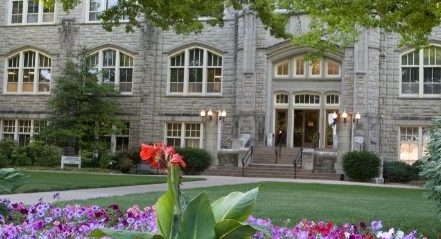
Located in Warrensburg, Missouri, the University of Central Missouri provides students educational experiences designed to transform them into lifelong learners, dedicated to service, with the knowledge, skills and confidence to succeed and lead in the region, state, nation and world. UCM is regionally accredited by the North Central Association of Colleges and Schools and currently enrolls over 12,000 students in over 150 programs of study leading to certificates, bachelor’s degrees, masters degrees, educational specialist, or cooperative doctorates.

UCM’s online offerings focus on student success through innovative academic programs. Online instructors are the same professors teaching on campus, so they bring the same high-quality instruction to students engaged in online learning as they bring to the students in their classrooms. A wide variety of Graduate degree programs are available in disciplines from aviation safety and criminal justice to nursing, teaching, and many more.

Tuition: $324 per credit hour.

#15. Chadron State College

Located in Chadron, Nebraska, Chadron State College is a public institution with its roots in teacher education. Founded in 1911, CSC offers programs and courses in 52 majors and endorsements and eight master’s degree programs. Among its most popular programs are business administration, education, psychology, biology-health sciences, rangeland management, and justice studies. Today CSC enrolls about 3,000 students and is regionally accredited by the North Central Association of Colleges and Schools.

Chadron State College offers a number of courses in an 8-week format to accelerate the completion of online program offerings. Online courses are delivered asynchronously so students do not have to be online at the same time as the instructor or other students. Online classes at Chadron State allow students the opportunity to learn according to their own schedules. Online graduate degree programs are available in Business, Counseling, Education, Mathematics, Organizational Management, and Psychology.

Tuition: $325 per credit hour.

#16. Southeast Missouri State University

In 1873 businessmen and local politicians from the town of Cape Girardeau, Missouri successfully petitioned to have a normal school (a school to train teachers) chartered in their town. Opened as Southeast Missouri State Normal School, classes were held at a nearby school until 1875, when the first building on campus had completed construction. Located close to the banks of the Mississippi River, the school would grow in size and academic scope and go through four name changes before becoming Southeast Missouri State University (SEMO or simply “Southeast”) in 1973, a hundred years after its founding. With a 328-acre main campus, online programs, and several extension campuses, Southeast currently enrolls almost 12,000 students in more than 200 academic degree programs in nine colleges and schools. Southeast is regionally accredited by the Higher Learning Commission (formerly the North Central Association of Schools and Colleges).

Southeast Online offers nontraditional students the opportunity to advance their career through further education without the need to live on campus or interrupt their lives. Over 30 highly ranked degree and certificate programs are offered entirely online and taught by the same faculty who provide instruction to traditional students in the classroom. Graduate degrees and certificates are offered in subjects ranging from business administration and management, education, and more. A variety of graduate levels professional certificates are also available for completion online.

Tuition: $325 per credit hour.

#17. William Woods University

William Woods University is a learning community of more than 3,500 students and faculty, including some 1,100 traditional undergraduates representing more than 35 US states and 24 countries on its 225-acre campus in Fulton, Missouri. William Woods University believes in a service-learning model, where students learn best through hands-on experience, and through the giving of their hearts, minds and talents. The University draws on a 146-year history of service and leadership in education which has given it values that endure and make the William Woods educational experience unique. Students are challenged to discover, lead, and achieve, often beyond what they ever dreamed possible. WWU is regionally accredited by the North Central Association of Colleges and Schools.

William Woods Online is ranked among the nation’s top online learning programs. Combining more than 140 years of academic excellence with a student-centered, service-oriented educational environment, and convenient, 8-week courses WWU offers flexibility and affordable tuition. Online courses at WWU are available are designed to promote collaboration and networking to provide the same educational experiences offered in on-campus programs. WWU offers a variety of specialized master’s programs online including an MBA in Entrepreneurial Leadership, an Med in Equestrian Education, Teaching and Technology, Athletics Administration, Curriculum and Instruction, and a Master o f Healthcare Administration.

Tuition: $325 per credit hour.

#18. Western Governors University

This private, entirely online, not-for-profit university located in Salt Lake City, Utah was the brainchild of nineteen United States governors during a 1995 meeting of the Western Governors Association.  Western Governors University (WGU) was formally proposed in 1996 and established in 1997, and there are four colleges that make up the university: the College of Business, the College of Information Technology, the Teachers College, and the College of Health Professions. The school uses a competency-based learning model, which means that each individual student has an educational journey very unique to their learning needs and competency in a given subject. Over 78,000 students are currently enrolled in WGU’s academic programs, and regional accreditation is provided by the Northwest Commission on Colleges and Universities.

Western Governors University is a nonprofit online university offering a convenient, flexible education online. WGU offers accredited online bachelor’s and master’s degrees specifically designed for working adults. Students will discover that WGU gives an outstanding quality education under the guidance of dedicated mentors. WGU offers graduate level degrees and certificates in education, business, information technology, health sciences, and more. WGU offers a multitude of student services for online students including full-text, online access to thousands of subscription-based scholarly journals, industry periodicals, magazines, and newspapers, as well as an extensive collection of ebooks.

Tuition: $333 per credit hour.

#19. University of South Florida

The University of South Florida (USF) is a major metropolitan, public research university based out of Tampa Bay, Florida. The University of South Florida System is comprised of three separately accredited institutions: USF; USF St. Petersburg; and USF Sarasota-Manatee. Established in 1956, USF is home to 14 colleges, including the Colleges of Arts; Arts and Sciences; Behavioral and Community Sciences; Business; Education; Engineering; Global Sustainability; Graduate Studies; Honors College; Marine Science; Nursing; Pharmacy; Public Health; and the Morsani College of Medicine. More than 36,000 undergraduate students are enrolled as well as over 10,000 graduate students with a 23 to 1 student faculty ratio. USF is regionally accredited by the Southern Association of Colleges and Schools and offers 180 undergraduate majors and concentrations and numerous graduate, specialist and doctoral programs. With a vision be a “global research university dedicated to student success and positioned for membership in the Association of American Universities (AAU)”, the University’s mission is to “deliver competitive undergraduate, graduate, and professional programs, to generate knowledge, foster intellectual development, and ensure student success in a global environment.”

USF Innovative Education (the university’s online division) offers students an opportunity to complete a bachelor’s or master’s degree – or just a single course – in a convenient online format. Online programs are designed to meet students’ educational needs while empowering them to juggle the demands of busy lifestyles. Innovative Education offers more than two dozen online graduate degrees, including electrical engineering, public administration, global sustainability, instructional technology and more.

Tuition: $348 per credit hour.

#20. University of Missouri

The town of Columbia, Missouri benefited from the first public university to be chartered west of the Mississippi River when the Missouri Legislature passed a bill to establish a university in 1839. The Boone County locals advocated for their town to be the location of the school with a bid of $117,921 in donated funds and the promise of acreage. Two students were the first graduating class in 1843. Named the University of Missouri (affectionately nicknamed “Mizzou”), the institution became a land-grant university in 1870 and started to grow exponentially. Now the University of Missouri System’s flagship school, Mizzou has eighteen colleges and schools with over 33,000 enrolled students and more than 300 academic degree programs of study. This comprehensive public coeducational university is regionally accredited by the Higher Learning Commission.

Mizzou Online offers students the opportunity to learn from anywhere with over 100 degree and certificate options and more than 1000 different fully online courses designed to deliver the same quality educational experience as the University of Missouri’s on-campus programs. Online graduate level degrees and certificates are available in disciplines including agriculture, food, and natural resources; economics; business; education; engineering; health sciences; environmental sciences; data analytics; journalism; public affairs; and more.

Tuition: $360 per credit hour.

#21. University of Illinois—Springfield

Sangamon State University in Springfield, Illinois was signed into creation by a legislative bill in 1969. Construction began, and a year later the first classes were held for 811 enrolled students–all upper-class or graduate students. Twenty-five years after the first class was held, SSU held its last commencement as higher education in Illinois was reorganized. SSU became one of three of the University of Illinois campuses and was renamed University of Illinois at Springfield (UIS). Remaining an upper-class school until 2001, UIS started admitting freshman first as “Capital Scholars” and finally as regular students after a general education curriculum was recognized and instituted by the University of Illinois Board of Trustees in 2005. Sitting on a 740-acre campus, this public liberal arts university has just under 5,000 students and is regionally accredited by the Higher Learning Commission of the North Central Association of Colleges and Schools.

Online learning at Illinois Springfield offers flexibility and convenience with the same high quality as its on-campus coursework. UIS has consistently been ranked among the top universities for its online graduate and undergraduate programs. Graduate degrees are offered online in disciplines including: computer science, data analytics, education, environmental health, planning/management, human services administration, liberal and integrative studies, legal studies, public health, and more. UIS also offers a variety of online teacher certification programs as well as professional graduate level certificates.

Tuition: $362 per credit hour.

#22. University of New Mexico

The University of New Mexico (UNM) is a public research university and the state of New Mexico’s flagship institution. Established in 1889, UNM is located on an approximately 800 acre campus near Route 66 in the heart of Albuquerque, a thriving metropolitan area of more than 500,000 people. The only Hispanic-Serving Institution to be classified as a Carnegie Research University with “Very High Activity”, UNM represents a “cross-section of culture and backgrounds”. UNM purposes to “engage students, faculty, and staff in its comprehensive educational research, and service programs” and has a mission to “provide students the values, habits of mind, knowledge, and skills that they need to be enlightened citizens, to contribute to the state and national economies, and to lead satisfying lives.” The University boasts many outstanding faculty members, including a Nobel Laureate, two MacArthur Fellows, 35 Fulbright scholars and several members of national academies. UNM is accredited by the Higher Learning Commission.

UNM Online offers online degree completion programs that provide students with flexibility to advance in their career paths. Online courses at UNM are delivered through the university’s learning management system, UNM Learn. Online courses are for-credit, academic courses, taught by UNM faculty. They follow traditional start and end dates each semester. Online graduate degree and certificate programs are available in such disciplines as dental hygiene; elementary education; secondary education; educational leadership; construction management; and organization, information and learning sciences.

Tuition: $363 per credit hour.

#23. University of Alabama

The University of Alabama, located in Tuscaloosa, Alabama, serves as Alabama’s flagship university and was the state’s first public college. Founded in 1831, the University of Alabama (UA) strives to offer excellence in teaching, service, and resource, and has earned the nickname of “The Capstone of Higher Education”. With a vision to be known as the “university of choice” among Alabama’s brightest and best scholars and for all students seeking “exceptional educational opportunities”, UA’s formal mission is to “advance the intellectual and social condition of the people of the state, the nation and the world through the creation, translation and dissemination of knowledge with an emphasis on quality programs in the areas of teaching, research and service.” Incoming freshman make a pledge during convocation, promising that “As a member of The University of Alabama community, I will pursue knowledge, act with fairness, integrity and respect; promote equity and inclusion; foster individual and civic responsibility; and strive for excellence in all I do.” Offering nearly 200 degree programs, UA is regionally accredited by the Southern Association of Colleges and Schools.

The University of Alabama’s online division “Bama by Distance” offers students the opportunity to complete their education and start on their career path or chart a new path by completing courses on their schedule from any location. Students can earn graduate level degrees and certificates in disciplines including business administration, communication and information sciences, education, engineering, human environmental sciences, law, nursing, social work, and more.

Tuition: $375 per credit hour.

#24. Kennesaw State University

A leader in innovative teaching and learning, Kennesaw State University offers more than 150 undergraduate, graduate and doctoral degrees to its more than 35,000 students. With 13 colleges on two metro Atlanta campuses, Kennesaw State is a member of the University System of Georgia and the third-largest university in the state. The university’s vibrant campus culture, diverse population, strong global ties and entrepreneurial spirit, draw students from throughout the region and from 92 countries across the globe. The university’s alumni network is 100,000 strong. A Carnegie-designated doctoral institution, it is one of the 50 largest public institutions in the country. Kennesaw State is regionally accredited by the Southern Association of Colleges and Schools.

Kennesaw State University offers online learning options including fully online degree programs, certificate programs, hybrid online programs and a large selection of courses in online and mixed-model versions. Designed and taught by KSU faculty, distance learning at KSU offers high quality degree options with distance learning convenience and flexibility. The variety of online student resources found on the easily-to- navigate website include a virtual library, tutoring, advising, and tech support. Graduate level degree and certificate programs are available in business, computing and software engineering, education, engineering and engineering technology, nursing, social sciences, peacebuilding, autism spectrum disorder, information security, and more.

Tuition: $390 per credit hour.

#25. Indiana Univeresity

Located in Bloomington, Indiana, Indiana University is a public research institution and serves as the flagship campus within the Indiana University system. Accredited by The Higher Learning Commission and a member of the North Central Association, Indiana University is known for its creativity, innovation and academic freedom; the University’s mission is “to create, disseminate, preserve, and apply knowledge.” This mission is accomplished in many ways thanks to Indiana University’s commitment to providing students with “cutting-edge research, scholarship, arts, and creative activity”. The University boasts several culturally diverse and international educational programs and is committed to furthering economic development within the state and local region. More than 550 academic programs are offered, including over 100 online programs which are available to students all across the nation and globe. The University boasts 200 research centers and institutes and is also home to a world-class business and music school, the world’s first school of philanthropy as well as the nation’s first school of informatics.

#26. Indiana State University

Founded by the Indiana General Assembly as the Indiana State Normal School in Terre Haute, Indiana in 1865, a century later the school would become Indiana State University. Twenty-three students and three faculty members began class in 1870, five years after the school’s establishment. The school would grow and change names multiple times to reflect the expansion of both the academic programs and student enrollment–becoming Indiana State Teachers College in 1929, Indiana State College in 1961, and finally becoming Indiana State University (ISU or Indiana State) in 1965. Dedicated “to teaching and the creation of knowledge while maintaining its longstanding commitment to inclusiveness, community and public service, and access to higher education,” Indiana State is committed to an inclusive and diverse campus and multicultural expression and safety. The 435-acre campus houses seven colleges, which provide over 150 academic degree programs for the more than 13,500 enrolled students. ISU has been regionally accredited by the Higher Learning Commission since 1915.

Offering more than 100 online degrees and academic certificate programs and hundreds of online classes from all of Indiana University’s campuses IU Online provides students the opportunity to earn an entire degree online or supplement on-campus college experience with online coursework. A wide variety of graduate degree and certificate programs are available in disciplines ranging from adult education, and health informatics, to library science, and recreational therapy and more.

Tuition: $404 per credit hour.

#27. Georgia Southern University

Georgia Southern University is a public Carnegie Doctoral/Research university located in Statesboro, Georgia. The largest and most comprehensive center of higher education in Georgia, South of Atlanta, Georgia Southern University (abbreviated GSU) offers approximately 120 degree programs, including bachelor’s, master’s, and doctorate, many of which are available in a classical campus setting or an online format. More than 20,000 students make up GSU’s total enrollment, with representatives from all 50 states, D.C., Puerto Rico, and 88 foreign countries. Established in 1906, GSU’s hallmark is their “culture of engagement that bridges theory with practice, extends the learning environment beyond the classroom, and promotes student growth and success.” The University is nationally accredited by the Commission on Colleges/Southern Association of Colleges and Schools and purposes to be “devoted to academic distinction in teaching, scholarship and service”. GSU’s mission is to be “committed to advancing the State of Georgia and the region through the benefits of higher education”. The mission statement continues, “The University fosters access to its educational programs, provides a comprehensive and fulfilling university experience, and enhances quality of life in the region through collaborative relationships supporting education, health care and human services, cultural experiences, scientific and technological advancement, athletics, and regional development.”

At Georgia Southern University, students can enroll in flexible online programs in business, education and healthcare as well as blended options that enable students to combine online and classroom work. Graduate degree programs and professional certificates are available in business administration, education, health and human sciences, engineering and information technology, and public nonprofit management.

Tuition: $410 per credit hour.

#28. University of North Alabama

Located in Florence, Alabama, the University of North Alabama (UNA) is a comprehensive, regional, state-assisted institution of higher education. Founded in 1830, UNA is the oldest four-year public institution in the state of Alabama. The University was reestablished in 1872 as the LaGrange College, the first state-supported teacher college south of the Ohio River and one year later became one of the nation’s first coeducational colleges. In 1974 the college gained university status and adopted its current name. Accredited by the Southern Association of Colleges and Schools, UNA offers a wide range of undergraduate and graduate programs through its several colleges. These include the College of Arts & Sciences; the College of Business; the College of Education & Human Sciences; and the Anderson College of Nursing. UNA’s  mission is to engage in “teaching, research, and service in order to provide educational opportunities for students, an environment for discovery and creative accomplishment, and a variety of outreach activities meeting the professional, civic, social, cultural, and economic development needs of our region in the context of a global community.” The University has a total enrollment figure of over 7,000 and boasts one of the highest international enrollment rates of any institution in its category.

Online Education at UNA has many online undergraduate and graduate programs as well as individual online courses. UNA’s online programs follow the “Quality Matters” rubric for quality assurance in online education which utilizes a peer-based approach to continuous improvement in student learning within the online and blended environments. Graduate level programs offered online at UNA include programs in criminal justice, education, family studies, history, business administration, nursing, and professional studies.

Tuition: $425 per credit hour.

#29. Idaho State University

When Senate Bill 53 was signed into law by the Governor of Idaho in the early spring of 1901, it paved the way for the Academy of Idaho to be established in Pocatello, Idaho later that spring. Due to the determination of the town’s mayor and the donation of private lands for the campus, a specific location was chosen (called the “Battle of the Blocks”). Classes started the following year, and within the next fifteen years enrollment would increase to 300 students and the name of the school would be changed to Idaho Technical Institute. The name would change three more times before becoming Idaho State University (ISU) in 1963, and now this coeducational public doctoral-research (as designated by the Carnegie Foundation) university offers 250 academic degree programs to the over 12,500 enrolled students online and at the main campus in Pocatello, and at the sister campuses in Meridian, Idaho Falls and Twin Falls. The Northwest Commission on Colleges and Universities regionally accredits ISU.

Idaho State University’s online division eISU provides online educational opportunities for degree seeking students offered by various colleges across the university including the colleges and divisions of Arts and Letters, Business, Education, Science and Engineering, and Health Sciences. eISU provides students with distance education courses taught online using various educational technologies. A wide array of courses are offered each semester allowing students greater flexibility in completing course work while better managing the competing demands on their time. Graduate level programs are offered in Business Administration, Instructional Technology, Dental Hygiene, Public Health, Nursing, Speech Language Pathology, and more.

Tuition: $426 per credit hour.

#30. University of West Alabama

The University of West Alabama (UWA) is a state-supported, coeducational institution of higher learning governed by a Board of Trustees appointed by the Governor. As a regional institution, the University’s foremost commitment is to meeting the educational needs of the State and particularly of the West Alabama area. Valuing a diverse student enrollment, though, it also welcomes students from throughout the United States and from other countries. At the University of West Alabama, the emphasis is upon the traditional learner, but the institution is also committed to furthering the concept of lifelong learning and to serving the non-traditional student. It considers among its clientele are high schools, businesses and industries, governmental agencies, and professional workers. In serving these diverse publics, the institution employs not only traditional means of delivery, but it also seeks to expand its use of innovative technologies, including distance learning, and to networking with other educational institutions and agencies in order to more comprehensively address the needs of its region. UWA is regionally accredited by the Southern Association of Colleges and Schools.

UWA Online makes degree programs accessible so that working adults and other nontraditional students can advance in their career through a personalized education designed to help the student achieve their goals at an affordable cost. A wide variety of degrees and certificates are available online at the graduate level including programs in teaching, early childhood education, high school education, instructional leadership, physical education, school counseling, adult education, conservation biology, and more.

#31. University of South Dakota

Prior to South Dakota’s confirmed statehood, the creation of University of South Dakota (USD) was initiated. The Dakota Territorial Legislature moved in 1862 to have the town of Vermillion be the recipient of a university. Without allocated funding however, it took the school twenty years to be able to raise enough money (through the support of Vermillion locals) to offer classes. On that last day of class that first year in 1882, 69 students were enrolled. Seven years later South Dakota was granted official statehood, and by that time USD had 500 students. A public coeducational research university with approximately 10,000 students and a beautiful 274-acre campus, USD is both the flagship university in South Dakota and an active participant in the sustainability movement in the state, aiming to help make “Vermillion the greenest town in South Dakota.” The Higher Learning Commission provides regional accreditation to USD.

USD Online and Off-Campus Education offers accredited, high-quality academic programs and courses with the flexibility, convenience, and affordability required by working adults and other nontraditional students. All programs feature courses taught by the same faculty that teach on campus, allowing USD to maintain a challenging and rigorous curriculum focused on preparing students to move forward in their career paths. USD offers online programs in business administration, public health, addiction studies, physical therapy, social work, education, kinesiology and sport management, music, and more.

Tuition: $444 per credit hour.

#32. East Tennessee State University

The East Tennessee State Normal School opened its doors in 1911 in Johnson City to twenty-nine high school and normal school students. The students in the normal school were entering a two-year program to become teachers. The normal school would become a four-year program and change its name to East Tennessee State Teachers College in 1925. Five years later the name would change again to State Teachers College, Johnson City and student enrollment would surpass 1,400 students. Two more name changes would occur–East Tennessee State College in 1943 and East Tennessee State University (ETSU) 1963. Now eleven schools and colleges serve over 14,500 enrolled students at this public university with multiple branch and extension campuses throughout the state. Part of the Tennessee Board of Regents university system (although governed by an institutional Board of Trustees), ETSU is regionally accredited by the Southern Association of Colleges and Schools Commission on Colleges.

With courses and programs led by courses taught by the same award-winning faculty teaching in the campus classrooms, ETSU Online provides students with the quality education they want with the flexibility they need. Whether looking for an entire online program or for a single online course to supplement on-campus course schedule, ETSU provides support for online students at every step of their academic paths. Graduate certificate and degree programs are offered in a wide range of disciplines including allied health, archival studies, community leadership, digital marketing, early childhood education, educational leadership, global sport leadership, human services, nursing, professional studies, public health and more.

Tuition: $444 per credit hour.

#33. Emporia State University

The Kansas State Normal School, a teacher’s college and Emporia State University’s predecessor, was first conceived of when Kansas became a state in 1861. Three towns were possible locations, but Emporia was chosen by the Kansas Legislature in 1863. Two years later classes began—eighteen students were taught by the school’s only professor (who also happened to be Kansas State Normal’s president). The first building to be constructed on campus was not actually finished until four years after the school’s establishment and after the first graduation was held. Two other normal schools in the state closed, which allowed for more state funding going towards the teacher’s school in Emporia. The name of the school changed several times as the curriculum grew—it settled on Emporia State University (Emporia State or ESU) in 1977. Almost 6,000 students are now enrolled in over 80 academic degree programs at Emporia State’s four schools and colleges. The Higher Learning Commission provides ESU with regional accreditation.

Emporia State University’s online and distance education is an important part of the university’s program offerings and has consistently been ranked among the best and most affordable online colleges available. Online students at ESU are afforded a multitude of student services including graduate advisors, library services, tutoring, disability services and more so that the experience of studying online is just as supported as those earning their degree in the on-campus setting. ESU offers more than 31 different graduate degree programs with 33 concentrations in disciplines including accountancy, art therapy, biology, business administration, clinical counseling, curriculum and instruction, English, informatics, library information management, mathematics, music, physical sciences, school counseling, school psychology, and many more.

Tuition: $457 per credit hour.

#34. Mississippi State University

The Agricultural and Mechanical College of the State of Mississippi, established as a land-grant university in Starkville in 1878, started educating its first students in 1880. The Mississippi Legislature changed the name first in 1932 to Mississippi State College and then again in 1958 to Mississippi State University. Having the history of being a land-grant institution, Mississippi State is faithful to the ideals of “learning, research, and service.” The main University campus in Starkville now encompasses 4,200 acres, and additional research areas on the Plant Science Farm and the Animal Sciences Farm total more than 2,000 more acres, plus three satellite campuses in three other Mississippi cities: Meridian, Biloxi and Vicksburg. Twelve schools and colleges serves over 20,000 students, and the school offers over 175 academic degree programs. The Southern Association of Colleges and Schools Commission on Colleges grants Mississippi State University with its regional accreditation.

MSU’s Center for Distance Education offers a convenient alternative to the traditional classroom administered through Blackboard learning technology. Online students are offered support through a variety of distance student services. Students can earn a graduate degree or certificate in areas including teaching, business administration, engineering, food science and nutrition, general biology, geosciences, information systems, workforce education leadership, and more. Degrees can be earned at both the master’s and doctoral levels and a handful of graduate professional certificates are available online.

Tuition: $458 per credit hour.

#35. Northern Arizona University

Northern Arizona University (NAU) is a public, student-centered university located in Flagstaff, Arizona. Established in 1899, the University defines its character as “personal” and “independent”. Built upon the core values of Excellence in Education, Student Success, Educational Access, Diversity, Integrity, and Civility, NAU takes pride in its top-tier programs, cutting-edge research, and world-renowned faculty. The University has a total enrollment of 30,000 students and offers more than 150 degree programs. NAU’s mission is to “enrich lives and create opportunities in Arizona and beyond” through its “academic programs, research, public service, and creative endeavors”. The University’s mission statement continues, “We develop solutions to challenges and drive innovation in a supportive, inclusive, and diverse environment.” NAU’s vision is to offer “rigorous programs and pioneering research with substantial community impact” and to “provide the foundation for transformational student opportunities that prepare graduates to excel in creating a sustainable future, nationally and globally.”

NAU’s Extended Campus makes available a variety of accredited, entirely online degree programs designed with flexibility for working adults in mind. NAU also offers degree programs in a blended format, which means students complete some courses online and some in person at one of more than 30 campuses across Arizona. Online students take courses through the Blackboard Learn platform where they connect with professors and peers, participate in discussions and view lecture presentations. Classes are typically asynchronous, meaning students log in and complete coursework whenever is most convenient to them. Graduate degrees are offered in English, rhetoric, business administration, computing and technology, education and counseling, health sciences, mathematics, criminal justice, and more.

Tuition: $458 per credit hour.

#36. Southern Illinois University—Carbondale

Founded as the state’s second teachers school in 1869 with an impressive first class of 143 students and twelve academic departments, Southern Illinois University Carbondale now has a total enrollment of over 17,000 students and offers more than 300 academic degree programs. Considered the flagship campus of the Southern Illinois University system, SIU has proudly demonstrated inclusivity and a commitment to diversity since its inception. Claiming to be “where brains and heart intersect,” service and outreach to the Illinois community is held in regard as highly as the many academic programs the University offers.  Southern Illinois University Carbondale receives its regional accreditation by The Higher Learning Commission.

Southern Illinois University’s Extended Campus offers a number of online courses and degree/certificate programs that provide students a convenient pathway towards furthering their education and advancing their careers. 10 different graduate degree programs are offered online as well as a number of online certificate and non-degree programs. Programs are offered in disciplines including architecture, behavior analysis and therapy, business administration, health administration, health informatics, quality engineering and management, medical dosimetry, public safety, radiologic sciences, and rehabilitation administration and services.

Tuition: $460 per credit hour.

#37. Wilmington University

Wilmington University is a private, nonsectarian research institution based out of New Castle, Delaware, not far from the city’s historic district and Wilmington. Wilmington University grew out of a charter class which first met in 1968 with only 194 students; today the University has an average annual enrollment if 18,000 and offers a wide range of programs including bachelor’s and master’s degrees. Comprised of several academic colleges, these encompass the areas of Arts & Sciences, Business, Education, Health Professions, Social and Behavioral Sciences, Technology, and Online and Experiential Learning. Wilmington University is all about providing high quality education in formats and schedules that are convenient and flexible for students. Most students are either commuters or enrolled online as the University offers programs in several locations across Delaware, New Jersey and Maryland as well as online. Accredited by the Middle States Commission on Higher Education, Wilmington University’s vision is to “distinguish itself as an open-access educational institution by building exemplary and innovative academic programs and student-centered services while anticipating the career and personal needs of those it serves.”

Wilmington University online degree programs combine the same quality, real-world academics of traditional degree programs with a flexible online format. Students have access to accredited and relevant online programs designed to prepare them for leadership roles and career advancement. A vast array of graduate degree and certificate programs are available online in disciplines including accounting, human services, justice, family science, technology in education, business administration, career and technical education, cybersecurity, nursing practice, esol literacy, gerontology, homeland security, information systems, management, school leadership, special education, and more.

Tuition: $466 per credit hour.

#38. Western Kentucky University

Two normal schools were the outcome of a decision by the Kentucky General Assembly in 1906. Bowling Green would be the home of one—the Western Kentucky State Normal School. (The school’s earliest vision goes back to 1876 and the Glasgow Normal School and Business College of Glasgow, Kentucky. That institution moved to Bowling Green almost a decade later and transitioned to become Southern Normal School and Business College. The Southern Normal School was sold by Henry Harden Cherry, who became the founding president of the new normal school in 1906.) Classes began the following year in 1907, and the school would continue to grow and expand, merge with other schools, change names, and move to a permanent location. The year 1966 saw the school officially become Western Kentucky University (WKU), and now this public, coeducational university has over 21,000 students enrolled in the programs at the main campus, satellite campus, regional campuses or online. WKU has regional accreditation through the Southern Association of Colleges and Schools Commission.

With more than 1,700 web classes offered each year, on demand options that allow students to start any day, and over 100 online degree and certificate programs, WKU Online‘s commitment to providing online degree options go beyond offering web classes. Students are also provided the tools needed to be successful. Nationally recognized support services for online learners include tutoring, career services, student success coaching and a team dedicated to fostering student success. Graduate degree programs are offered in disciplines including criminology, history, mathematics, organizational leadership, adult education, business administration, health administration, public health, social work, biology, child and family studies, nursing, and much more.

Tuition: $490 per credit hour.

#39. Colorado State University

Colorado State University-Global Campus is the online campus of the state-related public Colorado University System. Based out of Greenwood Village, Colorado, CSU-Global’s vision is to be “the premier provider of innovative, higher learning opportunities for nontraditional students in Colorado and beyond.”  A member of the three-university Colorado State University System, along with the flagship CSU campus in Fort Collins and the CSU-Pueblo campus, each campus within the Colorado State University System has its own distinct mission and is operated independently, though governed by the same System Board of Governors. Between the three campuses, the Colorado State University system serves nearly 40,000 students annually, including 7,000 graduates, and has over 200,000 alumni worldwide. CSU-Global holds the distinction of being the first independent, fully-accredited, 100% online state university in the nation; its core values include being Mission Focused, having Innovative Thinking, Accountability, Collaboration, Learning and Growth, and Professionalism. Its mission statement declares its commitment to “advancing student success in a global society, investing in human capital, expanding the state economy, and enhancing the quality of life for citizens in the state of Colorado and beyond by providing access to dynamic degree programs characterized by academic excellence, innovative delivery technologies, and strong stakeholder engagement.”

As fully online campus of CSU, CSU—Global‘s courses are 100% online and designed for working adults. CSU—Global offers accelerated 8-week courses and monthly starts. Graduate students at CSU—Global are offered the opportunity to customize their master’s degree with a specialization dedicated to a specific area of study, designed to best serve them in pursuit of their career goals. Master’s degrees can be earned in criminal justice, finance, healthcare administration, human resource management, information technology management, international management, organizational leadership, project management, teaching and learning, and more.

Tuition: $500 per credit hour.

#40. Ball State University

The philanthropic Ball brothers (Lucius, William, Edmund, Frank and George), manufacturing businessmen in Indiana, purchased the failed Eastern Indiana Normal School (a private teacher-training university located in Muncie, Indiana) in 1917 and donated the campus and facilities to the State of Indiana. One year later the Indiana State Normal School Eastern Division opened with 235 students. The state renamed the school in honor of the Ball brothers just four years later to Ball Teachers College, and five years after that to Ball State Teachers College. The school’s enrollment and campus facilities continued to grow, as did the curricular offerings, and by 1965 Ball State University (BSU or “Ball State”) became the final name. This public coeducational research university now has 22,000 students, eight colleges and two satellite facilities in Indiana. The Higher Learning Commission regionally accredits Ball State.

With over 70 online degrees, certificates, and educator licenses taught by the same faculty who teach on campus, Ball State’s online programs regularly rank among the best in the nation. Online learning at Ball State fits the student’s schedule because most classes do not meet at fixed times. Graduate degrees are offered at the doctoral and master’s levels with a number of online graduate certificates and educator licenses also offered. These include programs in disciplines such as adult and community education, behavior analysis, business administration, career and technical education, coaching education, educational administration and supervision, educational psychology, emerging media design and development, interior design, journalism, mathematics education, nursing, public relations, urban design, and more.

Tuition: $503 per credit hour.

#41. Florida International University

In 1965 Senate Bill 711 was presented as an impetus to develop a state university in Miami, Florida.  By 1969 Chuck Perry, who would be Florida International University’s (FIU) founding president, brought together three other visionaries–Butler Waugh, Donald McDowell and Nick Sileo–to begin planning the school. Abandoned airfield Tamiami Airport’s air traffic control tower (with no phone lines or potable water) would be the headquarters of development, and it remains on campus today ( called the Ivory Tower) as a symbol of FIU’s entrepreneurial spirit. Opening day for the 5,667 enrolled students would be historic as the largest opening enrollment in U.S. college history. An additional campus opened in 1977, and now this research-intensive public university has over 54,000 students studying in the twenty-three colleges and schools. Commission on Colleges of the Southern Association of Colleges and Schools provides FIU with its regional accreditation.

Florida International University’s online programs are designed to get students on the fast track to success, with completion of some degrees in as little as one year. Programs are a convenient, flexible and affordable approach to building a better future. At FIU Online, students are supported by renowned faculty providing feedback, and the full resources of a respected, prestigious state university to support them in the pursuit of their education. Online graduate degrees and certificates are offered in a variety of disciplines including African diaspora studies, computer engineering, construction management, business administration, criminal justice, curriculum and instruction, engineering management, forensics, health informatics, healthcare, hospitality management, international business, nursing practice, public administration, special education, and more.

Tuition: $508 per credit hour.

#42. University of Central Florida

Founded in 1963 as the Florida Technological University, the University of Central Florida (UCF) was created as a visionary response to President Kennedy’s man on the moon speech in 1962. In 1964 the Florida Board of Regents purchased 1,000 acres (which was supplemented by almost 300 more acres donated from locals) near Orlando to be the site of the school. Intentionally integrated and coeducational, the school was from its beginnings an inclusive environment for students to prepare for careers in technology and space-related fields. The first group of students numbered just under 2,000, but now with many regional campuses and online programs in addition to the 1,415-acre main campus, this space-grant, public metropolitan research university boasts the largest enrollment at a single campus in the United States with over 66,000 students. Thirteen colleges offer over 200 academic degree programs, and UCF is regionally accredited by the Southern Association of Colleges and Schools Commission on Colleges.

UCF offers more than 80 online degrees and certificates taught by the same expert faculty as our on-campus classes. Online degree programs combine an outstanding learning experience with personalized convenience and flexibility. UCF’s online courses are designed to provide the highest quality learning experience for both traditional and nontraditional students. Fully online programs include bachelor’s degrees, graduate degrees, graduate certificates, 2+2 baccalaureate completion programs, and undergraduate minors and certificates. Online graduate degrees and professional certificates can be earned in disciplines including engineering, art education, criminal justice, digital forensics, educational leadership, English, health administration, hospitality and tourism management, instructional design and technology, social work, nonprofit management, nursing, and more.

Tuition: $511 per credit hour.

#43. Arizona State University

The town of Tempe, Arizona received a school specifically to train teachers for the area in 1885. Thirty-three students were welcomed to class at the Territorial Normal School’s simple, four-room school in 1886. Twenty donated acres provided the campus location, and the normal school provided students with high school diplomas and teaching certificates. By 1925 the school no longer granted high school degrees but rather required students to have graduated from high school in order to enroll in the newly renamed Tempe State Teachers College. Becoming Arizona State Teachers College in 1929 was also short-lived, as the school continued to grow to the point that it was renamed one final time to Arizona State University (ASU). Six extension campuses across the state make this public, research university home to over 80,000 students, and the Higher Learning Commission regionally accredits ASU.

ASU Online offers nationally ranked online education options that are accessible and flexibly designed for working adults. All online courses are taught by the same faculty who teach on-campus coursework and who lead research and discovery at ASU. Online graduate students leverage the support of graduate professors and advanced coursework alongside student support services to glean a top-tier education. Graduate courses at ASU Online often give students the chance to practice skills and gain real world experience in the student’s own community. Graduate degree and certificate programs are available in a wide variety of disciplines including art and design, behavioral sciences, business, communications, criminal justice, education, engineering, health, history, humanities, language, liberal studies, sustainability, and more.

Tuition: $512 per credit hour.

#44. Concordia University—St. Paul

Concordia University, St. Paul (Concordia) began as Concordia High School in 1893. Located at a temporary site next to Saint Paul, Minnesota’s Zion Lutheran Church, it was originally a training school for male high school students who wanted to become ministers within the Lutheran Church–Missouri Synod denomination. The school quickly purchased five acres for a permanent campus and grew to include a junior college program. nearly collapsing due to the financial instability caused by the Great Depression, the school survived through student and local congregation support. The institution thrived once again after World War II, and the following decades saw big changes–females were admitted for the first time in 1950, and the school grew to a full four-year institution in 1962. Five years later the school was accredited as a liberal arts school, and the high school portion separated from the university to form Concordia Academy. Now serving over 4,000 students, Concordia is regionally accredited by the Higher Learning Commission.

Concordia University offers a wide variety of online degree programs at the associate, bachelor’s, master’s, and doctoral levels. Programs are offered entirely online with all coursework being submitted through CSP’s online system. Graduate degree programs are available online in criminal justice, curriculum and instruction, educational technology, family science, human resource management, forensic behavioral health, leadership and management, creative writing, exercise science, and more.

Tuition: $514 per credit hour.

#45. Oregon State University

Oregon State University (OSU) is an international public research university located in Corvallis, one of the safest, smartest, greenest small cities in the nation. Founded in 1868, Oregon State is the state’s Land Grant university and is one of only two universities in the U.S. to have Sea Grant, Space Grant and Sun Grant designations as well. The university offers more than 200 undergraduate degree programs along with a variety of graduate and doctoral degrees. It is also the largest university in the state, with a total enrollment exceeding 28,000. OSU is regionally accredited by the Northwest Commission on Colleges and Universities.

Oregon State’s Ecampus delivers a variety of educational opportunities for people interested in personal or professional enrichment and who prefer the flexibility of programs delivered online and off-campus. All class are developed by OSU’s renowned faculty, who are known worldwide for their research, expertise, and innovation and online students receive the same diploma and transcript as OSU’s on-campus students. Graduate degree and certificate programs are available in disciplines including business, natural resource sciences, engineering, public policy, adult education, teacher and counselor education, and more.

Tuition: $528 per credit hour.

#46. University of South Carolina

South Carolina College was founded in the city of Columbia on December 19, 1801. In 1805 the first classes were taught by two faculty members for nine students. The school flourished for more than 50 years, but the devastation of the Civil War greatly impacted the institution and forced it to close for a time. Upon reopening, the school became the University of South Carolina (USC) and progressively admitted African-American students in 1873–and was the only school in the South to do so during that time period. Unfortunately the school was closed and then reopened as an all-white institution in 1880 (it would not be until 1963 that African-Americans could again enroll). Beginning to thrive once again after World War II, the University today has fourteen schools and colleges, and offers the almost 50,000 students currently enrolled more than 350 academic degree programs from which to choose. The Southern Association of Colleges and Schools Commission on Colleges provides USC with regional accreditation.

The University of South Carolina online education offerings include bachelor’s completion programs and online graduate degree programs in education, engineering, health information technology, and public health. Student’s will also find a variety of individual online courses. Online graduate degree programs are designed to bring the same quality and rich academic experience that USC’s on-campus students enjoy. The flexible, affordable format allows students to pursue advanced studies while continuing to devote time and energy to growth in their professional and personal lives.

Tuition: $533 per credit hour.

#47. University of New England

The University of New England is Maine’s largest private university, an innovative educational community with two distinctive coastal Maine campuses, a vibrant new campus in Tangier, Morocco and a robust offering of degree and certificate programs online. UNE attracts internationally recognized scholars in the health sciences, life sciences, business, education, the social sciences and the humanities, allowing both our graduate and undergraduate students to engage in research and scholarship alongside dedicated faculty. UNE enrolls over 12,200 students and is regionally accredited by the New England Association of Schools and Colleges.

UNE Online College of Graduate and Professional Studies offers online programs that are completely asynchronous, with no campus visits require. Students are afforded the opportunity to move their career forward with UNE by pursuing further education that is flexible to accommodate the student’s busy and demanding schedule. Offering graduate programs in education, health informatics, applied nutrition, public health, and social work as well as single science prerequisites for health professions courses, UNE’s innovative distance education format provides 24/7 access to curriculum wherever the student is located in the world.

Tuition: $540 per credit hour.

#48. Pennsylvania State University

Farmers’ High School of Pennsylvania was established in 1855 as a degree granting institution. A gift of 200 acres in Centre County became the location of the school (the campus would continue to grow to over 10,000 acres), and in 1862 the school would become a land-grant institution (the federal Morrill Act of 1862 allowed states to sell federal lands in order to use the proceeds to then fund institutions of higher education. Penn State remains the only land-grant school in the state). The name was changed to Agricultural College of Pennsylvania at that time, but then changed again in 1874 to Pennsylvania State College. In 1953 the school became The Pennsylvania State University (Penn State), and there are twenty-four campuses across the state. The main campus is in University Park, Pennsylvania, and over 47,000 students study at this flagship campus. The Middle States Association of Colleges and Schools regionally accredits Penn State.

Penn State’s World Campus is a highly ranked provider of online educational offerings designed for people who aren’t able to attend classes on campus or commit to full-time enrollment. Adult learners are able to advance their education and careers through a variety of degree and professional certificate offerings. Graduate degrees are available at the master’s and doctoral levels in disciplines ranging from accounting and applied demography, to supply chain management and turf grass management, and much more. Students in all program are guided by world class Penn State graduate faculty and learn from other career-focused students from diverse backgrounds.

Tuition: $542 per credit hour.

#49. Georgia College and State University

Known as “Georgia’s designated public liberal arts university” since 1996, Georgia College was founded in 1889 as a two-year college for women thanks to Augusta journalist Julia Flisch, who lobbied on behalf of instituting a publicly-funded school to teach women skills in business and education. Located in Milledgeville, the school became coeducational in 1967, and went through several name changes through the years before settling on Georgia College and State University. 6,600 undergraduate and graduate students now seek their education within the four colleges–the College of Arts and Sciences, the J. Whitney Bunting College of Business, the John H. Lounsbury College of Education and the College of Health Sciences. The Southern Association of Colleges and Schools Commission on Colleges grants regional accreditation to Georgia College and State University. Georgia College and State University is regionally accredited by the Southern Association of Colleges and Schools.

Online programs at Georgia College are consistently recognized as some of the best in the country. Professionally focused, these advanced degrees provide students exceptional career advancement opportunities in many sectors including business, education, nonprofit and healthGraduate studies hosted online are some of the fastest-growing degree programs offered at Georgia College. Open to students nationwide, Georgia College’s online graduate degree programs can be completed from anywhere with internet access.  Online graduate degrees and certificate programs are offered in a wide variety of professional disciplines including business administration, supply chain management, public administration, teaching, educational leadership, library media, music therapy, health and human performance, nursing practice, and more. While some programs are offered entirely online with no campus visits required, others are offered through a hybrid model with some on-campus visits required.

Tuition: $544 per credit hour.

#50. Arkansas Tech University

Arkansas Tech University (ATU) is a comprehensive regional institution located in Russellville, Arkansas, United States. Founded in 1909 as the Second District Agricultural School, ATU has since grown to full university status and an enrollment of nearly 10,000 students. The university offers programs at both baccalaureate and graduate levels in a range of fields. The Arkansas Tech University–Ozark Campus, a two-year satellite campus in the town of Ozark, primarily focuses on associate and certificate education. ATU is regionally accredited by the North Central Association of Colleges and Schools.

eTech, Arkansas Tech University’s online division, is dedicated to providing a single focal point for any online training/degree programs and online resources that are made available at Arkansas Tech University. eTech provides information, training, and assistance to support students in their online education. Graduate level students can earn a variety of master’s degree and professional certificates fully online. Programs are available in disciplines including business administration, emergency management, nursing administration, health informatics, educational leadership, library media, special education, law enforcement, online teaching, and more.

Tuition: $548 per credit hour.

Why Get An Affordable Online Master’s Degree?

Whether you are a recent graduate of a bachelor’s degree program, or you have been working in your field for many years, a graduate level degree has the potential to provide graduates with a wide range of personal and professional benefits and can be just what is needed to boost individuals to the next level in their career paths. As more and more high school graduates are enrolling in bachelor’s programs each year, the bachelor’s degree is steadily being outmoded as the standard educational credential for establishing a career. According to the U.S. Bureau of Labor Statistics, 18 percent of all jobs in the U.S. will require a master’s degree by 2022. A master’s degree will benefit graduates in variety of ways including by providing specialized knowledge sought after by employers, increased access to upper-level positions in your industry, increased earning potential, improvement of valuable skillsets (research, writing, analysis, etc.), and forming a network of professional connections that will last beyond your formal studies. In today’s competitive job market, a master’s degree is one way of setting yourself apart from other potential employees to gain secure employment in a rewarding career.

However, for many individuals, especially those already working full-time or at home, earning a degree through the traditional route (taking coursework on campus) is not an option. Thankfully, many online programs have been developed to fill this need for flexible education that students can engage from anywhere at any time. These programs make it possible for working students to advance their education without disrupting their already busy career and family lives. Usually employing asynchronous learning technologies in which students log on to online learning systems at their convenience to do readings, participate in class discussion, and turn in assignments, students in these online degrees are not bound under the same time restraints of the traditional classroom. At the same time, because these programs are administered online, and regular on-campus visits are not required, students are also free to study from anywhere in the world where they can access the internet. This aspect is particularly advantageous in cases where individuals work lives dictate regular travel, or simply in cases where a quality program of study is not available in the direct vicinity in which they work.

In addition to the flexibility of online programs, on average, online programs will typically be cheaper than brick-and-mortar universities. For one reason, online programs (especially those offered by schools that specialize in online education) have fewer expenses in maintenance of property and facilities. Traditional colleges and universities, especially privately owned universities, have extremely high tuition rates. The average student enrolled at these universities can spend anywhere between $30,000 to $50,000 each year just in tuition. With an online degree program, students can expect to pay a fraction of those tuition rates which also ultimately means that these degrees will have better return on investment meaning they will provide the greatest salary increase per dollar spent on tuition in a lifetime of earnings.

Are Cheap Online Master’s Degrees Still of Good Quality?

While many American believe that that online education is equal in quality to educational programs offered in traditional university classrooms, a large number of people still doubt its quality. Rightfully so; online colleges have been criticized for putting profits over the education of students and several for-profit colleges specializing in online degree programs have even been at the center of lawsuits claiming fraud. However, online programs remain a viable route for students to pursue further education. As more and more colleges and universities, from state universities to private Ivy Leagues are developing an expanding catalogue of online course and degree program offerings, it is important to understand how online education measures up against traditional campus programs of study.

Many online degree programs are taught by the same professors and under the same standards of instruction as the on-campus programs offered through the same university. While learning in these online programs will look differently from traditional counterparts, they are theoretically imparting the same quality of education. At the same time, it is important to understand that not all online degree programs (just as no all traditional degree programs) are created equal, and it is important that prospective students do their own research before enrolling in any program. The following criteria will help evaluate whether or not an online degree is of high quality or not:

A college’s accreditation holdings are a very good indicator whether or not the school meets certain academic standards that have been widely agreed upon by the academic community as baselines of a quality academic experience. In the U.S. regional accreditation is particularly important. There are six accrediting bodies that can award regional accreditation. Accreditation at the regional level not only ensures that academic standards meet the most recent standards of quality, but also that any coursework completed at the institution will be transferable to other institutions. The six regional accrediting bodies are: the Middle State Association of Colleges and Schools, New England Association of Schools and Colleges, the North Central Association of Colleges and Schools, Northwest Association of Schools and Colleges, Souther Association of Colleges and Schools, and the Western Association of Schools and Colleges. In programs where special licensure or certification are required to enter professional practice upon graduation, specialized accreditation will often be required. In whatever professional discipline your are pursuing a career in, ensure that a degree program will meet the basic requirements to attain licensure before enrolling.

Statistics such as graduation and student default rates can also tell students something about the quality of a school. These statistics are made publicly available with the College Navigator at the National Center for Education Statistics (nces.ed.gov). Low graduation rates for instance can indicate that students are not receiving adequate support for completion of their studies. High default rates on students loans can similarly indicate that a school’s financial aid advising is inadequate or that there is poor career placement services. While other factors do play into these statistics such as socioeconomic levels of the communities in which the school is situated, the statistics can also be an indicator of quality and should be taken into account.

The existence of strong student support services are likewise essential to quality programs. Just because students are enrolled online, doesn’t meant that they do not require support throughout their academic careers. Many online degree programs will highlight their student support services on their website. These may include student advisors, online tutoring options, library services, career placement services, and more. If not listed on the program’s website, students should be able to get information over the phone. Ensure that any program you enroll in has strong student support and if it doesn’t, this is a major indicator of a general lack of quality in the program.

Are Inexpensive Online Master’s Degrees Respected By Employers?

In the past, online degree programs have been perceived negatively by many employers according to a literature review conducted at Cleveland State University. This stigma was at least in part due to the exploitative and fraudulent practices of “diploma mills,” or unaccredited, for-profit universities which came under scrutiny in the last decade. Today, however, employers do not frequently call into question the qualification of employees who earned their degrees online. As it is becoming increasingly common for public universities, and even private Ivy League schools such as Harvard to offer an expanding catalogue of online programs, employers understand that a degree earned online imparts the same knowledge and skills as degrees earned in traditional classroom settings (albeit through different modes of learning). In fact, degrees earned online through accredited universities whether public or private, will typically look exactly the same as degrees earned through on-campus programs through the same university. Diplomas from these programs of study will not indicate “Online” anywhere on the document of completion. A Master’s degree from a respectable, accredited university is Master’s degree regardless of how one earned it.

However, if in an interview process it does come to light that a degree was earned through online study, many employers are now viewing students of online programs as stronger candidates due to their flexibility and ability to juggle full-time work and/or family commitments all while pursuing their degree. In highlighting this aspect of your education for employers, you can stand out from the pack as a highly disciplined and committed candidate which are qualities that all employers seek.

In the end, what counts from the perspective of most every employer is not whether or not, your degree was earned online or in a traditional classroom setting, but whether or not the institution that awarded your degree is well respected. An online Master’s degree from an unaccredited school will very likely get your resumé tossed out regardless of how much money you invested in that education, but a Master’s degree from an institution that is accredited and recognized as a leader in the field, will very likely be recognized and respected by potential employers regardless of what mode of education you undertook to pursue that degree.

Related Rankings

50 Most Popular Masters Degrees
50 Best Online Masters Programs
50 Most Popular Online Masters

Michael Templeton
Managing Editor

Kacey Reynolds Schedler
Contributing Editor

10 Best Online Masters Programs

Are you interested in furthering your studies at accredited universities? If so, here is a list of the 10 best master degree programs that can be completed 100% online.

So grab yourself a coffee and get ready for some virtual learning for your graduate education!

Check out our ranking of the 10 Best Online Master’s Programs! Our editors first reviewed the Best Online Master’s article in November 2019. This ranking was last updated in November 2023.

See Also: 40 Fastest Online Master’s Degree Programs

10 Best Online Masters Programs

Are you ready to learn about the best online master’s degrees to help you meet your goals? Here are 10 of the best online masters programs!

#1. Capital Technology University

Capital Tech

You’ll find the best master online degrees at Capitol Technology University.

This school is just eight miles northeast of Washington, D.C.. Capitol Technology University has 12 online graduate programs. These online master’s degree programs integrate scientific theory with hands-on experience.

CTU is top ranked among other online schools for its online master’s degree plans in engineering, according to U.S. News & World Report.

Here, students have the opportunity to study for Master of Science degrees in:

  • Aviation
  • Aviation Cybersecurity
  • Construction Safety
  • Cyber Analytics
  • Cybersecurity
  • Critical Infrastructure
  • Engineering Technology
  • Unmanned and Autonomous Systems Policy
  • Risk Management

There are also some of the best masters online in business, including in:

  • Administration
  • Administration Cybersecurity
  • Business Analytics and Data Science

All online programs have between 30 and 60 credits. Most of these best masters online requirements are on the lower end of that scale. These online master’s degree programs often include research projects.

Students can also choose to pursue internships that may count toward course credits for certain online master’s degree programs. 

These programs take as little as 18 months on a full-time schedule. Students may take up to six years on a part-time schedule.

#2. MISSOURI UNIVERSITY OF SCIENCE AND TECHNOLOGY

Missouri University of Science and Technology

When it comes to online schooling in engineering and computing, there aren’t many that can top the Missouri University of Science and Technology!

Students can earn a master’s degree with ease and without having to meet any residency requirements. They can study from anywhere in the world, even in the middle of the night, if they want.

MUST has 15 reputable online masters programs. Many of these are ranked at the national level, according to U.S. News & World Report.

Some of the graduate programs MUST offers online include:

  • Engineering
  • Business Administration
  • Computer Engineering
  • Technical Communications
  • Geotechnics
  • Psychology
  • Explosives Technology
  • Computers

The faculty is flexible when it comes to coursework in these best online masters degrees. They know that most students work full-time. They are willing to arrange in advance specific times to hold live sessions or conferences with students during the semester.

Students have up to six years to complete a graduate degree once enrolled. Most students take one to two classes per semester in a master’s degree online. This gives them an average completion time of three to four years.

Transcripts and diplomas for online students are identical to those who attend classes on campus. In addition to MUST’s 17 master’s degree programs, there are more than 50 graduate certificate programs available.

A majority of MUST’s online students are adult learners over the age of 22. These are students who are looking to enhance their professional careers by taking classes at online schools. 

Applicants should also hold a bachelor’s degree from either MUST or another  institution with regional accreditation. MUST has over 8,000 students and was ranked by Newsweek as one of the country’s Best Investments among public universities.

#3. UNIVERSITY OF CALIFORNIA, BERKELEY

Berkeley

This one of the best online schools for a master’s degree is just a few miles from downtown San Francisco.

This is a well-respected state university with a lot to offer on campus. It’s also one of the best online schools to earn a master’s.

UC Berkeley ranks in the top 10 for its best master degree programs online in:

  • Business
  • Engineering
  • History
  • Law 
  • Chemistry
  • Physics
  • Clinical Psychology
  • Public Health
  • Social Work
  • Statistics
  • Public Affairs
  • Mathematics
  • Earth Sciences

In all programs, at least part, if not all, of the curriculum can be completed through the UC Berkeley Extension.

The school is home to 20 Nobel Prize winners, 30 National Medal of Science recipients, and 250 professors who are also the founders of their own companies.

It has a number of facilities on campus like:

  • multidisciplinary labs
  • research centers
  • museums
  • institutes for research and development

#4. SAN JOSE STATE UNIVERSITY

San Jose State

Another top state university at which to pursue a best online master’s degree is San Jose State University.

This state university wants to help students learn how to use the skills they’ve learned to make a positive difference with service to society.

SJSU ranks high on the list of Top Public Schools and Most Innovative Schools, according to U.S. News & World Report.

San Jose State University offers several hybrid master’s degrees that can be completed 100% online. Among them are:

  • a Master of Arts in Music Education
  • a Master of Science in Medical Product Development Management
  • a Master of Public Health
  • a Master of Science in Software Engineering
  • a Master of Social Work

Most all of the master’s degrees online can be completed in two years. They offer a fast-paced program to obtain a degree in a short amount of time.

Faculty expect students to have software that can support video and web conferencing (Zoom) as well as virtual and augmented reality education. This is part of the newest technology being used in master’s degree programs.

Professors often hold live sessions with students in addition to uploading lectures and lessons for the online programs.

#5. ARIZONA STATE UNIVERSITY, TEMPE

Arizona State

There are 493 classrooms spread across the Arizona State University’s campuses. But by studying for a Master of Business Administration online, you can take courses in the “494th classroom.” That is, you can complete one of the best online master’s in business right in your own home.

ASU’s online MBA is one of just 80 available master’s degrees, and it’s truly one of the best in the country.

ASU ranks at the top of the list for the Master of Business Administration compared to other online schools. That’s according to U.S. News & World Report.

The 24-month Master of Business Administration program includes 17 courses and 49 semester credits. Each class in a master’s degree is 7.5 weeks long.

The award-winning faculty at ASU makes a point of conveying leadership skills. A primary goal of the Master of Business Administration, as well as other online master’s at this school, is in improving students’ knowledge of advanced business strategies.

Students also learn cutting-edge techniques and methods for strategic management and operational functions.

The Master of Business Administration program includes emphases in:

  • finance
  • international business
  • marketing
  • supply chain management

Among the faculty teaching these online courses in this master’s degree are one Nobel laureate and several National Academy of Science members.

With an MBA, students can set themselves up for a career as a:

  • chief executive
  • financial manager
  • marketing manager
  • business operations manager

#6. NORTH CAROLINA STATE UNIVERSITY

NC State

Home to several of the best online master’s degrees, North Carolina State University was founded with the purpose of providing students a liberal and practical education. At the same time, these online master’s programs focus on military tactics/science, agriculture, and the mechanical arts.

To that end, NCSU is one of the best online schools to consider if you want a master’s degree that will prepare you for a rewarding career.

An online MBA from NCSU is ideal for working professionals. Students can study at their own pace and take control of their futures. In this broad university system, some online programs may even allow students to graduate in as little as one year.

NCSU’s MBA Online Program is ranked among the best online master’s in business in the nation. That’s according to The Princeton Review. The university is also ranked as one of the best online master’s in the list of Best Value Among Public Universities. That’s according to U.S. News & World Report.

The master’s degrees are taught by award-winning faculty. Students can opt to take the Accelerated Program, if they want to finish their studies in as few as 21 months. Or they can choose the Flexible Program. This delivery format is a part-time degree pathway that allows up to six years finish.

Online master’s programs in these online schools can be started in the fall or spring. Work can be completed where students are most comfortable.

For this master’s degree, there are two 3-day residencies required on campus in Raleigh. These in person classes are meant to give distance learners some hands on experience in fields like communication and networking.

But outside of those, all learning can be completed from a distance. These courses for students enrolled online are more or less self paced.

As part of the 40-credit curriculum, students complete a combination of core, elective, and practicum courses. It’s important to note these online programs charge tuition on a per credit basis.

#7. VILLANOVA UNIVERSITY

Villanova University

Like other online schools, this university offers online master’s programs with a flexible delivery format.

Villanova University is one of the oldest Catholic universities in America. And it’s one of the most respected!

The School of Business ranks as one of the best online schools for business in the nation, according to U.S. News & World Report.

It provides its online students the same rigorous and quality curriculum taught by the same expert faculty that serves its on-campus students. Yet the delivery format of the master’s degree online is self paced and flexible.

These online programs charge tuition on a per credit basis.

The six-semester program takes just two years to complete with a full-time schedule. It requires the completion of 48 semester credits. The program is rigorous and is taught by business professionals. Many of them work in the industry and teach part-time.

The MBA online graduate program includes the option for distance learners to choose a specialization in:

  • Finance
  • Marketing
  • Strategic Management
  • Analytics
  • International Business

The fall and spring semesters are 16 weeks long. The summer is just a bit shorter, at 14 weeks. MBA distance learners also have the opportunity to travel abroad for credit. According to Villanova’s website, 55% of MBA students travel globally with the program.

Typical Villanova students report a 25% increase in their salary after earning an online master’s in business. With this online graduate degree, students can also pursue leadership positions.

#8. AUBURN UNIVERSITY

Auburn University

Auburn University is one of the best online schools in the country and is located in Alabama.

The online MBA is top ranked among the Best MBA Programs in the Country. That’s according to U.S. News & World Report.

Auburn’s online master’s program in business gives students the competitive edge they need to succeed in a competitive business environment.

This accredited online master’s relies on the online system Canvas. It offers a flexible delivery format for working professionals. From the luxury of their own home, students can:

  • navigate through modules
  • submit lessons and homework
  • communicate with their professors and classmates
  • access all course materials

The accredited online master’s in business has nine core courses and four electives. The degree takes an average of two years to finish. By studying online, students can work at their own speed and take courses on either a full- or part-time basis.  

Along with an MBA, students can pursue a dual Master of Science degree in one of the following degree programs:

  • Information Systems
  • Finance
  • Industrial and Systems Engineering

Students can also choose a concentration in Finance or Information Systems for their online master’s programs. After completing the accredited online master’s , students can join one of Auburn’s 93 alumni clubs. These are spread throughout the nation and represent more than 250,000 graduates. 

#9. TEXAS A&M UNIVERSITY

Texas A&M

Texas A&M University, in College Station, TX, is the state’s oldest higher education institution. This university system is well-known for its student organizations.

Its accredited online master’s programs offer the same level of education as their on-campus counterparts. Like the in person classes, these online master’s degree programs allow working professionals to study at their own pace.

Texas A&M is top ranked by The Wall Street Journal’s list of Top Public Universities. The university also ranks high among the Best Graduate Engineering Programs. That’s according to U.S. News & World Report

The Master of Engineering Program is the school’s most popular accredited online master’s program with 10 separate emphasis areas, including:

  • Computer Engineering
  • Electrical Engineering
  • Industrial Engineering
  • Technical Management
  • Safety Engineering
  • Mechanical Engineering
  • Subsea Engineering
  • Engineering Systems Management
  • Industrial Distribution
  • Petroleum Engineering

These online learning programs provide students with all the relevant software tools they need to navigate through the coursework.

Courses in the online learning programs programs are taught by well-trained and experienced faculty. These instructors provide students with rigorous coursework to maximize their potential learning. They prepare them for the working world following graduation. Often, programs may allow students to graduate in as little as one year!

In addition to engineering, Texas A&M offers distance higher education degrees in fields like:

  • Geosciences
  • Agriculture and Life Sciences
  • Business, Education and Human Development
  • Government and Public Service
  • Nursing
  • Medicine
  • Science
  • Law

#10. GEORGIA INSTITUTE OF TECHNOLOGY

Georgia Tech

This institution of higher education is located in the heart of Atlanta. Georgia Tech has graduated notables such as:

  • former President Jimmy Carter
  • pro golfer Bobby Jones
  • entrepreneur Dean Kamen
  • astronaut William McArthur

Georgia Tech ranks in the top 10 in many categories when it comes to accolades. According to U.S. News & World Report, it is on the list of:

  • Most Innovative Schools
  • Top Public Schools
  • Most Co-Ops and Internships
  • Best Graduate Programs in Engineering
  • Best Graduate Programs in Information Systems

Almost all of its engineering concentrations rank in the top 10. The school is well-known for having one of the best, if not the best, engineering schools and faculty in the nation.

By studying at one of Georgia Tech’s online schools, students reap the benefits of its rigorous and high-quality coursework. These online master’s programs are taught by world-class faculty.

Prospective students get to learn using the latest state-of-the-art technology using media-rich and digital learning tools. These are tools that many other universities just don’t yet have.

Georgia Tech offers 10 online Master of Science degrees, all of which are 100% online with a convenient delivery format for working professionals.

They all are accredited by the Southern Association of Colleges and Schools Commission on Colleges.

The six colleges in which students can enroll and explore online degrees as graduate students include:

  • Business
  • Design
  • Computing
  • Engineering
  • Liberal Arts
  • Design

Most online students earn a degree in two years. These online master’s programs have a flexible delivery format. Tuition is charged on a per credit basis and financial aid is available. 

How to Choose the Best Online Masters Program for Your Needs

You’ve decided to pursue an online master’s degree. Congratulations! That’s the first step you need to take in order to take your career to the next level. But now you have some important questions to ask yourself to find the right school and program. Ask yourself the following as you begin searching for a school.

What Do You Want to Major In?

There are master’s programs out there for everyone. And the same is true for online master’s degrees! You just need to figure out what you are most interested. That said, here are some of the most popular online master’s programs:

  • Public Administration
  • Nursing
  • Business Administration
  • Education
  • Criminal Justice
  • Information Systems Management
  • Public Health
  • Organizational Leadership
  • Computer Science

Do You Want to Be Fully or Partially Enrolled Online?

Do you want to be enrolled full time or part time? There’s also a hybrid program, which is a delivery format in which some classes are offered on campus.

This may be better for students who need more hands-on instruction in certain areas.

That said, 100% online programs can give students more freedom and flexibility. It all depends on what your goals are for your education and how much time you want to devote to it.

What Does Tuition Cost Per Credit and How Many Credits Will You Take?

Tuition can vary from school to school. It’s important to do your research and compare prices between different schools and online programs. Pay attention to both the cost per credit hour as well as the overall tuition rate for students enrolled online. Also ask about financial aid.

Most master’s degrees have at least 30 credits. This number can go as high as 60 credits depending on the type of degree. Knowing how many credits are required for your degree will help you determine what your total per credit tuition will be.

Is the School an Accredited Online Institution?

Make sure that any school or program you consider is an accredited online masters program.This is done by a recognized accrediting body such as the Higher Learning Commission (HLC).

Accreditation means that the school meets certain standards of quality. These are standards set forth by the HLC or other accrediting bodies. Without accreditation your degree may not be accepted by employers or other educational institutions.

How Long Will It Take to Complete the Degree?

The average master’s program requires 32 to 36 credit hours. That’s according to U.S. News & World Report. Some online programs require less. There are some more rigorous online programs that require up to 60 semester hours.

Do You Want the Same Access to Student Services?

When choosing an online degree program, one of the most important aspects is whether or not it will give you access to the same student services as on-campus programs.

That could range from academic advisors and tutors to career counseling and mental health services. Before making a final decision, make sure that your potential online program offers everything you need.

What is Required to Apply for the Online Masters Program?

The first thing on your checklist is transcripts from any college or university that you attended.

You’ll also need two recommendations, in most cases. They should also be able to provide insight into why they think you would make a good candidate for their program.

Other requirements include a resume, essay, and GRE scores. Remember, though, that all admission requirements will vary from school to school. Do your research, and pay close attention to deadlines!

Did you enjoy our list of the most reputable online masters programs? Be sure to check out the following:

Michael Templeton
Managing Editor

Kacey Reynolds Schedler
Contributing Editor

Are Online Master’s Degrees Respected?

is an online masters degree respected

Many students see the appeal of pursuing an online degree program.

These programs are more convenient than their face to face counterparts. Just see our list of the 50 Fastest Online Master’s Degree Programs for proof!

But students worry if their decision will affect their employment. Online programs vary in quality and reputation. Yet the same isn’t always true for face to face colleges.

The key to success in the professional world is choosing the right school. This should be a school that will give you the valuable experience you need to do the job you want to do.

So are online masters degrees respected? Let’s take a closer look.

Are Online Masters Respected? The Future is Now!

Are Online Masters Respected?Online learning is nothing new. In 2011, about 6.7 million people took at least one online class. That’s a third of all college students!

But is an online master’s degree respected?

Many traditional residential colleges now have online courses. About a third of them offer full degree programs via the Internet. As online degrees grow more common, employers are forced to embrace them. They are realizing that distance learning can be just as effective as sitting in a classroom. See our list of the Top Paying Master’s Degree Programs to learn more!

Are online graduate degrees respected? That depends. Some employers are behind the times. They do not understand distance learning.

The good news? There is no need to point out that you completed your degree online when applying for jobs. That said, should the issue come up during an interview, you should be honest about why an online option was the best decision for you. The quality and reputation of the school is more important than whether you attended physical classes or not.

See Also: Best Online Cybersecurity Master’s Degree

Choosing a Reputable Online Master’s Degree Program

Choosing a Reputable Online Master's Degree ProgramThe most important factor in choosing an online degree is to make sure it is coming from an accredited college. Research their relationship with the Department of Education and the Council on Higher Education Accreditation.

Schools with regional accreditation are often better respected. That’s over  those with just national accreditation. Some universities do not recognize degrees and credits from colleges that are just nationally accredited. Consider that fact if you plan to pursue a doctoral degree later on.

See Also: Best Online Master’s in English

Types of Online Degrees and Programs

Earning an online master has become much more popular. Prospective students seek the flexibility and convenience that distance learning can provide.

There are a variety of online degrees and programs available. Each online learning experience caters to students with a wide range of interests and career goals.

For example, those interested in pursuing a career in human resource management may opt for a bachelor’s or master’s degree. This could be in business administration with a concentration in HR.

Those interested in a more creative field may choose to study for an online program in graphic design or web development. No matter what your goals, there is a degree online that can help you achieve them.

Employers respect online instruction just as much as traditional learning. Now is the perfect time to pursue your education from home.

How Does an Online Degree Look on a Resume?

How Does an Online Degree Look on a Resume?An online degree can look good on a resume, depending on the hiring practices. Some potential employers might not think an online degree is as credible as a degree earned from attending a brick-and-mortar institution. Many credible schools, including Indiana University, Southern New Hampshire University, Purdue University Global, and more all offer online degree programs.

However,  employers are starting to see the value in online degrees as they become more and more common.

When it comes time to apply for jobs, having an online degree can be a huge part of getting your foot in the door with a potential employer. In many cases, an online degree can give you the same level of education and training as a traditional degree, making it a strong addition to your resume.

How Credible is an Online Master’s Degree?

Are online masters degrees credible?

The online education landscape has changed dramatically over the past few years.

So are online masters programs respected?

Generally speaking, an online degree is just as credible as a traditional degree. The key is to make sure that you choose an accredited online program from an accredited institution.

Of course, there are some advantages and disadvantages to getting an online master’s degree. One thing important to note is that you can study at your own pace and in your own time. This can be a great option for adults working full time who want to go back to school but can’t commit to attending classes full-time in a traditional classroom.

On the downside, you may miss out on some of the social aspects of traditional degrees. These include interacting with professors and other students in person.

Do People Look Down on Online Master’s?

There has been a recent boom in graduate students seeking online master’s degrees.

This is largely due to the flexibility and convenience that online programs offer.

However, there is a perception among some that online master’s degrees are not as respected as their traditional counterparts.

This could not be further from the truth. In reality, hiring practices have evolved. They now keep pace with the increasing popularity of online master’s degrees.

Many employers now place equal value on online and traditional degrees. In fact, some employers even prefer candidates with online degrees. They often have more experience working remotely and are comfortable with new technologies.

What Do Employers Think About Online Degrees?

Research shows that some employers view schools that are 100% virtual as “less rigorous.” This perception doesn’t always reflect reality. Most online students complete classes at the highest level possible, even compared to college graduates at a physical campus. This misconception of online degree holders may soon change.

Are online degrees respected? Let’s look at what the data says to see the level at which online master’s degrees respected.

A recent meta-analysis of multiple studies compared learning outcomes. These were from face-to-face classes with those from online classes had interesting results. It found that online students had a better understanding of class material at the end of online courses.

The report issued by the Department of Education attributed online learners’ better performances to a few specific traits:

  • Excellent time management
  • Self-motivation
  • Superior online communication skills.

Are Online Master’s Degrees Respected?

So are online universities respected? And is an online master’s degree worth it? Most online students and most employers would say yes. Even U.S. News & World Report says that these degree programs offer the highest level of education.

Some studies suggest that online programs are more difficult. That’s because they need more discipline. Most jobs use the Internet now. Mastering telecommunication is also a valuable skill. It can increase your value on the job market.

[Check out our ranking of the best Online Graduate Programs.]

Is an online masters respected? Yes, but be careful when you start looking at online offerings compared to traditional on campus degree programs.

Be wary of “diploma mills.” These schools claim to issue master’s degrees based just on work experience. Some companies will send you a certificate that looks like a real diploma. This is often in exchange for your faxed resume and a large sum of money. Many don’t offer the highest level of education for these master’s programs earned online.

Some reputable colleges award limited course credit based on professional experience. A legitimate degree always has classwork.

So is an online degree respected? It all comes down to which program and school you choose.

If you choose a program that challenges you and prepares you to thrive in your field, employers will see that. They will not be so concerned with how you got your degree.

See our list of the 50 Most Popular Master’s Degree Programs.

Online Learning vs. Traditional Master’s Degree Statistics

According to a recent study, more and more students are choosing to earn their degrees online.

In fact, over six million students were taking at least one online course in 2017, an increase of almost three million from just five years earlier.

Many online programs offer courses at the same level as those offered at brick-and-mortar schools. These include graduate-level courses. With so many advantages, it’s no wonder that online education is on the rise.

How to Market Your Online Education to Employers

How to Market Your Online Education to EmployersThe highest level education (master’s degree) has become increasingly popular in recent years, as more and more people have realized the benefits of online learning. While many employers are still hesitant to hire candidates with an online degree, the tide is gradually turning in favor of these programs. Here are a few ways to market your online education to potential employers.

First, be sure to list your online master’s degree and programs on your resume. Many hiring managers are now familiar with the concept of online learning, and will give your application extra consideration if they see that you have pursued this type of education.

Second, highlight the skills that you have acquired through your online degree programs. A prospective employer will value the self-discipline and time-management skills that are necessary for successful online learning. Be sure to emphasize these skills in both your resume and cover letter.

Finally, take advantage of the many networking opportunities available through online education forums and social media platforms. These platforms can be a great way to connect with potential employers and learn about new job openings. By using these tools effectively, you can increase your chances of landing your dream job.

Are Online Universities Respected?

Let’s recap. Are online colleges respected? And more importantly, is an online masters degree respected by an employer?

Yes. Advanced degrees completed online have just the same value as if you were to attend class in person. Just look for one that’s verified by one of the many accrediting agencies out there and backed up by U.S. News & World Report’s highest level higher education rankings.

An online master’s degree worth is just as high as degrees earned on campus. Start the search today and earn a degree at your own convenience!

Related Rankings

50 Best Online Masters Programs
50 Best Online Graduate Programs
40 Fastest Online Masters Degree Programs

Michael Templeton
Managing Editor

Kacey Reynolds Schedler
Contributing Editor

30 Best Master’s Degree Special Education

The field of special education is as vast as a child’s personality.

There are countless different areas in which licensed teachers can make a difference. Helping children and young people at all different levels of abilities isn’t for the faint of heart. It takes caring, committed, and competent educators.

Are you a teacher who already works in the field of special education? Or perhaps you are someone who wants to help children and young people with special needs thrive?

If so, a Master of Special Education degree can help achieve that dream.

What will you learn in a master’s of special education?

Each graduate school is different. However, the curricula will go above and beyond what you covered in a bachelor’s degree.

Chances are, in your bachelor’s degree, you studied topics like classroom management and academic and social behavior of students. In a master’s degree, you’ll cover those in more depth.

You may take more specific classes that go beyond your undergraduate studies. A general curriculum might include classes that cover:

  • Working with students with moderate disabilities or severe disabilities
  • Academic and social behavior of students with severe disabilities
  • Research-based intensive interventions
  • Special education classroom management
  • Curricular design for students with unique learning needs
  • How to teach students in a specific age group
  • Communication strategies for nonverbal students
  • Creating inclusive settings
  • Behavioral management
  • Educational technology
  • Professional communication
  • Teaching strategies for students with an emotional disturbance
  • Assessment strategies for those with diverse learning needs
  • Evaluating multiple data sources to make sound educational decisions
  • Literacy skills in teaching diverse learners
  • Teaching English language learners

A student teaching experience is a core component of these programs. A student teaching experience will prepare special education graduates with the hands-on training needed to have confidence in the classroom.

You could take anywhere between 30 and 60 total credits, depending on the school. Many universities even offer a graduate certificate option so you can teach without successful completion of a full master’s.

And what do you need to apply? Admission requirements vary. However, as part of these admission requirements, most programs – including graduate certificate programs – require a bachelor’s degree in a related field. You will also need to submit official transcripts. You’ll need official transcripts from any undergraduate programs you attended. Most online programs look for a 3.0 GPA.

There are other application materials you will need besides these official transcripts. You will also need the following items:

  • Letters of recommendation (often two to three letters of recommendation are needed)
  • Successful completion of undergraduate coursework in education or related programs
  • Personal statement evidencing self determination in higher education and educational settings
  • K-12 work experience if relevant
  • GRE scores
  • Application fee

We admit – it can be tough to find the time and resources to earn a master’s degree. Even if you choose not to study on a full time basis, it take time to learn the essential skills and complete the clinical experiences necessary to graduate from a special education program. And if you’re seeking initial teacher licensure, it can take even longer.

That’s why the online Master of Special Education is in the top ten of the most popular online master’s degrees. Online special education programs often cater to students who are teaching. They provide asynchronous classes. That means there is no set class time and students can logon at their convenience. They also offer dedicated online student support services. Often, there are even mentors and advisors to guide when needed.

We all know time is precious. The amount of information and possible programs out there can be a bit overwhelming.

To make it easier, we’ve combed through many online special education programs. Our goal was to find the best of the best.

A word of caution – as is true with the best undergraduate special education programs, vigilance is key. Please make note of your state’s certification requirements. This is to make sure they fit in with any program you may want to pursue.

Many of the programs on our list participate in the State Authorization Reciprocity Agreement (SARA). This is an agreement that enables national standards to dictate comparable coursework and education outcomes between states.

But it’s always a good idea to double check your program and your state’s requirements to become a licensed teacher.

So is a degree in special education worth it? Definitely! A degree ins pecial education offers you the skills you need to gain insight into working with students with special learning needs. But you need to ask more than one specific question to find the right graduate school and special education master for your needs.

When researching the best master’s degree in special education for your needs, ask the following questions:

  • Is tuition affordable? Is it billed at a per credit rate, and is state and federal financial aid available? Are there any scholarship opportunities?
  • Will I be able to work hands on with students with diverse needs?
  • Do I need to have completed an undergraduate program in a specific area?
  • Are individual students given their own faculty advisors?
  • Is this program flexible enough for current teachers?
  • Is the school recognized by organizations like U.S. News & World Report? 
  • Will I be able to participate in faculty research or get hands-on teaching practice with a special education instructor in a real classroom?
  • What sorts of techniques will I learn to teach students?
  • Can I complete my student teaching for the online master’s degree while working at my current job?
  • What opportunities are there for hands-on learning? Will I learn research based intensive interventions and other strategies?
  • Will I be fully prepared to pursue licensure?
  • What services are available to support students online?
  • What are the admission requirements and core curriculum? What does the application process look like?
  • Will the core curriculum in these online programs prepare me for any other career paths?
  • What is the next start date for the program?

Also consider the accreditation of the online programs you are considering. Top accreditors of master’s degree in special education programs include:

  • National Council for Accreditation of Teacher Education (NCATE)
  • Teacher Education Accreditation Council (TEAC)
  • The American Association of Colleges for Teacher Education (AACTE)

Look for a regionally accredited institution whenever possible. That’s especially important for special education professionals seeking licensure.

With that housekeeping out of the way, let’s get started!

Read on for our top special education masters programs rankings!

See Also: Affordable Online Master’s in Education

Quick Links to Our Top 10

  1. Western Governors University
  2. Florida State University
  3. Western Carolina University
  4. Indiana University Bloomington
  5. Saint Joseph’s University
  6. Graceland University
  7. Ball State University
  8. University of Nebraska-Lincoln
  9. University of Arkansas
  10. Saint Mary’s University of Minnesota

Methodology: We gathered data through publicly available resources, such as:

  • US News and World Report
  • the National Council for SARA
  • the National Center for Education Statistics
  • the school’s program websites

Then we assessed schools for our ranking. We used these criteria as guide-points:

  • Affordability
  • Extent to which the program can be completed online
  • School accreditation
  • Quality of learning outcomes

30 Best Master’s Degree Special Education Programs

#30. Grand Canyon University

MEd of Special Education

Grand Canyon University

The aspiring special education teacher will find a lot to love in the special education program at Grand Canyon University. This best online master’s in special education degree program has an affordable per credit tuition cost.

This professional studies program is offered by GCU’s College of Education. The online MEd in Special Education leads to initial teacher licensure for Arizona residents. GCU Counselors can guide and advise special educators from other states on how to obtain their teaching license.

The program includes 47 total credits that will train you to work with exceptional learners. Students can transfer up to twelve credits. The program includes concepts from a variety of academic disciplines. It is flexible and accessible at any time.

Coursework includes particular attention to the following subjects:

  • U.S. and Arizona Constitutions for Teacher Candidates
  • Methods of Teaching Math to Students with Mild to Moderate Disabilities
  • Learning Environments for Students with Mild to Moderate Disabilities

There are countless grant and scholarship offerings. Aspiring special educators can be assured that their education will be affordable.

#29. University of North Dakota

Master’s in Special Education

UND

If you want to become a special education teacher, you should consider a master’s degree in special education from the University of North Dakota. The learning environment here is ideal for diverse learners. It’s the perfect program for the special educator seeking a teaching license.

Students can choose between a MEd and an MS degree in Special Education at the UND College of Education & Human Development. The program also offers no less than nine specialization options:

  • Board Certified Behavior Analyst
  • Autistic Spectrum Disorders
  • Early Childhood Special Education
  • Intellectual Disabilities

This is a strong program created for certified teachers or non-certified individuals. It helps them serve children and young adults with mild to moderate disabilities. You’ll take classes covering topics like:

  • Teaching children with moderate disabilities
  • Assessment strategies for measuring student achievement
  • Educating children in an inclusive classroom setting
  • Instructional design
  • Multiple methods for classroom management

You’ll need a minimum of 32 total credits to graduate. It takes as little as eighteen months. All classes are 100% online. They are offered in an asynchronous format with weekly assignments and projects. Students can choose to start the program at three different times through the year.

#28. Emporia State University

MS Special Education

Emporia State University

You’ll find another one of the best master’s degree in special education at Emporia State University. A key component of this program is its focus on working with diverse learners in all kinds of learning environments, from K-12.

Emporia State’s online MS with a High Incidence Concentration has a specialized curricula that allows graduates to obtain a teaching license.

It is offered at The Teachers College’s Department of Elementary Education. The degree has 36 total credits.  You can take up to seven years to complete your program. The degree allows students to work at their own pace. You’ll gain insight into the educational approaches necessary to work effectively with special education students.

Coursework focuses on theory and application. You’ll take some of the following courses to give you the skills you need for teaching students of all kinds:

  • Characteristics of Students with High Incidence Disabilities
  • Autism Spectrum Disorders: Medical Issues & Trends
  • Family/Other School Professionals Working w/Exceptionality

Three application deadlines occur before each of the three start dates a year.  Students must be accepted both as a gradate student eligible for study at Emporia State and also into the Special Education Program. Applicants can take as many as nine total credits of electives in the program before acceptance.

#27. Frostburg State University

MEd in Special Education

Frostburg State

Frostburg State University has a graduate school with one of the best special education degrees.

This online master’s allows students to choose a specialization in grades 1-8 or graders 6-12. This is a comprehensive program that examines “every element of the special education environment.”

A key component of this program is its flexibility. For students who are public school certified or eligible to be, the program ranges from 39 to 42 total credits.

Students take classes in order. These include:

  •  the Professional Education Core (example class: Developmental Theory and Experiential Growth)
  • the Special Education Core (example class: Characteristics of Exceptional Children)

Electives and a Capstone project culminate the degree. Similar programs provide special education professionals with opportunities to broaden their degrees outside of that specific subject area.

#26. Kentucky State University

MS Special Education

Kentucky State

You’ll find another one of the best special education master’s at KSU’s School of Education. The online Master of Arts in Special Education with Certification in Learning and Behavior Disorders P-12 (MASPE) program offers superior educator preparation.

If you’re a special educator seeking a unique learning environment, you’ll love the specialized curricula of this program. You’ll cover topcis like:

  • Academic and social behavior of students with severe disabilities
  • Academic and social behavior of students with moderate disabilities
  • Ideal learning environments for students
  • Instructional planning for students with mild to severe disabilities
  • Classroom management
  • Self-determination strategies for students with moderate disabilities

Students are guided and supported through the entire program. That’s through electronic educational support services or field education advisement.

All students must participate in a student teaching practicum in a school. This is a key component of professional studies in this graduate school. It will give you the hands-on experience you need for working with students with mild to moderate disabilities. You’ll learn about classroom management and intensive interventions. It’s a great way to gain the skills necessary for teacher licensure.

The curriculum is made up of 36-45 total credits dependent upon a student’s prior educational background. Some students may be required to take a prerequisite twelve total credits. These provide educator preparation in topics such as:

  • Legal and Parental Issues in Special Education
  • Teaching Mathematics to Children and Youth with Learning and Behavior Disorders.

#25. Old Dominion University

Master’s in Special Education

Old Dominion University

Old Dominion University has a leading special education master’s program. The Department of Communication Disorders & Special Education at the Darden College of Education offers an MS in Education that is an excellent option for students residing in Virginia or Washington State. These are the only locations in which the program is available, according to current information.

The program focuses on:

  • scholarly research
  • instructional planning
  • advanced instructional strategies and learning environments
  • the foundations of special education leadership

This 30 credit hour special education program offers classes like:

  • Fundamentals of Human Growth and Development: Birth through Adolescence
  • Characteristics and Medical Aspects of Disabling Conditions

The coursework is the same as the on-campus master’s degrees. ODU offers dedicated resources for the online learning experience.  Support is available for both prospective students and current online students. There are multiple academic resources and technical supports. This best online master’s in special education degree program has an affordable per credit tuition cost.

#24. University of Missouri

M.Ed. in Special Education

The College of Education’s Department of Special Education houses Mizzou Online’s MEd in Special Education. This program provides a pathway to initial teacher licensure. It has an Emphasis in Early Childhood Special Education and Autism.

This 30 credit special education program is 100% online. It takes just two years to complete. Three start dates a year are offered. All required courses are semester based. Coursework is constructed to help graduates “design, deliver and evaluate services to children from birth to age 5.”

Classes teacher candidates will take in this online master’s in special education include:

  • Research With Exceptional Children
  • Young Children With Autism
  • Advanced Behavior Management

There is significant support offered before students are even enrolled. You can take a brief quiz to assess your aptitude towards online learning. This quiz leads to an assortment of Student Success Resources.

#23. University of Nebraska at Kearney

MA in Special Education

The MA in Education: Special Education program is available 100%  online through UNK’s eCampus.

This special education program has 36 total credits to graduate. After completing your professional studies, K-6 or 7-12 special education teacher licensure is the end result. All applicants must already have initial teaching licensure to be admitted. There are twelve required courses for professional studies. Then there are twenty-four credits in the emphasis area. You’ll learn how to deliver instruction in complex situations and to diverse groups of students.

Classes include topics like:

  • Functional Behavior Assessment and Behavior Intervention Planning
  • Inclusion and Differentiation Strategies for the 21st Century Classroom
  • Critical Issues in Education

UNK gives a short tutorial on “netiquette” prior to beginning any online master’s degrees. This is to make sure students are prepared in an online class. Tuition is charged per credit hour for the special education degree and financial aid is available.

#22. University of Arizona

Master’s in Special Education

University of Arizona

The University of Arizona has a leading special education master’s program.

There are three different MA in Special Education programs:

  • Behavioral Support
  • Deaf and Hard of Hearing
  • Disabilities

These flexible programs also provide four possible concentrations:

  • Challenging Behavior
  • Autism Spectrum Disorders
  • Sensory Impairment
  • Gifted Students

All special education degree emphasis areas ask new teachers to complete 36 credits to graduate.

Classes include:

  • Special Services in the Schools
  • Language Development for the Exceptional Child
  • Behavior Principles and Disability: Assessment and Intervention

UA’s department of special education offers several dedicated support services to distance learners. For the online master’s degree, these include:

  • Career Services
  • Wildcat Joblink
  • the Online Library
  • round-the-clock tech support to teacher candidates

#21. Stephen F. Austin State University

Master’s in Special Education

SFA

At Stephen F. Austin State University, aspiring special education teachers have multiple special education master’s degrees to choose from.

Three options are available 100%  online for students in SFASU’s MEd in Special Education program. This is through the Perkins College of Education’s Department of Human Services. Students can choose from:

  • initial teacher special education certification seeking
  • non-teacher special education certification seeking
  • Educational Diagnostician certification seeking

The initial certification and non-certification programs have 27 total credits of core course and total credits of elective. The Educational Diagnostician program has 36 total credits.

Courses include:

  • The Educational Diagnostician
  • Trends in Education
  • Physical/Health Impairments

All programs provide students with thorough preparation in:

  • disability awareness
  • instructional strategies
  • formal and informal assessment
  • law

#20. Drexel University

Master’s in Special Education

Drexel

You’ll love everything that the master’s degree in special education at Drexel University has to offer.

Drexel’s MS in Special Education at the School of Education is delivered in an asynchronous format. This research based program is meant to accommodate working teachers.

There are six certificate options. These are in:

  • Applied Behavior Analysis
  • Autism Spectrum Disorders
  • Collaborative Special Education Law and Process
  • Special Education Leadership
  • Technologies for Special Education
  • Multisensory Reading Instruction

This is a 45 credit hour program that can be completed in just 21 months. There are:

  • 27 credits of core classes
  • 12 credits of concentration courses
  • Six credits of “action research”

All aspiring special education graduates must construct a professional portfolio. They must present this during the program exit interview.

Each student receives a dedicated academic advisor for the duration of the program for guidance and support. The online program provides the same faculty members teaching the same quality coursework as the on-campus program. You’ll have access to the same practical application field experiences as well.

#19. Purdue University

Master’s in Special Education

Purdue Global

The MSEd in Special Education at Purdue University is one of the best special education master’s around. It is top ranked by U.S. News & World Report along iwth the Council for the Accreditation of Educator Preparation.

The Purdue University is a comprehensive and thorough online program. It has 31 to 41 total credits depending on which track is chosen. These education degrees take as few as twenty months.

Six tracks are possible in this program in learning disabilities at Purdue University. Students can opt to just pursue the master’s degree. Or they can follow either advanced or initial licensure tracks with a focus in:

  • mild intervention for mild learning disabilities
  • mild and intense intervention
  • intense intervention-only

For students who live outside of Indiana, Purdue University practices license reciprocity with 42 other states. Purdue University advisors can assist students with their student teaching practicum in any of those states. The curriculum is in line with edTPA (which used to be called the Teacher Performance Assessment).

Students at Purdue University must complete four professional portfolios. There are three with faculty advisement and one on their own.

#18. Texas A&M University

Master’s in Special Education

You’ll love the online master’s in special education at Texas A&M.

Students can opt for either a Master of Science or a Master of Education in Special Education online.

There are 36 total credits to graduate. This two-year program begins every June and offers classes in a sequential format.

Here, online study “does not mean independent study.” This program has a faculty made up of practitioners who are also researchers. They have all been through specific certification training on how to provide the most effective online instruction possible.

Classes include:

  • Adolescent Literacy for Students with Diverse Instructional Needs
  • Ethical and Professional Conduct in Special Education

A Certificate in ABA is available as an additional option. This adds eighteen credits hours to the program.

#17. Michigan State University

Master’s in Special Education

Michigan State

Special education teachers, listen up! The online master’s in special education at Michigan State University is one of the best.

Applications are accepted once a year in the spring for the online MA in Special Education. The program begins each year in June. All aspiring special education teachers are assigned a full-time, tenure-track faculty member.

This person serves as an academic advisor to help them navigate their time at MSU. The program includes 30 total credits.

Two endorsement areas are offered. Each adds an additional six credits:

All clinical requirements can be achieved through a student’s own classroom with faculty approval. Teachers can apply the skills they are learning to the classroom right away.

Courses include:

  • Literacy Instruction for Students with Mild Disabilities
  • Collaboration and Consultation in Special Education

#16. Arkansas State University

Master’s in Special Education

The Master of Science in Education (MSE) for Special Education Instructional Specialist K-12 online degree program at Arkansas State University is 36 total credits.

Arkansas State University

This online master’s in special education is perfect for working teacher candidates. It takes less than a year and a half. It is also a good option for those seeking successful completion of a master’s degree for teacher licensure. This school is accredited by the Council for the Accreditation of Educator Preparation. It is also top ranked by U.S. News & World Report.

Coursework includes:

  • Positive Behavior Interventions and Support
  • Collaboration for Special Education Service Delivery
  • Characteristics of Individuals with Disabilities

Students learn applicable skills and real-world methodology. ASU offers such student services as:

  • an online library
  • Arkansas State Disability Services (which provides help and support for students of “Arkansas State online courses, A-State Online Program, Distance Education, and A-State courses at sister-campuses”
  • dedicated online 24/7 tech support through A-State Online Support

Based on current information on the school’s website, online tuition is affordable. It is charged at a per credit rate. Financial aid is available as is a helpful tuition calculator.

#15. Fort Hays State University

Master’s in Special Education

Special education teachers seeking a teaching license will love the online master’s in special education at Fort Hays State University. This research based program offers plenty of field experiences and diverse learning options for all kinds of career paths.

The Virtual College at Fort Hays State University provides a “personal academic advisor” to each online student in the Master of Science in Special Education online degree program. In addition to the training needed for actual teaching, there are also lots of resources and student services. This program guarantees a “user-friendly” experience.

The 36-credit hour program can be completed in about a year and a half to two years and is all online. Students can complete coursework and any field experiences or student teaching experiences in the places in which they live and work.

Students can choose between focus areas in Gifted or High-Incidence Special Education.

Comprehensive exams are given in both the fall and spring semesters. The curriculum is “designed to promote reflection and critical thinking.”

Students take away from the program “authentic learning experiences with real-life application.” Tuition is billed at a per credit rate with ample financial aid opportunities abound.

#14. Indiana Wesleyan University

Master of Education in Special Education

Indiana Wesleyan University

Indiana Wesleyan University offers one of the best online master’s in special education for teacher candidates who wish to pursue teacher licensure.

The online masters programs for special education with a major in Special Education are delivered through the School for Educational Leadership. These programs are designed for working educators from all states. This 33 credit hour program leads to initial licensure in special education for students with mild to moderate disabilities. Students from states other than Indiana will need to assess their state’s requirements to make sure the program will meet them.

The cohort-modeled program takes just over two years to complete. There are three annual start-dates. These give students the opportunity to start the online degree program when the time is ideal for their needs.

Core coursework for this master’s degree special education option includes:

  • The Culturally Competent Teacher Leader
  • Leading Instructional Improvement
  • Classroom Responses to Individual Differences in Language and Culture
  • Collaboration with Families and Professionals

#13. Minot State University

Master’s in Special Education

You’ll find another top online master’s in special education at Minot State University. The MS in Special Education degree program at MSU is 100% online and is delivered by one of the best online colleges for special education.

The degree is made up of 25-27 total credits of core classes. There is a capstone thesis project. You also have a choice of program emphasis areas. The program has a goal of creating educators who are “agents of positive change.”

The Special Education program emphasis areas include:

  • Deaf or Hard of Hearing
  • Specific Learning Disabilities
  • Early Childhood Special Education
  • Special Education Strategist (this area covers autism, emotional and behavioral disabilities, and intellectual disabilities)

Students choose from three start dates a year. They work with faculty advisors to tailor an individual plan of study to their academic experience.

MSU Online offers an Online Tutorial. This gives prospective students a glimpse of what being an online student would be like at MSU.

#12. Texas Tech University

Master of Education in Special Education

Texas Tech

The online master’s in special education at Texas Tech University has seven emphasis area options. The MEd in Special Education helps students achieve many different career goals.

These master’s degrees have multiple options, including:

  • Autism
  • ABA
  • Deaf Education
  • Educational Diagnostician
  • Generic Special Education
  • Orientation and Mobility
  • Transition
  • Online masters visual impairments

All of these have 36 total credits. Some of the certification options include some on-campus classes or weekend workshops.

Students take six credits of foundational requirements. Course topics include:

  • Cultural Foundations of Education
  • Educational Psychology

You must also take six credits of Basic Special Education Core classes. The remainder of the program is then dedicated to the emphasis area. Students can opt between a Master’s thesis or a comprehensive written exam to culminate the program.

#11. West Virginia University

Master’s in Special Education

West Virginia University

Another of the best online master’s in special education can be found at West Virginia University.

The online master’s in special education is perfect for teacher candidates. WVU Online offers degree programs for both licensed teachers and those who need to seek licensure. These top special education masters programs are online in both live, synchronous format and an asynchronous format via the WVU eCampus web.

There are five specializations:

  • Applied Behavioral Analyst
  • Early Childhood Education
  • Gifted Education
  • Multi-categorical Special Education
  • Severe/Multiple Disabilities

Students complete their field education teaching experiences in their own communities. That’s with with guidance and supervision from the esteemed UWV faculty in the Department of Special Education.

Students have the opportunity to participate in various Professional Development events and resources. These are meant to enhance their educational experience.

#10. Saint Mary’s University of Minnesota

Master’s in Special Education

Saint Mary's University of Minnesota

The Master of Arts in Special Education (MASE) degree program at Saint Mary’s is one of the best online master’s in special education. It is ideal for certified teachers looking to enhance their abilities to work with students with special needs. It’s also great for others who need initial licensure.

Students have three dates in which they can start this 36 credit hour program. It can be completed in two years. Those seeking licensure will need to take additional prerequisite coursework. They must also participate in field experiences at one of Saint Mary’s physical campuses.

The program has a goal of guiding students to “understand the unique needs of learners with a wide range of disabilities.”

Saint Mary’s offers core classes in topics such as:

  • Literacy Development & Interventions
  • Behavior Theories
  • The Individual Education Process

In addition to also offering specific special education resources, each online Saint Mary’s student receives an iPad to access their classes on their time for ultimate ease and accommodation.

#9. University of Arkansas

Master of Education in Special Education

Teacher candidates will appreciate the flexibility of the special education programs at the University of Arkansas.

The MEd in Special Education is meant for practicing teachers. It’s ideal for those who want to advance in the specialized field of special education.

Students seeking initial licensure can still attend. They will need to take additional coursework beyond the regular program requirements.

This is a 36 credit hour program that can be completed in about two years. There are certificate options available in Autism Spectrum Disorders and Applied Behavior Analysis.

Students take nine total credits of core courses. These include:

  • Life-Span Human Development
  • Historical Foundations of Modern Education

You can make up the remaining credits with three hours of cognate study. There are 24 of specific classes related to topics like:

  • moderate disabilities
  • learning disabilities
  • instructional planning

All classes in these master’s degrees are online. You’ll need to complete a practicum. However, this can be completed in the student’s hometown. That’s often within a public school or agency that aligns with the program focus.

#8. University of Nebraska-Lincoln

Master’s in Special Education

University of Nebraska

The special education programs at the University of Nebraska-Lincoln are some of the best for aspiring teacher candidates.

Two degree programs and three specialization possibilities await students online. The school offers both a MA a MEd.

Students can choose between thesis and non-thesis options. There are three specializations:

  • Deaf and Hard of Hearing Education
  • Early Childhood Special Education
  • Visual Impairments

These exist 100% online. However, the Visual Impairments specialization does include on-site summer coursework. For students seeking additional educator preparation or endorsements, the MEd program is ideal. It has 36 total credits.

For students who want to go on to research rather than teach, the MA program is the right fit.

Regardless of which of these best special education masters programs are chosen, all students work with an advisor. This is to chart out their coursework and academic goals.

#7. Ball State University

Master’s in Special Education

Ball State

There’s a lot for teacher candidates to love about the special education programs at Ball State University.

Ball State’s MA is an online program with five focus areas.

It requires at least 30 total credits to graduate. Students take nine hours of core coursework. You must take at least fifteen hours of coursework in a focus area. There is also a supplemental research course.

Focus areas include:

  • Applied Behavior Analysis
  • Autism
  • Director of Special Education/Exceptional Needs
  • Response to Interventions
  • Severe Interventions

You can focus on just one area. Or you can combine them to tailor the degree to your specific needs. Classes are offered per credit both in a synchronous and asynchronous format

There are a myriad of student support services and resources to help students be successful.

Courses include:

  • Educating High School Students with Severe Disabilities
  • Behavioral Consultation
  • Organization and Administration of Special Education Online Degree Programs
  • Cognitive Interventions for Special Education

#6. Graceland University

Master of Education in Special Education

Graceland University

The special education programs at Graceland University are some of the best for the licensed special education teacher.

The 30-credit hour MEd at Graceland’s Gleazer School of Education (GSOE) is ideal for already licensed teachers. It’s perfect for those who want to transition to working with children with disabilities. It’s also ideal for students who want to enhance their skills working with special needs children in their schools.

The degree is all online and takes about two years to complete. Students enter the program together. There are several start dates a year from which to choose. This is all in a cohort.

You will take courses in a sequence. Core classes include:

  • Introduction to Choice Theory: Teaching Students Responsible Behavior
  • Remedial Math Methods
  • Autism Spectrum Disorders

Accelerated study is available. Financial aid is also offered per credit.

#5. Saint Joseph’s University

Special Education Master’s Degree

Saint Joseph’s online MS in Education degree with Special Education certification is designed for Level 1 certified teachers in early childhood education through secondary school. It is also one of the best special education masters programs for Reading Specialists. Students with other backgrounds can still participate in the MS without seeking certification).

In addition to the certification tracks, there are two other tracks available:

  • Autism Spectrum Disorders endorsement
  • Wilson Reading System® certification

The programs range from 36 total credits for the Master’s-only track to up to 39 hours. This depends on which additional track is chosen.

All programs require 24 total credits of core courses. These include:

  • Diagnostic Assessment and Progress Monitoring
  • Families, Schools, and Communities: Communication and Collaboration

Online students benefit from the experienced and caring faculty at their disposal. They also receive 24/7 tech support through SJU’s “Personal Support Center”. They even get their own “Student Services Coordinator” to help guide them to the resources they need.

#4. Indiana University Bloomington

Special Education Master’s Degree

Indiana University Bloomington

If you want to begin a career as a special education teacher, consider the special education programs at Indiana University Bloomington.

A distinguishing feature of the only-online MSEd is the “Mentor Teacher”. This is a person that oversees and offers guidance throughout the student’s ongoing field experiences. For students who are already teaching, a mentor can be picked at the school in which they teach. This support from a seasoned teacher provides a ready-made resource of practical and applicable skills.

36 total credits make up the program. Students have their choice of one of several track options. These include:

  • Autism
  • Behavior Specialists
  • Early Childhood
  • Instructional Strategies
  • Intense Interventions

Twenty total credit hours are devoted to core courses in topics like:

  • Families, School and Society
  • Collaboration and Service Delivery

Twelve hours make up the emphasis area courses. A final thesis or capstone project completes the program requirements.

#3. Western Carolina University

Special Education Master’s Degree

Western Carolina University

The special education programs at Western Carolina University are ideal for aspiring teacher candidates.

The  College of Education and Allied Professions at WCU offers two online programs. For students without a bachelor’s degree or licensure in a relevant field, WCU has a Masters of Teaching (MAT) degree program.

For students who hold the undergraduate SPED degree and licensure, there’s the Masters of Education (MAEd) program.

The MAEd program requires 30-33 total credits. There are:

  • twelve hours of core classes
  • 18-21 hours of concentration coursework
  • a final professional portfolio

The MAT program is 42 total credits. It requires:

  • eighteen hours of core coursework
  • twenty-four credits for the concentration
  • a professional portfolio

WCU offers a “Catamount Online Readiness Experience (CORE).” This is to test the waters of distance learning. Students have a resource page called “How to Distance” that provides tutorials and materials on all they need to know to succeed.

#2. Florida State University

Special Education Master’s Degree

FSU

The special education programs at Florida State University are perfect for teacher candidates seeking teacher licensure.

The FSU College of Education’s online Master’s in Curriculum and Instruction (C&I) degree program has a major in SPED Studies. It starts each fall with all core classes offered in an asynchronous format.

The flexibility allows students to maintain their jobs as educators. It lets them use their current teaching assignments as the field education classroom practicum.

This is a 33 credit hour program. There are 21 credits of required core coursework. These classes include:

  • Culturally Responsive Teaching
  • Positive Behavior Support
  • Teaching and Technology.
  • The remaining twelve hours are from three different focus areas:
  • Early Childhood Special Education
  • Autism Spectrum Disorder
  • High Incidence Disabilities

This program is not for students seeking initial certification. Online students are supported by all of the on-campus resources. They also have multiple specific resources available just for distance learning support.

#1. Western Governors University

Special Education Master’s Degree

Western Governors University

Last but not least on our list of the best special education programs for teacher candidates is Western Governors University.

The unique MS at WGU lands in our #1 spot. This program takes about two years to complete. It has a student-focused approach and competency-based learning model style.

With the competency-based model, students assess their current skills and experience with the help of an Enrollment Counselor and a Faculty Mentor. They develop an individualized Degree Plan. This focuses on the subject areas that they need to master.

Courses are organized into “competency units” as opposed to credit hours. Each of the courses provides the student with a “study guide and recommended learning resources.” There are thirty-one competency units of required coursework in topics like:

  • Psychoeducational Assessment Practices and IEP Development/Implementation
  • Instructional Models and Design, Supervision and Culturally Responsive Teaching

All students participate in “Program communities.” These are made up of fellow students and mentors to broaden their knowledge in their field of study. You’ll also participate in “Learning communities”. These are groups of other students going through similar assessments become a virtual support system.

Related Rankings
Michael Templeton
Managing Editor

Kacey Reynolds Schedler
Contributing Editor

20 Best Online Masters in Project Management

There’s no doubt that project management is a vital skill set in today’s job market. 

The rise of digital transformation across industries has opened up new doors. It’s expanded opportunities for professionals in project management. 

Are you curious about the best degrees? We’ll take a closer look at them in this post. 

Methodology: Points are awarded with equal weight. This was determined by the following criteria. There’s a range of point possibilities from zero to one within each category.

  • Program Accreditation (25%): Accreditation from the PMI-GAC or comparable body
  • Accessibility (25%): Extent degree can be completed online
  • Reputation and Recognition (25%): Placement in well-known and reputable rankings such as U.S. News & World Report
  • Clear Career-Advancing Focus (25%): Specific Career Services and resources and clearly stated on website that the program 

PMP® and PMI® and PMBOK® are registered trademarks of the Project Management Institute, Inc.

See Also: 10 Best MBA in Entrepreneurship

20 Best Online Masters in Project Management

#1. Stevens Institute of Technology

Project Management Online MS

Stevens-Institute-of-Technology

The MPM degree at Stevens is a 30-credit hour degree. It is a Master’s in Enterprise Project Management degree program. It’s all online through Steven’s School of Business. 

This is a PMI Registered Education Provider (R.E.P.) school. The Steven’s master degree program curriculum provides 35 professional development units (PDUs). This is towards Project Management Professional (PMP) certification. This can also go toward maintenance of the certification. 

The core curriculum covers topics such as:

  • Leader Development
  • Project Analytics

You will learn how to manage projects and become an effective project manager in any setting.

There are three concentration areas to customize the degree. Students can choose the general track. It focuses on strategy, finances, and leadership. They can also choose more specialized technical-focused concentrations. These are in either Software Engineering or Construction Management. 

This program offers convenience and excellence through live, interactive classes and collaborative group projects. 

There is plenty of assistance for online students in the nationally-recognized Stevens Career Center. Online students receive dedicated and specific online support through the Continuing and Professional Student Care Center as well. Accredited by PMI-GAC

See Also: 20 Best Online MBA in Strategy

#2. Northeastern University

Master’s in Project Management 

Northeastern

The MPM program at Northeastern University is hands-on and focused on practical applications.

Core courses include:

  • Project Scope Management
  • Risk Management
  • Leading Remote Project Teams
  • Negotiation, Mediation, and Facilitation

Students have eight concentration areas from which to choose. Full-time students can complete the program in just one year. Part time students take around two. Students can take full advantage of the College of Professional Studies Career Resources. It offers students assistance with everything from career-planning to technical help such as resumé-building. Accredited by PMI-GAC

#3. Florida Institute of Technology

Master’s in Project Management 

Florida Tech

One of the best online masters degrees in project management you’ll find is in the FIT Virtual Site. Florida Tech’s online master’s can be completed online (or on-site at several different locations). 

There are two dedicated concentrations in Information Systems and Operations Research. 

Students can select electives to create their own concentration customization. The degree has 33-credit hours. The curriculum is “relevant to today’s workplace.” Classes include:

  • Organizational Behavior
  • Cost and Economics Analysis
  • Project Tools and Techniques

There’s also a final, hands-on Capstone project. The Florida Tech Project Management curriculum satisfies the educational requirements for PMI’s Project Management Professional (PMP) certification. 

There are prerequisite courses that may be waived depending upon a student’s undergraduate degree. Applicants should consult with an advisor. Accredited by PMI-GAC

#4. Western Carolina University

Master’s in Project Management 

If you’re looking for a project management master degree online with some serious accolades, look at WCU.

This project management program has the distinction of being the very first PMI-GAC accredited project management program. The Master of Project Management (MPM) degree program is through WCU’s School of Economics, Management and Project Management. It covers all the bases!

All courses are pre-approved to allow students to sit for the PMP Credential certification. For students who already have their certification, it lets them receive the professional development units (PDUs) to maintain their credentials. 

All faculty members have both a doctoral degree and Project Management Professional (PMP) certification. The program is housed in the AACSB accredited College of Business. It has a “global focus.” 

Classes in the 36-credit hour program are all online. They begin in either January or August, and take two years. Students should be mid-career level with two years of relevant work experience. The Center for Career and Professional Development is available to all online students and graduates as a resource. Accredited by PMI-GAC

#5. Boston University

Master’s Degree in Project Management 

The next project management masters degree online on our list can be found in Boston.

Boston University

The AACSB accredited Boston University’s Metropolitan College provides a Master of Science in Project Management degree program. 

The program exists as a hybrid program, or on-campus. It has 40 hours. Most students take between eighteen to 24 months to graduate. Those who have achieved their PMI credentials can gain up to 45 PDUs. 

This program is a huge boon for the online student. BU employs specific Instructional Designers to guide instructors as they craft their online coursework. This leads to an exceptional distance education curriculum and student experience.

BU collaborates with the resource Smarthinking™. It offers both current online students and alum the assistance of 24/7 online tutoring support. Accredited by PMI-GAC

#6. University of Texas at Dallas

Master’s Degree in Project Management 

University of Texas at Dallas

The MS in Management Science (MS MAS) degree with a Project Management concentration is another one of the best online masters programs in project management. It is just one of three possibilities through the Project Management Program. This is at the AACSB accredited UT Dallas Naveen Jindal School of Management. 

Students can participate in the 20-credit hour project management core to pursue a certificate. They may also further their education with 19 more hours through the MS MAS degree program. They may continue even further to gain an MBA degree with project management emphasis by taking 14 more credits. 

All students start as a cohort. They experience the core and obtain their certificate in twelve months. 

Then, students engage in an International Study Trip. 

Classes include:

  • Project Execution Planning
  • Information Technology for Management

These courses allow UT Dallas to issue PDUs to certified individuals to maintain their credentials. Accredited by PMI-GAC

#7. City University of Seattle

Master’s Degree in Project Management 

City University of Seattle

CityU’s ACBSP-accredited School of Management has an online degree in Project Management that is one of the best online masters in project management around. 

Classes cover topics like:

  • Measuring Project Performance for Success
  • Mastering Portfolios and Programs
  • Leading Domestic and Global Teams

The courses in this 45-credit hour program count as continuing education credits to maintain project management certification. 

They also gain the assistance of the Online Career Management Community. Accredited by PMI-GAC

#8. Colorado State University-Global Campus

Master’s Degree in Project Management 

Colorado State University Global

As one would expect from a university that only offers online programs, the CSU-Global Campus has a superb online master of project management.

The 36-credit hour program is in line with the PMBOK®. The curriculum helps students prepare to sit for the certification exam. 

  • Students study relevant topics such as:
  • Project Metrics, Monitoring, and Control
  • Contracts, Procurement, and Risk Management

They may choose from a vast array of specialization options. There are fifteen specializations, including:

  • Applied Business Management
  • Finance
  • Information Technology

CSU-Global provides start dates at the beginning of each month. Students can start at the best time for their schedules. As an added bonus, every class is offered every term for ultimate choice and convenience. Accredited by PMI-GAC

#9. Granite State College

Online Master’s in Project Management

Next up on our list of master project management online degrees is Granite State College. This is a 30-credit hour degree. It’s available all online in a “practice-oriented program.” 

Students engage in classes such as:

  • Risk Management
  • Leading Teams
  • Project Planning and Scheduling

Granite State focuses on providing in-depth and applicable education to working adults. All Career Services resources are made available to online students. Not just current students, but also alum and individuals who are even considering attending a Granite State program! Accredited by PMI-GAC

#10. Embry-Riddle Aeronautical University

Online Master’s in Project Management

Another top online master of project management is the MS in Project Management degree in the College of Business at ERAU. 

This 30-credit hour program is offered online through Embry-Riddle Worldwide. It provides students with professors who are all PMP certified. 

The curriculum is crafted by certified Project Management Professionals.

The final Capstone Project consists of an e-Portfolio. 

ERAU also assists students in their career search. This is through the free online service “EagelHire.” This resource allows students and alum to send resumes to potential employers through the database system.  Accredited by PMI-GAC

#11. Penn State University World Campus

Online Master’s in Project Management

Pennsylvania State University provides one of the top project manager masters degree online. It’s along with the Penn State Erie Black School of Business. This is an interdisciplinary online master’s degree. It’s guided by the PMBOK® principles as well as the APM. This is the European equivalent. 

This program is accredited by AACSB. The 30-credit hour program “uses problem-based learning.”

Penn State is a Registered Education Provider (R.E.P). Students can work toward their certification in a program that takes two years to complete. 

Core classes include topical subjects such as:

  • Interpersonal and Group Behavior
  • Strategy: Corporate, Business, and Project
  • Engineering Product Innovation
  • Enterprise Modeling

#12. Georgetown University

Online Master’s in Project Management

Georgetown University

The next program on our list of the top project management online masters programs is through Georgetown’s School of Continuing Studies. This is an exceptional Master of Professional Studies (MPS) in Project Management. It’s available 100% online. 

This 30-credit hour program has hands-on project management experience. The online program is identical to the on-campus format. It offers the same resources and rigorous coursework. This is in topics such as:

  • Communication & Collaboration for Managers
  • Project Initiation & Development

Students benefit from the asynchronous online format. It gives students the ability to watch lectures on their own time. 

#13. Missouri State University

Online Master’s in Project Management

Missouri State University

The next best online project management degree on our list is a STEM-centered (Science, Technology, Engineering and Mathematics) degree.  Missouri State’s Master of Science in Project Management is online through the Department of Technology and Construction Management. 

This interdisciplinary degree curriculum is built upon the standards and guidelines of the PMBOK®. It has 33 hours. Students take classes such as:

  • Project Control Systems
  • Cost Analysis for Project Management
  • Management of Innovation and Technology
  • Readings in Technology Management
  • Statistical Quality Control and Design of Experiments

Students can choose between a thesis or a seminar project to complete the degree. They’re provided with many resources to help them succeed. These resources extend for the Project Management student to learn how to pursue and achieve PMI PMP certification. Accredited by PMI-GAC

#14. Bellevue University

Online Master’s in Project Management

Bellevue University

The Master of Project Management (MPM) degree at Bellevue is another top online master in project management. Classes are taught by PMP-certified instructors. They are also industry practitioners. 

Professors offer rigorous coursework to train and prepare students for a career advancement. They can offer guidance and career advisement. Students can complete the program online. 

The 36-credit hour curriculum is aligned with the principles in the PMBOK®. It includes classes like:

  • Organizational Structures and Practices
  • Cost Control in Projects
  • Schedule Management

Graduates of the MPM program will gain an “extensive network and a life changing experience.” That makes them quite attractive to hiring professionals. Accredited by PMI-GAC

#15. Colorado Technical University

Online Master’s in Project Management

This next project management masters online is the Master of Science in Management degree at Colorado Tech. It has a concentration in Project Management. This provides students with “tangible skills in project design, scheduling, team-building and creative problem-solving.” It is a 48-credit hour program.  

This program is an Educational Provider Program (PMI R.E.P.). The CTU program offers courses like:

  • Strategic Management in Dynamic Environments
  • Database Analysis, Design and Implementation
  • Schedule and Cost Control Techniques

For a more business-oriented degree, there’s also the CTU ACBSP accredited online MBA. This has a concentration in Project Management. It’s also 48 credits. Courses include:

  • Leadership and Ethical Decision-Making
  • Applied Managerial Finance
  • Strategic Human Capital Management

There are multiple start dates a year. This allows students to begin the program when they need to. The long list of career development resources assures prospective students that CTU is involved in making sure students succeed in their online programs. Accredited by PMI-GAC

#16. University of Wisconsin—Platteville

Online Master’s in Project Management

There are countless benefits of pursuing a 100% online Project Management degree from UW-Platteville. The 30 to 36-credit hour curriculum is aligned with the PMBOK®. Each course allots 45 PDUs. 

Students start with foundational courses (if needed) and then take required core courses. An academic advisor is assigned to each student. They can help students choose the best electives to customize their degree. UW-Platteville offers an array of electives. These include:

  • Consumer Behavior
  • Taguchi Method of Designing Experiments
  • International Supply Chain Management
  • Business Ethics

And for students who have already earned their PMP credentials? UW-Platteville even allows that experience to count towards their degree. Full-time students finish the degree within a year or two. Part-time students are allowed up to seven years. Accredited by PMI-GAC

#17. University of Wisconsin-Whitewater

The next online master’s degree is through the UW-Whitewater College of Business and Economics. It is an AACSB accredited Online MBA Emphasis in Project Management. It’s “developed by local project management experts.” 

The PMBOK® aligned courses include subjects like:

  • Quality Issues in Operations
  • Disaster Recovery/Business Continuity
  • Global Project Management

All coursework in work towards initial achievement or maintenance of PMI credentials. As an MBA degree, students receive a quality online education. This is through UW-Whitewater’s MBA Assurance of Learning. This assurance covers important learning objectives in the curriculum and the professional business traits to which they lead. These include ethical behavior, innovation and critical thinking.

#18. George Washington University

Online Master’s in Project Management

George Washington University

The AACSB accredited GW School of Business Online MS in Project Management (OMSPM) is one of the most established degree programs of its kind. It’s been around since 1996. The 36-credit hour curriculum “goes beyond the PMBOK®.” It can be completed in eighteen months to two years when taken full time. 

Students begin with an on-campus orientation. They then progress through the online coursework in a sequence. They complete the program with a week-long residency. 

Classes include challenging topics like:

  • Statistics for Managers
  • Cost Estimation & Control
  • Directed Computational Project Management

#19. Saint Leo University

MBA in Project Management

Saint Leo

Saint Leo University has an MBA degree with a concentration in Project Management. It’s accredited by both the ACBSP and IACBE. 

The concentration is only available online. The coursework is aligned with PMBOK® standards. This helps students successfully sit for the professional certification exam. 

The 36 credits cover relevant topics like:

  • Monitoring, Controlling and Closing Projects
  • Human Resource in Management
  • Managerial Economics
  • Applied Project Management Case Capstone Course

You’ll complete project management control projects as well. These complex projects will prepare you for leadership positions and to sit for exams for professional certifications.

Saint Leo’s promises online student support through every step of the academic journey. This includes Student Advisors to Career Services.

#20. Saint Mary’s University of Minnesota

Online Master’s in Project Management

The next program is aligned with the PMBOK® standards. Saint Mary’s online master’s degree prepares students to become PMPs. 

It has 36 credits. Some classes are waived for students who possess professional certification. It takes 24 months to complete. The curriculum is rich with both managerial and project management classes such as:

  • Planning and Estimating
  • Product Integration and Quality
  • Managerial Ethics and Issues

There is a final Capstone project. 

All incoming students receive a fully-equipped iPad. Accredited by PMI-GAC

What is MPM Degree?

An MPM is a professional master’s degree program. It’s  focused on providing students with valuable project management skills for various industries. 

MPM coursework develops the necessary expertise to manage all aspects of a project. This includes planning, execution, monitoring, and controlling through to successful closure. 

The curriculum includes real-world scenarios. This enables learners to apply theoretical concepts in practical situations. 

MPM programs may offer students the option to specialize in specific areas. These might include:

  • IT
  • Construction
  • Finance
  • Healthcare project management.

A project management program focuses on topics like change management and resource allocation in project planning. You’ll learn how to make informed decisions. You’ll gain a deep understanding of all required materials and skills for the field.

Project management courses may  cover:

  • Stakeholder Management
  • Project Leadership
  • Risk Analysis and Risk Mitigation
  • Financial Statement Analysis
  • Financial Management and Financial Reporting
  • Human Resources Management
  • Project Communications
  • Information Systems 
  • Managing Project Cost Without Sacrificing Project Quality 
  • Enterprise Resource Planning
  • Information Systems
  • Quality Assurance
  • Strategic Planning
  • Conflict Resolution
  • Agile Methodologies in Inventory Management
  • Contract Management of Large Scale Projects
  • Managing Team Dynamics
  • Agile Project Management
  • Operations Management
  • Supply Chain Management
  • Technical Requirements of Project Management
  • Social Responsibility in Project Management
  • Contemporary Issues and Global Standards of Project Management

You’ll gain the technical skills needed for leadership roles and professional licensure. A project management master’s online can prepare you for continuing education opportunities.

Completing an MPM degree can lead to various benefits. These might include a higher salary and career growth opportunities. MPM graduates are well-versed in project management concepts. They have in-demand project management tools and techniques.

MPM curriculums promote leadership skills and team-building skills. This allows graduates to build dynamic project teams that drive project success.

Admission Requirements for Project Management Programs

Before you can begin studying, you’ll need to meet the admission requirements. 

Most project management programs ask applicants to have a high school diploma. You’ll also need a bachelor’s degree unless you’re completing a 4+1 program. This kind of degree lets you complete a four year degree and master’s program at the same time.

A personal statement is necessary for admission to project management programs. Take time to craft a well-written statement that is both honest and compelling.

Many project management programs look for applicants who have experience leading projects. This can be found through work experience.

Some project management programs require two letters of recommendation. These letters should come from professional or academic sources. These should be individuals who can speak to your ability to study at the graduate level.

Most schools also ask for official transcripts, a resume, and English proficiency exams. Check with your desired institution for any other materials required for admission. You may need to meet a minimum undergraduate GPA from your bachelor’s degree. 

Some project management programs may ask you to submit GRE scores (Graduate Record Examination). GMAT scores are often taken as a substitute.

When looking at project management education programs, pay attention to accreditation. Look for a nonprofit institution. Ideally, this should be a regionally accredited institution. It should have accreditation from organizations like:

  • The Project Management Institute (PMI)
  • Global Accreditation Center
  • New England Commission of Higher Education
  • Association to Advance Collegiate Schools of Business

What Can You Do With a Project Management Master’s?

A project management degree can open up new career opportunities. For example, program managers and project managers. 

You can expect higher salaries. The best data is found in the Occupational Outlook Handbook by the Bureau of Labor Statistics. The median salary for a project manager is around $95,370 per year! 

Look at the project management program overview for the school you want to attend. This will not only tell you what kind of classes the program focuses on. It will also give you an idea of the project management cost for the program and

Related Rankings
Best 50 Online Masters Engineering Management
50 Best Online Masters in Public Administration

Michael Templeton
Managing Editor

Kacey Reynolds Schedler
Contributing Editor

30 Best MPH Online Programs

“Public health” can be a somewhat misunderstood profession. But the online Master of Public Health (MPH) degree is one of the most popular online master’s degrees available.

Even working professionals in public health can sometimes find it difficult to describe what exactly public health is and is not.

Often it is only when public disasters or disease outbreaks strike that society is reminded again that there is this system called public health. Public health is not treating a disease, it is working to prevent the disease in the first place.

Public health does not manage large-scale health crises. Instead, it looks at populations to promote education and better procedures to avoid a future crisis. Public health is a network of healthcare professionals who are engaged in a process of preventing disease and harm. They work hard to present information to help the public disengage from harmful practices.

There are countless MPH best programs to consider. Yes, even beyond what we’ve included on this list! The long list includes:

  • Liberty University online MPH 
  • Loyola University
  • Florida International University
  • Mercer University
  • Drexel University
  • University of California Los Angeles
  • University of Iowa Des Moines

So how do you choose the best MPH program to start public health careers?

Before selecting a college or university, it is important to look into the following factors:

  • Required course load and necessary prerequisite courses
  • Accreditation
  • Graduation rates
  • Full time availability of instructors and classes
  • State tuition costs
  • Degree options and specializations offered

A hybrid format may also be available for some dedicated students interested in combining virtual education with on-site elements such as lab work and internships. Taking the time to research each of these components will help potential students make an informed decision about their academic future.

The length of time it takes to finish a public health degree varies based on an individual’s educational goals and program requirements. Many accelerated programs can be completed in as little as 12 months.

However, these accelerated MPH options are designed for motivated individuals with prior healthcare or public health experience.

For those without such background, the most common program length is around 18 months to two years. It is important to keep in mind that accelerated programs can still require more intensive study. They are presented in compressed formats with accelerated MPH coursework to help you meet your educational goals.

There are even some 4-year programs that focus more on research opportunities. That’s while balancing rigorous academic course work to give students access to both educational and practicum experiences.

You’ll also need to consider whether you plan to study on a part time or full time basis.

What to Look for in MPH Best Programs

When looking at the top MPH programs, ask yourself the following questions:

  • What are the graduation rates?
  • How does the school support current and incoming students?
  • Will I be able to have a flexible schedule?
  • Is this an affordable option, with financial aid available?
  • How rigorous are the admissions requirements and will I need to submit GRE scores?
  • Does the school offer on campus visits to give me an idea of whether
  • Do I need full time work experience?
  • How many years to complete this degree?
  • Can I complete classes on a part time basis?
  • Is this a terminal degree?
  • Will I be able to complete a practicum experience or internship experience?
  • What kinds of concentration areas are available?
  • Are there resources for online learning?

These questions might not be important for all MPH students to answer. Some degree programs will check off some boxes for you but not all. Try to find the public health program that will meet most of your goals but be sure to research all options with detail.

Admissions Requirements for a Public Health Degree Program

There are certain admissions requirements that must be met. Applicants must submit:

  • Two letters of recommendation (sometimes it’s three letters) in support of their application, often from prior employers or professors
  • A bachelor’s degree with at least three years of relevant experience in the industry
  • A personal statement detailing your interest in public health and health sciences
  • A GRE score that meets the program’s stated criteria

It is important to take these considerations into account before starting the admissions process. Some schools have high standards and this will  increase the chances of enrollment success.

Students enrolled in a public health degree program will learn a variety of skills and develop an appreciation for a holistic approach to healthcare.

You’ll take essential classes such as epidemiology and biostatistics. Plus, students are also exposed to elective courses which vary depending on the school they attend.

Some students explore further topics such as health promotion and communication or even leadership skills.

Common courses and public health specializations will allow you to gain a competitive edge. The average MPH curriculum includes practical experience and asynchronous coursework in topics like:

  • Data analytics and educational technology
  • Global disaster management
  • Maternal and child health
  • Nutrition and dietetics
  • Public health informatics
  • Social and behavioral aspects that affect public health
  • Public health law and health policies
  • Health administration
  • Public health challenges in community organization
  • Spatial data science
  • Environmental factors in human health and wellness
  • Infection control and infectious diseases
  • Community health sciences/community health education

Many schools require students to complete a public health practicum as well. Some programs require a public health internship in local communities, too. Others require a culminating capstone project for applied practice experience.

They provide students with professional networking opportunities that are vital for building professional relationships and communication skills.

Ultimately, a public health degree program provides students with both theoretical knowledge and practical skills. These can be applied to the chosen field for career advancement. You may be eligible for federal financial aid or scholarship.

What Kinds of Jobs Can I Get With a Public Health Degree?

A Public Health degree provides the perfect stepping stone for working professionals to work in government agencies, community organizations, and the healthcare industry in general.

With government agencies, public health majors have a wide range of career opportunities. You could help carry out health screenings or aid programs that provide medical care for those in need.

Community organizations also rely on individuals with a Public Health background for research and analysis of health trends. You could also work on developing initiatives aimed at improving public well-being.

Healthcare administration is an excellent field for individuals with a degree in Public Health; these professionals are often renowned for their ability to effectively manage personnel and resources.

After earning an online master of public health, you could also work in the following fields and career paths in the healthcare field:

  • Social workers
  • Health policy
  • Community health promotion
  • Public health workers
  • Epidemiologists
  • Health data analyst
  • Health Services administration
  • Environmental health science

As you can see, the best online MPH programs are those that are interdisciplinary and flexible. This is a generalist degree that can prepare you for all kinds of career goals, including preparation for later doctoral degrees if desired.

Top 10 Public Health Programs

  1. University of South Florida
  2. University of Nebraska Medical Center
  3. University of Illinois at Chicago
  4. University of Alabama at Birmingham
  5. Tulane University
  6. University of North Carolina at Chapel Hill
  7. University of North Texas Health Science Center
  8. University of Florida
  9. University of Massachusetts Amherst
  10. University of South Carolina

Best MPH Programs in the World Methodology

There are countless top MPH programs online with accreditation. But how do you find the right one? From the Liberty University MPH online to the University of Florida MPH, there are no shortage of options.

We focused on several important sources that are available to the public:

  • the Council on Education for Public Health (CEPH)
  • Public Health Accreditation Board (PHAB)
  • the American Public Health Association (APHA)
  • U.S. News and World Report
  • U.S. Bureau of Labor Statistics
  • the websites of schools offering online MPH degree programs

We developed a four-point crediting system to rank the top schools, as follows:

  • School reputation (25%)
  • Affordability (25%)
  • Program accreditation (25%)
  • Accessibility/flexibility (25%)

Ready to learn more? Keep reading to find out everything you need to know about the 30 best online programs for public health students!

30 Best MPH Online Programs

#30. Benedictine University

Online Master of Public Health

Benedictine University

You will find one of the best online MPH programs at Benedictine University.

The comprehensive, 58-credit online MPH program at BenU offers six session start dates a year. The online MPH can be completed in just two years. Students start with 46 credits of foundational coursework. The core curriculum for the online MPH includes:

  • Research Methods in Public Health
  • Community Health Analysis
  • Management of Health Services Organizations

The remaining credits can be used to gain a public health certificate alongside the online MPH. Certificate possibilities include:

  • Emergency Preparedness
  • Health Management & Policy
  • Epidemiology

A thesis paper is not required for graduation from this online master’s degree. However, students must participate in an internship with 240 contact hours.

Support services and resources are also comprehensive. These start even before an application is submitted. Prospective students can go through a step-by-step guide to the admissions process and explore the online delivery system. They will even be assigned a program manager for whatever guidance is desired.

#29. University of Maryland

Master’s in Public Health

University of Maryland

The University of Maryland MPH online is another one of the best options.

UMD’s School of Public Health offers a hybrid online Master of Public Health, Public Health Practice and Policy (MPH-PHPP) program. The coursework for this online MPH is 100% online plus six required weekend residencies of on-site instruction.

The online MPH has 42 hours of fifteen mandatory courses. There are both an internship and Capstone Project. Students study topics such as:

  • Healthcare Strategic Planning and Evaluation
  • Health Law and Ethics

Students move through the online master’s degree as a cohort. They can complete the program in just two years. A web-page maintained by UMD’s Office of Extended Studies is full of resources and guidelines specific to online public health graduate students. This can help both prospective and current students find the services and support they need to be successful in the online MPH degree.

#28. University of Alaska Anchorage

Master’s in Public Health Practice

University of Alaska Anchorage

The online MPH in Public Health Practice through the Department of Health Sciences at UAA’s College of Health is an interdisciplinary, 42-hour online MPH. It has a specific emphasis “on the needs of Alaska and the circumpolar north.”

The foundational coursework is in subjects like:

  • Circumpolar Health Issues
  • Public Health Emergencies and Disasters

The interdisciplinary electives for this online MPH degree program are all 100% online. Students must come to campus once a year for a face-to-face meeting with faculty and other MPH students. You must also come to campus to defend the final practicum thesis or project. The practicum requirements are dictated by CEPH accreditation. Students should expect to put in 225 hours over the course of two semesters. Students in the program often graduate within two to four years. This depends on whether they take classes for the master of public health on a full time or part time basis.

#27. San José State University

Online Master’s in Public Health

San Jose State University has an online MPH program format through the International and Extended Studies department. This online MPH is a twenty-four month, cohort-model program. It starts every fall for about twenty-five students.

Classes for this master of public health are delivered in a synchronous and sequential fashion. Students benefit from moving through the program with their cohort. They participate together each week as if in an actual classroom.

The curriculum is based on the CEPH recommendations. The 42-credit master of public health program provides a specialization in community health. It is one of only five in the country. It includes a culminating experience. San Jose State University offers multiple advising resources to current students in the master of public health. 

#26. New Mexico State University

Master’s in Public Health

New Mexico State

Next on our list of MPH best programs is New Mexico State University. With an online program that mirrors the on-campus program, the 42-hour online MPH offers students the same quality program. It is delivered in an asynchronous format for their convenience. Core courses in the online MPH cover topics such as:

  • Epidemiological Approaches to Disease Control and Prevention
  • Community and Psychosocial Aspects of Public Health
  • Health Services System: Administration and Organization

There are two concentration options for this mater of public health:

  • Community Health
  • Health Management, Administration and Policy

A field experience provides students with the opportunity to apply what they have learned and culminates the master of public health program.  

#25. University of West Florida

Master’s in Public Health

University of West Florida

The 42-credit online MPH at the University of West Florida’s Department of Public Health provides students an opportunity to explore a multidisciplinary program. This master of public health has the added benefit of customizing it to fit their career goals.

Students at the University of West Florida can opt for a general track. Or they can select the specialization in Health Promotion, Education, and Behavior.

An internship and a comprehensive exam are also required. Several key student services are also made available for online students. These include academic and career advising, and military and disability services.

#24. Johns Hopkins University

Online Master’s in Public Health

Johns Hopkins

Another top MPH is the John Hopkins MPH online.

The part-time online MPH program at the Johns Hopkins University Bloomberg School of Public Health has asynchronous, per-recorded lectures. Classes for this master of public health can be completed when convenient for each student.

The 80-credit program requires at least four weeks of on-campus face-to-face classes of the student’s choice. There is a free, non-credit course, Introduction to Online Learning. This is required at the beginning of the master of public health to help future students become acclimated to the online culture at Johns Hopkins University. Students then take the core courses and choose their electives. They are able to customize the master of public health from over 200 offered classes.

The program is rigorous and comprehensive. But as an added benefit all online/part-time students receive the Welch Scholarship to defray the cost of out of state tuition.

#23. Emory University

 Executive Master’s in Public Health

Emory College

The Rollins School of Public Health at Emory University offers an Executive MPH (EMPH)  program. This is delivered as a hybrid program.

Within this 42-credit program at Emory University there are three tracks from which students can choose:

  • Applied Epidemiology
  • Applied Public Health Informatics
  • Prevention Science

All students start the program in the fall semester. They complete the program in two years. Eleven core courses and a two-credit practicum serves as the foundation for all students regardless of chosen concentration. Classes for this best online master of public health include:

  • Social Behavior in Public Health
  • Public Health Advocacy

This program is for working health professionals with at least three years of professional experience. 

#22. Northeastern University

Master’s in Public Health

Northeastern University

The MPH in Urban Health degree through NU’s Bouvé College of Health Sciences is a 100% virtual program. This best online master of public health has 42 credits. General education classes cover subjects like:

  • Race, Ethnicity, and Health in the United States
  • Principles and History of Urban Health
  • Society, Behavior, and Health
  • Health and Human Rights
  • Food, Food Policy, and Health

This will allow you to perceive and explore how public health is affected by issues “ranging from poverty, violence, and substance abuse to immigration, migration, and suburbanization.”

A 200-contact hour practicum is also required for this best online master of public health. However, students can participate in the program full or part-time. They have between two and five years to complete it.

#21. University of California, Berkeley

Master’s in Public Health

Berkeley

The University of California Berkeley online MPH degree at the School of Public Health is a two-year powerhouse of a program. In this best online master of public health, students take six core courses in their first year. They take two core courses plus electives and a practicum in the second year. Faculty teach the same rigorous curriculum as on-campus.

Courses for these best online MPH programs include:

  • Introduction to Probability and Statistics in Biology and Public Health
  • Global Health Disaster Preparedness and Response

Students take fourteen courses (at least 42-credits) to graduate from these best online MPH programs.

There are several different tracks that students can choose to follow at the University of California Berkeley. The degree is very customizable. Students can follow an interdisciplinary approach. Or they can choose from either the Health Policy and Management (HPM) concentration or Global Health concentration.

#20. California State University, Northridge

Master’s in Public Health

Cal State Northridge

Graduate students will find another one of the best MPH online programs at California State University, Northridge.

The Tseng College of Extended Learning at CSUN provides a fully online MPH: Community Health degree program. This master of public health is offered in conjunction with the College of Health and Human Development.

The best online master of public health program is designed for students with little or no experience. These are candidates who are “seeking to enter or advance in the field” of public health. The master’s presents a curriculum which focuses in the “five core areas of public health and professional preparation (such as biostatistics and epidemiology).” Students move through the 42-credit hour, two-year program as a cohort.

Classes include topics such as:

  • Advanced Concepts of Health Behavior
  • Curriculum Development in Health Education

A 300-contact hour Practicum is required for graduation. It can be chosen from appropriate placements in the student’s location (with advisor approval).

#19. Kent State University

Master’s in Public Health

Kent State

The College of Public Health at Kent State offers an online 46-credit MPH online program with two specialization options.

The Health Policy and Management (HPM) specialization is ideal for individuals who want to make a difference on a local or national level through policy change. The Social and Behavioral Sciences (SBS) specialization is a good fit for professionals who desire to “prevent disease, promote health and health equity, and manage chronic illnesses.” This is on an individual and collective-community basis.

Fifteen of the 46 credits are devoted to the specializations. The remaining credits are made up of twenty-five credits of core courses.

The best online MPH programs here include studies in subjects such as:

  • Fundamentals of Public Health Epidemiology
  • Public Health Administration

There is also a practicum experience.

#18. National University

 Master’s in Public Health Promotion

National University

Through the Community Health department at the School of Health and Human Services, National’s online MPH program offers three specialization options:

  • Health Promotion
  • Healthcare Administration
  • Mental Health

All students take the eight required core courses (36 quarter units).

The best online MPH programs here include classes in:

  • Theories of Health Behavior
  • Public Health & the Environment

They will then participate in their eight specialization required courses (36 quarter units) to complete the degree. Students may transfer up to thirteen and a half quarter units from another institution.

#17. Northern Illinois University

 Master’s in Public Health

Northern Illinois University

Northern Illinois University is home to one of the best MPH programs online. The online MPH at NIU’s School of Health Studies is through the College of Health and Human Sciences. This online master’s in public health promotes understanding public health from many different points of reference.

Two specializations are offered by the Northern Illinois University online master’s in public health programs:

  • Health Promotion
  • Health Services Management

Students must take 43-46 credits in order to graduate.

Core coursework for these best online MPH programs include:

  • Problems and Issues in Environmental Health
  • Principles and Methods of Epidemiology
  • Community Health Planning

Both programs develop students into leaders in the field. The Health Promotion specialization prepares students for the Certified Health Education Specialist (C.H.E.S.) exam. Students in the Health Services Management specializationare eligible to participate in the Illinois Nursing Home Administrators Licensing Examination.

#16. East Tennessee State University

Master’s in Public Health

East Tennessee State

Three MPH concentrations are available completely online at ETSU:

  • Community Health
  • Epidemiology
  • Public Health Administration

All three concentrations require sixteen core courses. These best online MPH programs include classes such as:

  • Philosophy of Public Health
  • Health Service Administration

The remaining credits in the 43-credit program are made up of concentration courses, electives and a final, six-credit culminating experience. This is known as “Pubic Health Program Field Experience – Community and Behavioral Health.”

The MPH Community Health degree provides the same on-campus quality program in a convenient delivery. Online classes offered in both a synchronous and asynchronous format.

A dedicated online tech support service is available to assist students with any questions or problems they may have with the online process. There are other services and resources to help the online student succeed as well.

#15. University of Memphis

Master’s in Public Health

University of Memphis

Five focus areas await the MPH student through U of M Global’s online program:

  • Biostatistics
  • Epidemiology
  • Environmental Health
  • Health Systems and Policy
  • Social and Behavioral Science

These best online MPH programs are 42-credit programs. The core curriculum covers:

  • Environmental Health
  • Social and Behavioral Sciences Principles

The focus area choice determines the twelve credit hours of specialization electives. A practicum of 240 contact hours completes the degree.

#14. University of Southern California

Master’s in Public Health

USC

The Department of Preventive Medicine at Keck School of Medicine of the University of Southern California offers the only medical school-based online MPH program. The medical school’s has a world-class faculty. Students can customize these best online MPH programs with five concentration options:

  • Biostatistics and Epidemiology
  • Health Education and Promotion
  • Global Health Leadership
  • GeoHealth
  • Health Services and Policy

Each concentration track requires twenty units towards the online degree requirements. Students have three start dates a year at which to begin their online education journey.

#13. George Washington University

Master of Public Health Program

George Washington University

The Milken Institute School of Public Health offers George Washington University’s online MPH  program (called MPH@GW). There are several offered length-options. Students can participate in the MPH@GW program on a part-time basis. Students complete the MPH program in two, three or four years. Or they can opt for one of the two full-time accelerated options and complete the program in twelve months or eighteen months.

The curriculum at George Washington University is the same coursework no matter the pace.

The online master of public health has 45 required credit hours. These are in courses such as:

  • Comparative Global Health Systems
  • Biological Concepts for Public Health
  • Principles and Practice of Epidemiology

Electives can be chosen from a broad range of topics. Or they can be grouped together in a particular focus area. Options include:

  • Global Health
  • Health Communication
  • Health Policy
  • Program Planning and Evaluation

A practicum and a culminating experience are both required to complete the program at George Washington University.

#12. Loma Linda University

Online Master of Public Health Program

You will find another one of the best MPH programs in the world at Loma Linda University.

Loma Linda

Two online MPH options are offered at Loma Linda’s School of Public Health. The MPH with a concentration in Lifestyle Management is a 56-unit program. This MPH program is for current practitioners who want to further their reach in the arena of public health. It is also ideal for those who wish to advocate for “lifestyle change interventions and promote healthy behaviors for patients with chronic diseases.”

The online master of public health at Loma Linda University also requires 56 units to graduate. It is the only online program of its kind in California. Students in both programs focus on helping provide health instruction to patients and potential patients. This is all with the goal to help prevent and manage disease.

#11. University of Minnesota

Master of Public Health Program

University of Minnesota

The University of Minnesota’s renowned School of Public Health (SPH) offers an online MPH. This online MPH program has a focus on Maternal & Child Health (MCH).

The curriculum for the online master of public health entails:

  • fifteen credits of public health core courses
  • at least five credits in subjects like “Global Reproductive Health” and “Maternal and Infant Nutrition”
  • fifteen credits of methodology, policy, management, advocacy topics and application work (internship and final paper)

The remaining coursework is comprised of electives. These are to complete the 42-credit hour program (or 48 credits for those students without a prior earned master’s degree).

There is a dedicated Office of E-Learning and Academic Services at the SPH. All elements of distance learning are supported. Students of the online MPH MCH program can be assured that their program will provide them every opportunity to succeed.

#10. University of South Carolina

Master of Public Health Program

University of South Carolina-Columbia

The MPH in Health Promotion, Education, and Behavior (HPEB)-Professional Online Program is offered through the Arnold School of Public Health at the University of South Carolina.

This online MPH degree is a 45-unit, interdisciplinary degree. It is ideal for those who are already working as practitioners in the field of public health. It’s also a great option for those who want to make deeper, long-lasting improvements in society.

The online master of public health program requires fifteen credits of a public health core curriculum. It has fifteen credits of a HPEB core. The remaining credits are made up of the HPEB focus courses:

  • Race, Ethnicity, and Health: Examining Health Inequalities
  • Consumer Health in Contemporary Society
  • Applied Health Communication

There is also a practicum seminar and field experience. All classes in this MPH degree are delivered online. The MPH program is offered via an asynchronous delivery for flexibility. Students complete the program in about two years.The master’s degree in public health at the University of South Carolina is one of the best for giving students real world experience.  

#9. University of Massachusetts Amherst

Master of Public Health Program

The University of Massachusetts Amherst’s School of Public Health and Health Sciences offers two online MPH options.

There is the general track MPH in Public Health Practice or the specialized MPH in Nutrition. The MPH degree concentration in Nutrition is the first online degree of its kind. The online master of public health requires 44-credit hours to graduate. Students take core MPH courses. There are nutritional core classes in subjects such as:

  • Nutritional Epidemiology
  • Nutritional Problems in U.S.

There are three electives, and a 200-contact hour practicum.

The Public Health Practice track requires 42-credit hours with a focus on the core coursework. The online MPH program also has six electives and the same practicum requirement. All classes are delivered in an asynchronous format for flexibility and convenience. Students are allowed to take up to four courses as a non-degree student before being admitted.

This is a benefit for individuals who desire to get a head start on coursework. It’s also great for those who want to test an online course to see if the program is a good fit for them. 

#8. University of Florida

Master of Public Health Program

UF

This online master’s in public health science is designed to emphasize the “development of competence in key public health skills and to meet current standards in the field of public health.” The online MPH is offered through the College of Public Health and Health Professions at UF. It is a 100% online, asynchronous MPH degree.

The public health online master’s requires 48-credit hours to graduate. It allows students to start with core courses in:

  • Public Health Management and Policy
  • Epidemiology
  • Social and Behavioral Sciences

This is all before choosing a concentration in Public Health Practice or Social and Behavioral Sciences

#7. University of North Texas Health Science Center

Master of Public Health Program

University of North Texas

The University of North Texas offers two online MPH options for students interested in their MPH program.

There is the 48-credit hour MPH Online degree and the 42-credit hour MPH Online – Professional Option.

Both of these educational opportunities at the University of North Texas take an interdisciplinary approach. But the students in the Professional Option must have already achieved an advanced degree. Or they must be enrolled in another master’s program along with the MPH program.

There are required core courses for both public health online programs. These cover topics such as:

  • Environmental Determinants of Health
  • Leadership for Public Health

Then students choose twelve credits of electives. For students in the standard online program their electives will fall into one of two tracks: Global Health or Geographic Information Systems.

Students can attend a School of Public Health Admissions Webinar for assistance with their application. Once admitted, all online students can take advantage of all the same student services that are available on-campus. However, these aspiring public health professionals can access the resources from the comfort and convenience of their own homes. 

#6. University of North Carolina at Chapel Hill

Master of Public Health Program

University of North Carolina at Chapel Hill

The MPH at the University of North Carolina at Chapel Hill is a brand-new online format. It is a version of the same stellar on-campus MPH programs offered at the University of North Carolina at Chapel Hill Gillings School of Global Public Health.

Three different degrees are offered. These online master’s in public health programs are all 100% online. There is a 42-credit hour MPH and the 42-credit hour MPH with Leadership Track. There is also the 51-credit hour Master of Public Health/Registered Dietitian degree in Nutrition (MPH/RD).

All three public health online programs offer online students the same curriculum, faculty and well-known rigorous instruction as their on-campus counterparts. It’s just in an online delivery.

#5. Tulane University

Master of Public Health Program

Tulane University

Three distinct MPH programs are offered through the distance learning online format through the Center for Applied Environmental Public Health (CAEPH) at the Tulane University School of Public Health and Tropical Medicine.

The program provides MPH specializations in:

  • Occupational Health and Safety Management
  • Occupational and Environmental Health
  • Disaster Management

All classes are provided in real-time. However, they are also recorded for students who need added flexibility.

They are designed for professionals already mid-career in the public health field. The core MPH curriculum focuses on the five foundational basics of:

  • epidemiology
  • behavioral science
  • environmental health
  • biostatistics
  • management

This is to further each student’s scope and professional potential. The concentrations then serve to specialize each student’s chosen focus area. Specific focus classes for this online master’s in public health include:

  • Principles of Industrial Hygiene
  • Environmental Aspects of Disaster Response
  • Biological Basis of Disease 

#4. University of Alabama at Birmingham

Online Master of Public Health Program

University of Alabama T

The 42-credit hour degree program through the UAB School of Public Health offers five different departments. There are a multitude of concentration options for the online MPH student. There are multiple departments involved in these public health online programs. They include:

  • Biostatistics
  • Environmental Health
  • Epidemiology
  • Health Care Organization and Policy

Together, they offer concentrations such as:

  • Epidemiology
  • Health Behavior
  • Health Care Organization & Policy
  • Industrial Hygiene
  • Maternal and Child Health Policy and Leadership

Students have three different start-dates to begin the program. All applicants to the program must be able to demonstrate that they have met The Biological Basis of Public Health Competency Requirements. Students must participate both in an internship and a Public Health Integrative Experience.

#3. University of Illinois at Chicago

Online Master of Public Health Program

University of Illinois Chicago

This school claims the distinction of being the only school in the nation to offer an online MPH in Public Health Informatics degree program. UIC’s School of Public Health also offers two other online MPH programs. These online master’s in public health have concentrations in Community Health Sciences or Health Policy and Administration.

The programs range from 42 to 45 required credit hours. The program can be completed in a flexible format. All classes are offered in an asynchronous format.

The curriculum for these public health degree programs covers:

  • Social Ethics and Public Health
  • Public Health Concepts and Practice
  • Leadership in Public Health Practice

#2. University of Nebraska Medical Center

Online Master of Public Health Program

The College of Public Health at the University of Nebraska Medical Center offers multiple online master’s degrees. There are also several certificate options. Two MPH concentrations are accessible online. These are the MPH in Biostatistics and the MPH in Environmental and Occupational Health.

Both public health degree programs require 45-credit hours. They share some of the same key curricular elements. Classes for these online master’s in public health include:

  • Foundations of Public Health
  • Public Health Environment and Society

The focus then goes in different directions. The Biostatistics concentration curriculum emphasizes “statistical and quantitative evaluation of public health research and programs”.

The alternative specialization concentrates on:

  • ecological health
  • environmental health
  • occupational health
  • safety or toxicology with particular emphasis on agriculture

On-campus, advisors, online library resources, and career services are all available to online students. The only difference in their education experience is the flexibility and convenience of completing their public health degree programs.

#1. University of South Florida

Online Master of Public Health Program

University of Southern Florida

There are no less than seven distinct online MPH specializations available through the University of South Florida College of Public Health.There is also an online DrPH program and thirteen online MPH graduate certificates). Prospective students are sure to find a program track to fit their needs in our number one pick.

This program at the University of South Florida requires at least 42-credit hours. Some concentrations in this interactive online degree require more credit hours than others. Students enjoy foundational coursework in:

  • biostatistics
  • epidemiology
  • health policy and management
  • environmental and occupational health

Online students can choose to customize their degree with focus areas in:

  • Epidemiology
  • Public Health Practice
  • Global Disaster Management
  • Humanitarian Relief & Homeland Security
  • Infection Control
  • Social Marketing
  • Nutrition & Dietetics
  • Health, Safety & Environment

Related Rankings
Michael Templeton
Managing Editor

Kacey Reynolds Schedler
Contributing Editor

30 Best Online Graduate Programs No GRE

online masters no gre

In this ranking, we highlight the best online graduate programs no GRE.

So you’ve made the smart decision to pursue an online master’s degree. You’re ready to start pursing it sooner rather than later. You’ve made up your mind to get your degree. You know which online master’s programs online are the best fit. Do you want to take time to study for the Graduate Record Examination (GRE)?

Fortunately, there are masters programs online no GRE needed.

The Graduate Record Examination is the standard test. It is used to assess an applicant’s readiness for graduate programs from many schools. These include online graduate programs. Many schools now waive test scores as part of the admission process.

Some examples of online master’s programs no GRE include:

  • Online MBA in Human Resources (No GRE)
  • Online Master’s in Education (No GRE test scores)
  • Online Master’s in Educational Leadership (No GRE)
  • Online Master in Public Administration (MPA) (No GRE)
  • Online Master of Arts in Education in Elementary Education (MAE) (No GRE test scores)
  • Online MBA (No GRE)
  • Online Master’s in Criminal Justice (No GRE test scores)
  • Online Master of Public Health (No GRE)
  • Online Master of Liberal Studies (No GRE)
  • Online Master of Science in Organizational Leadership (MSOL) (No GRE test scores)
  • Online MPH (No GRE)
  • Online Master of Arts in History (No GRE test scores)
  • Online MBA in Finance (No GRE test scores)
  • Online MS in Finance (No GRE test scores)

Want to start learning in the program of your choice rather than study for a standardized test? There are plenty of online programs that don’t ask for GRE test scores.

This list of online master’s programs that don’t require GRE test scores is not exhaustive. Yet it is a good starting point. We’ll show you that you have some solid options when it comes to graduate programs.

Methodology: To avoid apples-to-oranges comparisons, we looked at the attributes of online graduate degree programs that are available. These are common across disciplines. In addition, we kept our pool of graduate programs within the top quarter of the 50 Most Popular Online Master’s Degree Programs to provide some boundaries for the review. Points are awarded in varying degrees in each criteria below. For online graduate degree programs with the same point value, the school with the lowest out-of-state tuition per credit hour ranks higher. This allows us to rank the best online master’s programs for you.

  • Commendation (25%): Ranking among national recognized sources such as U.S. News & World Report
  • Accreditation (25%): Program has recognition by the leading accrediting agency for that particular field of study
  • Accessibility (25%): Extent that the program can be accessed online
  • Specialization Available (25%): Degree customization or concentration areas

Let’s have a look at the best online graduate education programs in the ranking below!

See Also: Best Industrial Engineering Master’s Programs

#1. Northeastern University Online MBA

Northeastern University

Online Graduate Degree Program Details

Looking for an online masters degree no GRE or GMAT required? The MBA is for “seasoned business professionals.” The program is for individuals who already have years of experience in business. You don’t need to take the GRE for these online programs unless you lack work experience.

The 50-credit hour program offers core courses such as:

  • Global Competition and Market Dominance
  • Strategic Decision Making in a Changing Environment

There are eight dedicated concentration options. There is also a general track. Focus areas in this online master’s degree no GRE include:

  • Finance
  • Healthcare Management
  • High Technology Management
  • Innovation Entrepreneurship
  • International Management
  • Marketing
  • Supply Chain Management
  • Sustainability

You can customize their degree to suit your individual needs. Graduate students can complete this online master’s degree program in business administration part-time in two years. You’ll access services tailored toward MBA business students.

See Also: Best Online Master’s in English

#2. Western Governors University Online Master’s in Education

Western Governors University

Master’s in Education Program Details

There are five degrees leading to initial licensure. There are fourteen degree programs for current teachers. The WGU Teachers College provides many online master’s degree options. Some of these online master’s include:

  • Master of Arts in Teaching, Elementary Education
  • Master of Science in Curriculum and Instruction
  • Master of Education in Learning and Technology

You’ll become a more competent practitioner. All online master’s degree programs at WGU follow the competency-based education model (which WGU developed and has championed on a school-wide scale), meaning that students progress through their coursework based on what subjects they have mastered as opposed to a specific timeline set by an instructor. This is unique among many graduate programs. Graduate Record Examination test scores are not necessary for admission for this master’s degree, rather, applicants are expected to participate in a meeting with an Enrollment Counselor as part of the process.

See Also: Best Online Masters in Statistics No GRE

#3. California State University Dominguez Hills Online MPA

California State University Dominguez Hills

Graduate Degree Program Details

Another one of the best online master’s programs no GRE required is here. The online Master in Public Administration is one of the Graduate Programs at CSU Dominguez Hills College of Business Administration and Public Policy. It provides the same rigorous academics as the on-campus graduate level public administration program. Yet it’s also unique. Master’s degree students have the option, based on their concentration choice, between two academic calendars – which is uncommon in graduate programs. There are concentrations in:

  • Criminal Justice Policy and Administration
  • Health Care Policy and Administration
  • Nonprofit Management

These are presented in three sessions. The Public Management concentration has four sessions. There are 9 three-credit hour core courses such as:

  • Administrative Theory and Behavior
  • Public Budgeting
  • Foundations of Ethical Administration

These are followed by the student’s concentration electives. Then there is either a Capstone or Honors Thesis. You don’t have to provide test scores for admission to this online master’s degree. All MPA students are provided with student resources like career training.

See Also: Fastest Online Master’s Degree Programs

#4. Ball State University Online Master of Arts in Education in Elementary Education

Ball State

Master’s in Education Details

The Online Master of Arts in Education in Elementary Education program (MAE) through Ball State Online provides many customization options. You’ll find the perfect fit in this 30-credit hour education degree. In addition to the Elementary Education degree, there are three other focus areas:

  • Early Childhood Education and Middle School Education
  • Applied Teaching Practices
  • Reading and Literacy Instruction

Once graduate students have chosen their online master’s degree focus, they also have seven specialties from which to choose:

  • Autism
  • Computer Science and Education for Teachers
  • Gifted and Talented Education
  • Human Development and Learning
  • Middle School Education
  • Response to Intervention
  • English as a New Language

These specialities are applicable regardless of the focus. Having this many specialization options is rare among online degree programs. It is housed in the Department of Elementary Education in the Teachers College. All online MAE degree students have access to comprehensive student services. You’ll also have faculty mentors and resources to ensure academic success. You don’t need to provide GRE test scores for the online master’s degree programs here.

See Also: Highest Paying Masters Degrees

#5. Colorado State University Online MBA

Colorado State University Global

Online Master’s Degree Program Details

Colorado State University Global College of Business presents an online MBA program. It can be completed in just twenty-one months. The “caring and experienced faculty” provide classes such as:

  • Business Systems and Processes
  • Ethical, Legal, and Regulatory Issues
  • Corporate Risk Management

Master’s degree students have many start date options. You can take up to five years to complete this 42-credit program. You can choose to participate in an international study trip. You’ll learn international business culture. You’ll also become acclimated to environments that are different from your own. It will prepare you to work in a global economy. It will also boost their business intelligence. Business intelligence is a must for students in MBA graduate programs. There is a dedicated College of Business Career Management Center. This is available to online MBA students as it is to on-campus students. Once you graduate, you can still access many business-specific resources that the Center offers. You don’t need to take the GMAT for this online master’s degree. If you want more information, there are regular webinars about admission you can attend.

#6. Ohio University Online MBA

Ohio University

Graduate Degree Program Details

The online MBA is a top ranked online master program. There is a choice of four different concentration options. The degree is both flexible and customizable. There are twenty-six credit hours of master’s degree core courses. You’ll cover subjects like:

  • Organizational Behavior and Human Resource Management
  • Strategic Use of Information

You can choose from concentrations in:

  • Finance
  • Healthcare
  • Executive Management
  • Business Analytics

There are many resources available to online MBA students. You can access new and archived papers and infographics. There are even educational and instructional webinars. These enhance business intelligence. Business intelligence and high student satisfaction is evident throughout the website. Faculty involvement at Ohio University provides a supportive environment. This bolsters online students’ academic experiences. Don’t worry about taking the GMAT for this online master’s degree. The Ohio University online MBA promises to help graduate students become leaders “who make a difference.

#7. Western Carolina University Online Master of Arts in Education

Western Carolina University

Master’s in Education Details

The online Master of Arts in Education (MAEd) degree is in WCU’s School of Teaching and Learning.  It continues the strong tradition of educating talented teachers. Two 30-credit hour online graduate education programs are available:

  • Elementary Education
  • Middle Grades Education
  • Early Childhood Education

Each are comprised of four professional core courses, four track courses, and two Capstones. The Elementary track options include:

  • Literacy
  • STEM
  • AIG

The Middle Grades tracks are:

  • Language Arts/Literacy
  • Math
  • STEM

The degrees can be achieved in about two years. Advisors are available to help graduate students construct their timeline and plan of completion. Students can apply at any time. This is uncommon for graduate programs. You can transfer in up to six credit hours of graduate coursework. You don’t need to provide Graduate Record Examination test scores for the online master’s degree programs here. However, you should have existing teacher licensure.

#8. West Texas A&M University Online MBA

West Texas A&M University

Online Master’s Degree Program Details

The online MBA offered through the Department of Management, Marketing and General Business is housed in the West Texas A&M Paul and Virginia Engler College of Business. It can be completed online in as little as a year.  Graduate students can take three years or more if completing the program part-time. It includes 31-49 credit hours. This depends upon a student’s bachelor’s degree and choice of emphasis area. Graduate students can choose from a selection of core online courses such as:

  • Econometrics
  • Financial Management of Biotechnology and Health Care
  • Project Management for the Enterprise

Four emphasis areas are available in this master’s degree in addition to the General Business Track:

  • Computer Information Systems (with some computer science coursework)
  • Management
  • Marketing
  • Healthcare Management

As with many online degree programs, all coursework is taught by the same experienced faculty as the on-campus MBA program. It has the added flexibility and convenience of online learning. Applicants with an undergraduate GPA of 3.0 can request a GMAT waiver. This will allow them to continue their online education without taking a test. It’s one of the best online graduate programs without GRE requirements.

#9. Southern New Hampshire University Online Master’s in Criminal Justice

Southern New Hampshire University

Online Graduate Programs Details

This program prepares students for careers in criminal justice. SNHU offers three versions of an online master’s degree in criminal justice for graduate students who want to work towards a safer society. The MBA in Criminal Justice degree provides a unique curriculum. It broadens a student’s “knowledge of the field of justice and its applications in the business world.” The Master of Science in Criminal Justice degree offers two concentrations:

  • Public Safety Administration
  • Advanced Counterterrorism and Homeland Security

The 36-credit hour master’s degree can be completed in as little as fifteen months. There are five start dates from which to begin the graduate program. Coursework covers topics such as:

  • Ethical Leadership in Criminal Justice
  • Criminology and Public Policy

Many criminal justice electives are available. SNHU is well-versed in the needs of online master’s degree students, so there are dedicated and specific academic advisors and career counselors for MS and MBA Criminal Justice degree program students. You don’t need to provide GRE test scores for the online master’s degree programs here.

#10. Northern Illinois University Online MPH

Northern Illinois University


Online Graduate Programs Details

Northern Illinois University provides an online Master of Public Health (MPH) degree program through the College of Health and Human Sciences, School of Health Studies. It is a reputable and respected degree. You’ll be able to access an online community of support made up of faculty members and fellow classmates. It is a 43-52 credit hour program. It is geared to the busy, working professional. Two specializations are offered in this master’s degree. Students can choose between Health Promotion or Health Services Management. There is also the choice of a thesis or a non-thesis path. You’ll take classes such as:

  • Community Health Planning
  • Principles and Methods of Epidemiology
  •  Applied Research Methods in Public Health

Students who opt against the thesis must complete the program with a Master’s Comprehensive Examination. You’ll need to submit letters of recommendation. You will also need an undergraduate GPA of 3.0. You don’t need to take the GRE for the online master’s degree programs here. That’s what you would expect for graduate programs in this ranking!

#11. Florida Atlantic University Online MBA

Florida Atlantic University

Online Graduate Programs Details

The Florida Atlantic University College of Business provides an online environment that is hands-on and personal. The resulting MBA degree program provides the convenience and flexibility to study anywhere at any time. This is thanks to the asynchronous delivery of the 100% online coursework. The 40-46 credit hour master’s degree program prepares students for future careers by progressing as a cohort through the classes, which include subjects like:

  • Global Environment of Management
  • Advanced Analysis of Accounting Data

Students can also participate in an International Business Specialization, which explores the “growing impact of international business and competition.” Information sessions for prospective students are held on-campus, but individual phone information sessions are available for those who cannot travel to campus. Do you have at least four years of relevant work experience and an advanced degree?  You don’t have to take the GMAT or GRE!

#12. Florida International University Online MBA

Florida International University

Online Graduate Programs Details

The Chapman Graduate School of Business at Florida International University presents an online Corporate MBA (CMBA) that kicks off with a three-day on-campus Residency that is free for online CMBA students. The 42-credit hour online education program can then be completed in eighteen months for students who desire an accelerated pace. Two other tracks are offered. These allow students to complete the graduate program at slower paces. There is a 1 year masters programs online no GRE option. There is also a nine month track option. There’s even a two year, nine month option. This online master’s degree covers topics such as:

  • Corporate Simulation
  • Legal Environment of Business

You can choose between seven different specialization areas like:

  • Entrepreneurship and Innovation
  • International Business
  • Business Analytics

There is dedicated technological support for the online CMBA student to assist with whatever needs a student may encounter, as well as other student services. You don’t need to provide GRE test scores for the online master’s degree programs here.

#13. American University Online MBA

American University

 Online Degree Programs Details

American University’s Kogod School of Business is the oldest accredited business school in the Washington, D.C. area. The online MBA has all of the rigor and resources of the on-campus graduate program. It is “for domestic and global business professionals who want to start or advance their career.” It includes 48-credit hours. Students participate in twelve core courses . They can choose from five concentrations to customize their online master’s degree. These include:

  • Marketing
  • Finance
  • International Business
  • Business Analytics
  • Consulting

You’ll complete two immersion experiences during this online master’s program. One of these in on-campus in D.C. The other takes place abroad.  Past immersion locations include:

  • Brussels
  • New York City
  • San Francisco

You don’t need to take the GRE for these online programs.

#14. Fort Hays State University Online Master of Liberal Studies

FHSU

Online Degree Programs Details

The Master of Liberal Studies (MLS) degree program at FHSU is all online. This is through the Virtual College. This is a graduate program to prepare students for pursuing many different careers. It is an online masters without GRE requirements. The MLS degree program provides a bridge to interdisciplinary learning at its best. It is a 31-credit hour master’s degree program. This is a typical number of credits for many graduate programs. Students engage in ten credits of core courses such as:

  • Origins and Implications of the Knowledge Society
  • Ways of Knowing in Comparative Perspective

Students have the option of a culminating thesis or internship to complete the program. To customize the degree there are twelve online predetermined concentrations. These include:

  • Art History
  • Global Management
  • Political Leadership
  • Public Service

An MLS Coordinator is on-hand to provide academic guidance and support to online students, and as a pursuit of liberal studies “focuses on intellectual, social, and moral growth,” students can be assured that their success is a goal of the graduate program as well. You don’t need to provide GRE test scores for the online master’s degree programs here.

#15. Texas A&M International University Online MPA

Texas A&M University at Laredo

Online Degree Programs Details

The online MPA degree program at Texas A&M International is housed in the Department of Social Sciences. Courses are offered in conjunction with Nursing and Health Sciences. The 42-credit hour graduate program has been provided since 2001. It is for both mid-career professionals and beginning career professionals.

You’ll take classes like:

  • Advanced Methods of Social Research
  • Communication for Public Administrators
  • Principles and Politics of Public Budgeting

These are taught by the experience MPA faculty. In addition to the MPA degree, the master’s degree program also offers a Certificate in Nonprofit Leadership & Management (CNLM). You’ll complete twelve-credit hours. You don’t need to provide GRE test scores for the online master’s degree programs here.

#16. Troy University Online MPA

Troy University

Online Degree Programs Details

Troy University’s MPA degree program is through the College of Arts & Sciences. It can be completed online in as little as fifteen months. The program includes  36-credit hours. Core courses include:

  • Governmental Budgeting and Financial Management
  • Public Policy

Students can choose one or two areas from nine concentration options:

  • Government Contracting
  • Justice Administration
  • National Security Affairs
  • Nonprofit Management
  • Public Health Administration
  • Public Human Resource Management
  • Public Management

The MPA at Troy is “both a practitioner’s professional degree as well as an academic degree.” You’ll get the perfect combination of theory and real-world application. You’ll learn from the specialized faculty. Resources and student support are available to online master’s degree students. There are services such as a Writing Center and an online tutor network. There’s even an active Career Center. You don’t need to take the GRE for the online master’s degree program.

#17. Colorado State University-Global Campus Online Master of Science in Organizational Leadership

Colorado State University Global

Organizational Leadership Program Details

The Master of Science in Organizational Leadership (MSOL) provided by CSU-Global Campus offers two track options to prospective students. There is a Research track and a Practitioner track. The program requires 36 credit hours of study. You’ll be able to choose between fifteen specializations. These include:

  • Strategic Innovation and Change Management
  • Online Learning Innovation and Design
  • Human Resource Performance
  • Business Intelligence

There are other customization options, too. The MSOL at CSU-Global will prepare leaders and innovators in a variety of fields. All faculty are masters in their respective fields. They are trained to provide online instruction. You don’t need to take the GRE for the online master’s degree programs here.

#18. Kent State University Online Master of Liberal Studies

Kent State

Online Graduate Degree Programs Details

The KSU College of Arts and Sciences allows you to create an online and unique Master of Liberal Studies (MLS) degree. There are 33-credit hours in this online master’s degree program. Two are in “Introduction to Liberal Studies” course. There’s also a one-credit Liberal Studies Research Paper. You’ll complete a three-credit Liberal Studies Essay. All remaining credits can be electives. you must submit a Goal Statement. In this, you will describe the degree you want to pursue. You’ll work with a Program Director for guidance as you craft your degree. At least twelve credits must be from within one single department. This is to assure the degree has a sense of cohesion. Yet up to fifteen credits can be distributed between many departments. You don’t need to take the GRE for the online master’s degree programs here.

#19. University of New England Online MPH

University of New England

 Online Program Details

UNE Online offers the only CEPH-accredited online MPH degree program in Maine. It is a 46-credit hour MPH online program. You’ll twenty-five credits of core coursework. There are twenty-one credits devoted to electives. You can choose from classes such as:

  • Public Health Emergency Preparedness
  • Infectious Disease Epidemiology
  • Health Literacy and Plain Language

A Student Support Specialist exclusive to the MPH program is on hand. This professional can provide online students with the support they need to be successful in the graduate program. There are other services and faculty advisors available, too. Classes are administered in three terms. They are offered in the fall, spring, and summer. Each term is eight-weeks long. Students are expected to take one course per term. You don’t need to take the GRE for these online programs.

#20. Nova Southeastern Online Master of Science in Criminal Justice

Nova Southeastern University

Online Master’s Program Details

The Master of Science in Criminal Justice degree program is online. This is through the Department of Justice and Human Services in the College of Arts, Humanities, and Social Sciences. There are 15 credits of core courses. You’ll take 30 credit hours in criminal justice in total.  In addition to a practicum placement or a Master’s Thesis, you can choose between twelve concentrations. Concentration options vary. Some can be in collaboration with another department at NSU.

Criminal justice concentrations include:

  • Investigative Forensic Technology
  • Information Systems
  • Public Administration

Criminal justice students can complete the graduate program in about two years. You’ll take  two courses a semester. You can accelerate your pace if desired. You don’t need to take the GRE for the online criminal justice degree.

#21. American Public University Online Master of Arts in History

American Public University System

Online Program Details

APU’s online Master of Arts in History program is located in the School of Arts & Humanities. It includes 36 credit hours. Students are able to transfer in up to fifteen credits. They have a choice of concentration focus areas in:

  • American History
  • Ancient and Classical History
  • European History
  • Global History
  • Public History

You’ll choose a capstone course or a supervised practicum. Online students at APU have access to the Richard G. Trefry Library. This has a mission “to provide quality resources to support learning across all disciplines”. You don’t need to take the GRE for the online master’s degree programs here.

#22. University of Arkansas Online Master of Education in Educational Leadership

University of Arkansas

Educational Leadership Online Master’s Program Details

The U of A Online Master of Education (MEd) in Educational Leadership is an all- online degree program that can be completed in just two years. The Educational Leadership program is ideal for licensed teachers seeking administrative positions. It includes 33-credit hours and an internship. U of A’s educational leadership program boasts a 100% passage rate on the SLLA (School Leaders Licensure Assessment). The Educational Leadership program is through the College of Education and Health Professions. It has a mission to produce “educational leaders with the knowledge, skills, ethics, and motivation to transform educational organizations.” The curriculum covers topics such as:

  • Principalship
  • School Law
  • Statistical Literacy
  • School Finance

You’ll also receive guidance and advisement in this educational leadership degree. You don’t need to take the GRE for these online graduate degree programs.  However, that’s only for applicants with an undergraduate GPA of 3.0 or higher.

#23. Wilmington University Online MBA in Finance

Wilmington University

Graduate Programs Details

The MBA in Finance degree program can be completed all online. It has nine concentrations , a Finance concentration and a general track. You can customize your degree with options such as:

  • Business Administration and Technology Management
  • Environmental Sustainability
  • Management Information Systems
  • Organizational Leadership

It is a 36-credit hour graduate program. You’ll take core coursework classes such as:

  • Global Marketing Management
  • Organizational Behavior and Ethical Leadership

The Wilmington University MBA core has a strong Finance focus. You can also choose from electives like:

  • Advanced Financial Analysis
  • Corporate Taxation
  • International Finance

You don’t need to take the GRE for the online master’s degree programs here.

#24. Belhaven University Online Master of Business Administration in Human Resources

Belhaven University

Graduate Programs Details

The online MBA with Human Resources Concentration at Belhaven guides graduate students through human resources principles. These include good employee-organization relationships and best practices in compensation. It is housed in the School of Business Administration. It is a 42-credit hour degree program. It offers concentrations such as:

  • Ethical Problems in Business
  • The Legal Environment of Business
  • Quantitative Decision Making

There’s also a 36-credit hour Master of Science in Leadership with Human Resources Concentration. This is also offered online. The MSL degree curriculum shares some classes with the MBA in Human Resource program, and offers other subjects like:

  • Leading Productive Teams
  • Coaching, Mentoring, and Resolving Conflicts
  • Organizational Change

You’ll complete an online orientation before starting your online master’s program. You’ll be assigned a Services Representative to help navigate your online learning. You don’t need to take the GRE for the online master’s degree programs here.

#25. University of Saint Mary Online MBA in Finance

Saint Mary University

Graduate Programs Details

The online MBA in Finance combines rigorous academics with a great deal of online student support. You’ll complete 36-credit hours with a strong MBA core curriculum. You’ll also take Finance concentration coursework such as:

  • Advanced Financial Topics
  • Financial and Capital Issues

The degree is an accelerated graduate program. It can be completed in just one year. Graduate students can opt to take the program part-time and complete it in two years. You’ll complete both a Capstone course and a final comprehensive exam. Program resources are MBA-specific. These are through the Master of Business Administration Resource Center . They cover industry articles and research. You’ll have other student services via the Admissions Advisors. There’s also 24/7 access to a Personal Support Center (PSC). You don’t need to take the GRE or GMAT for the online master’s degree programs here.

#26. University of North Carolina Wilmington Online Master of Arts in Liberal Studies

University of North Carolina at Wilmington

Graduate Programs Details

The online Master of Arts in Liberal Studies (MALS) degree program is through UNCW’s Graduate Liberal Studies (GLS). There are two concentration certificate options online:

  • Conflict Management and Resolution
  • Women’s and Gender Studies

Class selections are broad and include topics such as:

  • Religion and Sex
  • The Social Organization of Cruelty
  • Post-Modern Childhood
  • The Historical Geography of Food
  • American Roadways

This is by definition an interdisciplinary degree. You’ll complete a final project. You don’t need to take the GRE for the online master’s programs here.

#27. University of Wisconsin-Platteville Online Master of Science in Organizational Change Leadership

University of Wisconsin-Platteville

Graduate Programs Details

The UW-Platteville Master of Science in Organizational Change Leadership  program is all online. It is crafted “for individuals who wish to cultivate their change leadership skills, drive positive change and enable organizational innovation.” You’ll take 30 to 39 credit hours. The online program provides up to nine credits of foundational courses. There are 21-credit hours of core courses. There are four optional emphasis areas offered in:

  • Healthcare
  • Project Management
  • Human Resources
  • Safety Risk Control

You can also choose from electives like:

  • Conflict Resolution and Negotiation
  • Business Ethics
  • Quality Management

Students who have certain certifications may be eligible to receive credit. This goes towards the Organizational Change Leadership degree. UW-Platteville offers a dedicated Online Student Services center. You’ll have resources such as advising, on-campus services for distance learners, and tech support. You don’t have to take any entrance exam for this online master’s.

#28. Anna Maria College Online MPA

Anna Maria College

Graduate School Program Details

The online Master of Public Administration (MPA) degree program helps educate students for  careers in the public sector. There is an MPA General Track. There are also four specializations are offered to customize the degree:

  • Criminal Justice
  • Emergency Management
  • Fire and Emergency Services
  • Homeland Security

It includes 36-credit hours. All students take classes such as:

  • Strategic Management of Human Capital
  • Organizational Theories & the Public Sector

A MPA Resource page provides the most up-to-date Public Administration and Criminal Justice news. Students are supplied with support from the beginning. Admissions advisors and other services are on hand, as are expert and caring faculty. You don’t need to take the GRE for the online master’s degree programs here.

#29. Brenau University Online Master of Business Administration in Human Resource Management

Brenau University

Graduate School Program Details

Brenau’s Master of Business Administration with a Human Resource Management (HRM) Concentration is online in addition to at many on-campus locations. It has 45-credit hour degree program. The curriculum is “updated to ensure real-world relevancy to today’s global marketplace.” It is through the College of Business & Mass Communication.  Students take core MBA classes such as:

  • Business Law and Ethics
  • Strategic Management and Policy
  • Talent Acquisition & Management
  • Human Resource Strategy
  • Employment Law

The program provides specialized training and real-world experience. You’ll get personal attention, while developing solid business fundamentals. The Brenau online MBA HRM degree is rigorous. Yet it is delivered by a caring and knowledgeable faculty. You don’t need to take the GRE for the online master’s degree programs at this school.

#30. Concordia University Wisconsin Online MBA Finance

Online Master’s Program Details

The MBA in Finance is taught by professionals in the field of finance. It provides students with mastery of the “key aspects of real estate investment, securities analysis, risk management, and other essential topics within the financial field.” It consists of 39-credit hours. You can start the program at your convenience. You’ll engage in MBA core classes such as:

  • Ethics and Organizational Leadership
  • Management Science and Analytics
  • Portfolio Mathematics
  • Securities Analysis
  •  Real Estate Investment

Al students participate in an internship. This includes at least 120 contact hours of real-world work. You’ll be provided with enrollment advisors. Once admitted, you’ll have many other resources at your disposal. These graduate programs are housed in the Concordia School of Business. You don’t need to take the GRE for the online master’s degree programs here.

Frequently Asked Questions

Can you get a masters degree without GRE?

Some graduate programs waive the GRE requirement, allowing students to pursue a master’s degree without taking the exam. However, admission criteria may vary by institution and program, so it’s essential to research specific requirements for each program of interest.

Is the GRE no longer required?

Some graduate programs have waived the GRE requirement, making it optional for applicants. However, it’s essential to check the admission requirements of individual programs, as policies may vary.

Is it okay to get a master’s degree online?

Getting a master’s degree online is perfectly fine and increasingly common. Many reputable universities offer online programs that provide quality education and flexibility for students who may not be able to attend traditional on-campus classes.

Which master’s degree is most in demand?

The most in-demand master’s degrees often align with fields experiencing growth or facing critical needs in society, such as healthcare, technology, business, and education. Degrees like Master of Science in Nursing, Master of Business Administration, and Master of Computer Science are frequently sought after by employers due to their relevance and potential for career advancement.

What is the highest paying master’s degree?

The highest paying master’s degrees typically include fields like healthcare, business, engineering, and technology. For example, Master of Business Administration (MBA), Master of Science in Nursing (MSN), and Master of Science in Engineering (MSE) are known for offering lucrative career opportunities with high earning potential.

Related Rankings for Other Online Graduate Degree Programs
Online MBA programs With No GMAT

Most Popular Online Masters
Fastest Online Masters Degree Programs

Michael Templeton
Managing Editor

Kacey Reynolds Schedler
Contributing Editor